 Nic Dunn, CEO, Charle Agency
How Much Does an Ecommerce Website Cost in the US?
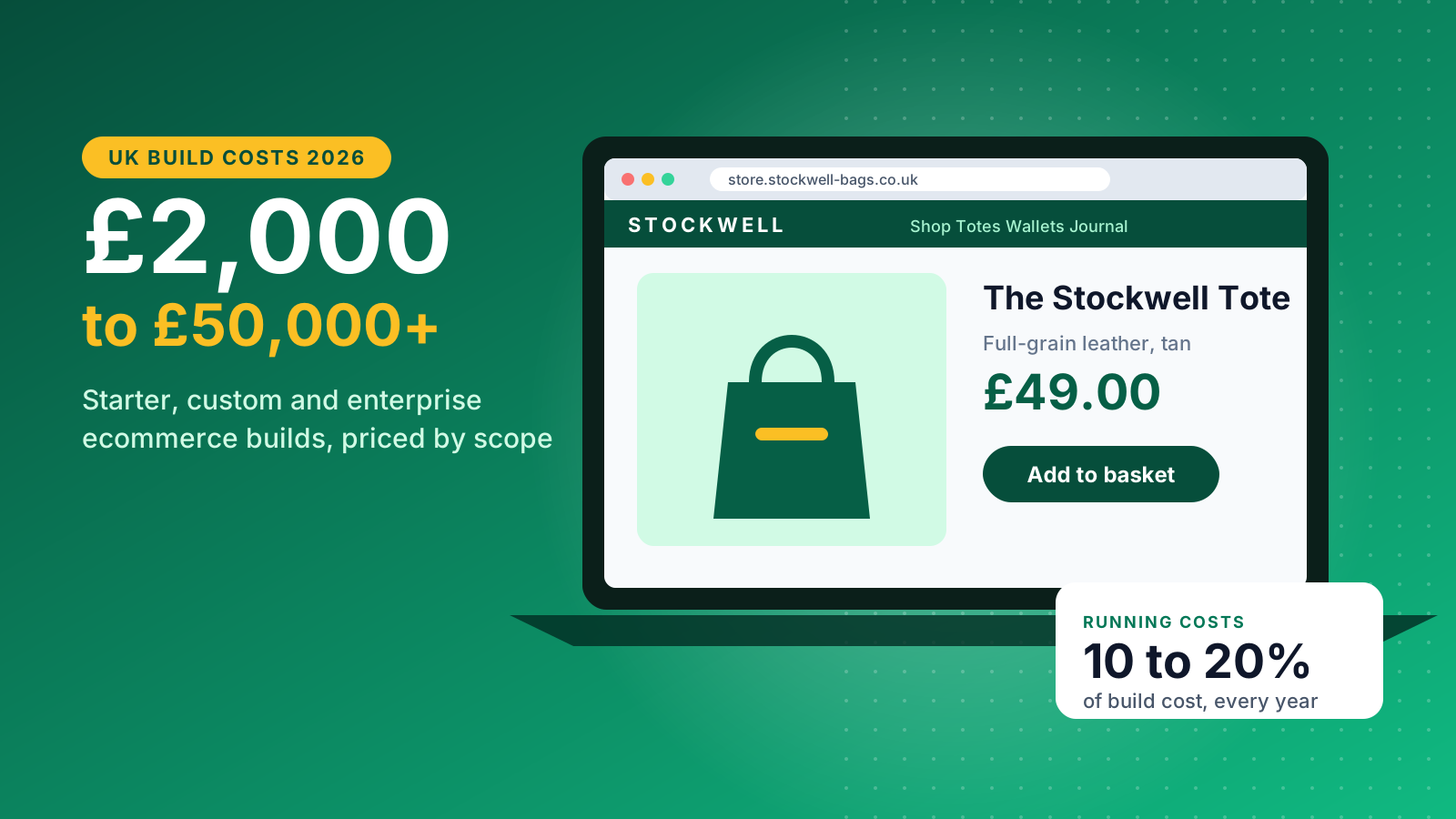
Most US ecommerce websites cost between $500 and $150,000 or more to build, plus a yearly running cost that is easy to underestimate. A basic hosted or DIY ecommerce store sits at the bottom of that range. A small professional build sits next, and a custom growth build with integrations sits near the top. Large catalogs, B2B pricing and headless builds can climb past $250,000.
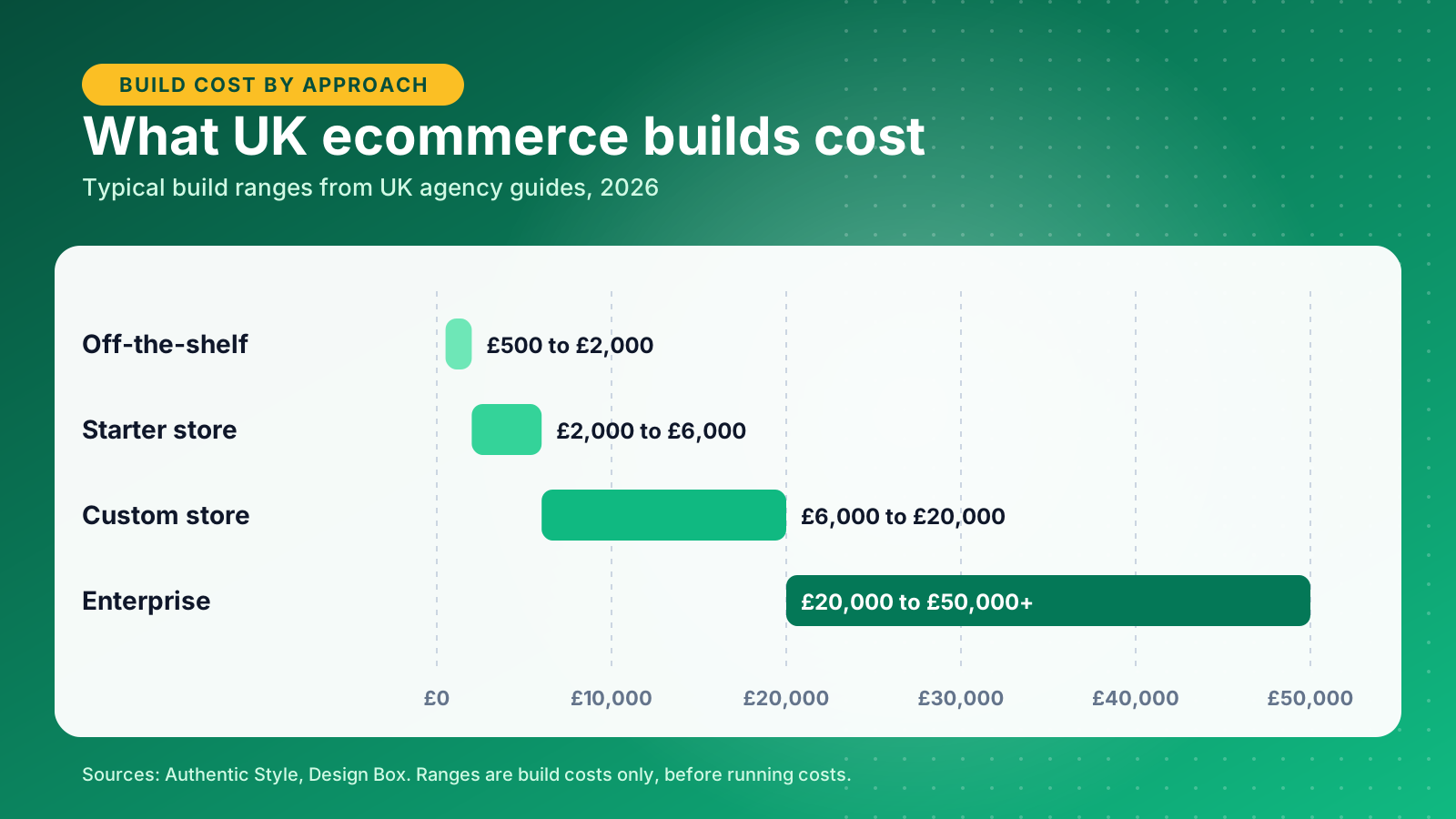
The spread is wide because published guides price different things. Outer Box Design lists $500 to $5,000+ for a starter hosted store, $5,000 to $25,000+ for a small professional build, and $25,000 to $150,000+ for a custom growth build. Wix suggests freelancers at $500 to $5,000 and agencies at $5,000 to $25,000 or more, while Zoolatech places a custom SMB build at $30,000 to $80,000. None of those numbers is wrong, but none can be compared without knowing the scope behind it.
A useful way to read any price is to split it into four buckets: the build, the ecommerce platform, the people who run the business and the extras around it (apps and plugins, photography, copywriting, SEO). A quote that covers one bucket and ignores the other three is not a cheap quote. It is an incomplete one, and the shortfall lands on your business later as unplanned expenses.
Ecommerce Website Cost by Build Approach
The biggest single decision is how much of the store is built from scratch. The tiers below follow the ranges published by US agencies and platforms, which line up reasonably well once you separate ready-made from bespoke.
Hosted builder or ready-made theme: $500 to $5,000
A hosted platform such as Shopify, with a premium theme and your branding applied, is the fastest route to a working store. Outer Box Design puts a starter hosted or DIY store at $500 to $5,000+, and Wix says most small stores on a builder land between $29 and $59 a month once a domain and a few apps are included.
Small professional and custom stores: $5,000 to $150,000
A professional build adds bespoke design, a tailored product page and collection experience, and integrations with the tools you already use, such as accounting, email and inventory systems. Outer Box Design lists $5,000 to $25,000+ for a small professional store and $25,000 to $150,000+ for a custom growth build. Zoolatech puts a SaaS storefront at $5,000 to $20,000 and a custom SMB platform at $30,000 to $80,000. This is where most growing brands land.
Enterprise, B2B and headless: $75,000 to $500,000+
Enterprise projects involve ERP and inventory connections, multi-region storefronts, B2B pricing and complex migrations. Outer Box Design lists $75,000 to $250,000+ for B2B and large catalogs and $250,000 to $500,000+ for enterprise and headless builds. There is no real ceiling once custom engineering is involved.
What Drives the Price Up or Down
Two stores with the same platform can differ by tens of thousands of pounds. These are the factors that move the number most.
- Design depth: a lightly customized theme costs a fraction of a bespoke UX and UI design with custom page templates.
- Catalog size and product data: cleaning, importing and structuring thousands of SKUs, variants and attributes takes real time.
- Traffic and growth plans: expected visitors and sales volume decide how much web hosting, site performance work and infrastructure you need. A store built for 500 visitors a day is priced differently from one built for 50,000.
- Complexity and requirements: multi-currency selling, subscriptions, B2B pricing and custom checkout rules each add investment, and the more complex the brief the wider the quote range.
- Integrations: app and payment integrations add monthly fees (Wix cites apps at $30 to $200 a month), while ERP and CRM connections are priced as custom development and are among the biggest drivers of variance in Outer Box Design's ranges.
- Migration: moving products, customers, orders and URL redirects from an old platform is a project in its own right. Our guides to migration versus optimization and protecting SEO during a migration explain what is involved.
- Content: photography, copywriting and video are often missing from basic agency quotes and arrive later as extras.
- SEO setup: redirect mapping, schema markup and technical foundations are cheaper to build in than to retrofit.
When a quote looks low, check which of these six it leaves out. The gap between two quotes is usually scope, not margin.
Platform Costs: Shopify, WooCommerce and Adobe Commerce
Your ecommerce platform sets the shape of your costs, and the options differ in who controls what. Hosted platforms charge a subscription and include hosting, security and checkout. Open-source platforms are free to download but push hosting, security and maintenance onto you.
Shopify plans in the US currently run as follows (annual billing, per month): Basic at $29, Grow at $89, Advanced at $359, and Shopify Plus from $2,300 a month. Month-to-month billing costs more: $39, $105 and $399 for the first three. Online card rates on Shopify Payments run from 2.9% + 30¢ on Basic down to 2.5% + 30¢ on Advanced. Our Shopify pricing breakdown covers each tier, and Shopify Plus versus Advanced helps if you are near the upgrade point.
WooCommerce gives you more control over the code and has no license fee, but you pay for web hosting (Outer Box Design cites $25 to $350 a month), premium extensions at $29 to $299 a year each, and developer time. Adobe Commerce (Magento) suits very large catalogs and carries significant setup and licensing costs. If you are weighing these, see how Shopify compares with WordPress and with Magento.
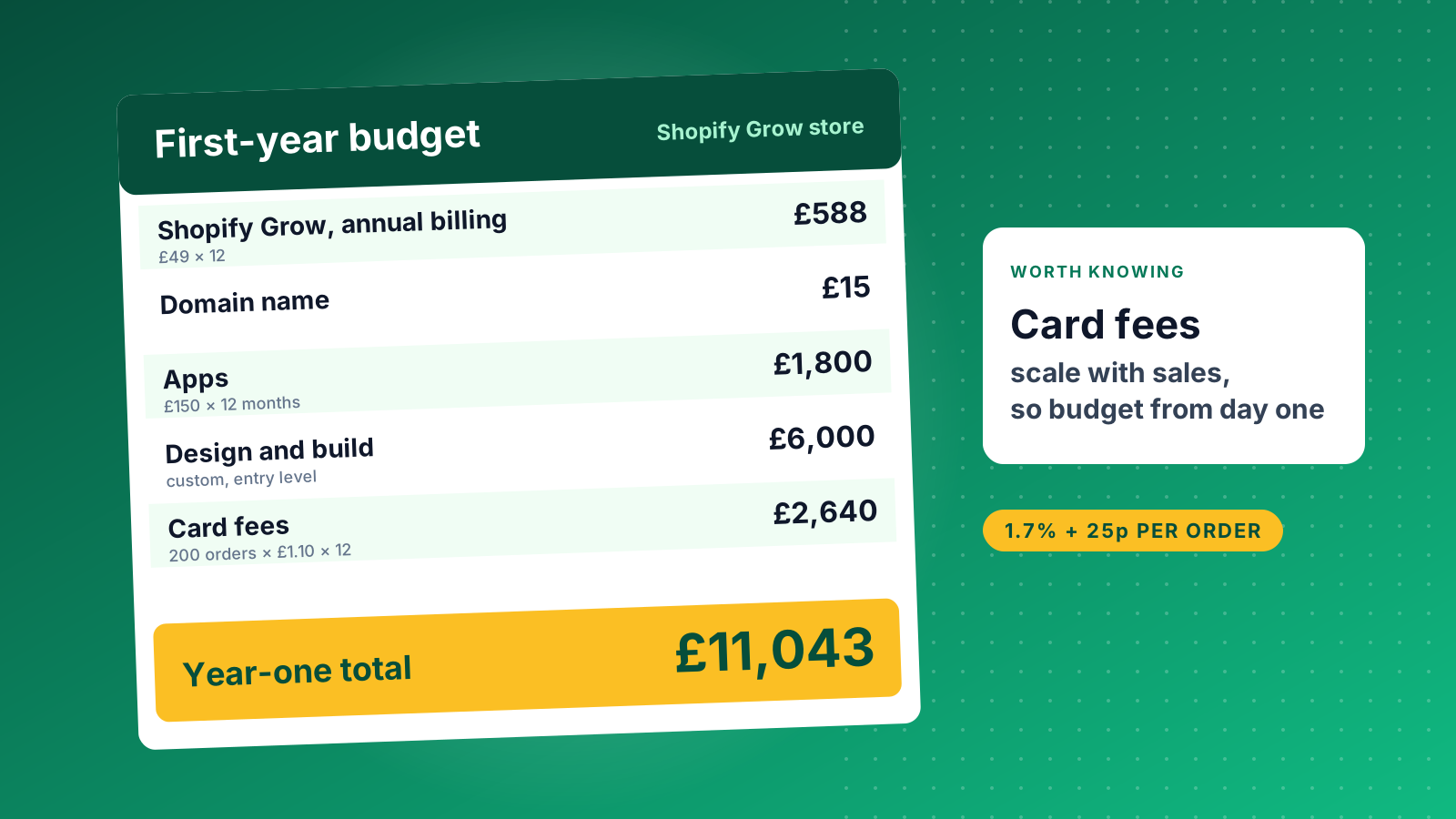
Here is a worked first-year example for a Shopify store on the Grow plan, using a build at the bottom of the small professional range and $10,000 a month in online sales across 200 orders of $50 each:
- Shopify Grow, annual billing: $1,068 ($89 × 12)
- Domain: $20
- Apps at an average of $150 a month: $1,800
- Design and build: $5,000
- Card fees at 2.7% + 30¢ on 200 orders a month: $3,960 ($1.65 × 200 × 12)
- Year-one total: $11,848
Whichever ecommerce platform you choose, check payment processing and transaction fees before you commit. Stripe and PayPal charge their own rates, and Shopify adds an extra transaction fee when you use a third-party gateway instead of Shopify Payments.
Notice that card fees come close to the cost of the build itself. They scale with sales, which is a good problem to have, but they belong in the budget from day one.
DIY, Freelancer or Agency: Who Builds It Changes the Price
Labor often matters more than the platform fee. The same Shopify store can be built three ways, at three very different prices.
DIY. A hosted builder and a premium theme keep cash costs low, and you pay in time. This works for a simple catalog and a founder who has the hours. It struggles once you need integrations, custom checkout logic or serious SEO.
Freelancer or web developer. Wix puts freelancer builds at $500 to $5,000, with designer rates around $75 an hour. A good freelancer is excellent value for a defined, one-person job. The risk is capacity: one person rarely covers design, development, SEO and conversion work together.
Agency. Agency projects run from $5,000 to $25,000 or more on Wix's figures, and well beyond that for custom work. You are paying for a team of specialists, project management and continuity after launch. For a store where ecommerce is a serious revenue channel, that usually pays for itself. Our guides on what an ecommerce agency does and how to choose a Shopify agency will help you compare.
Whichever route you choose, ask who owns the code, the data and the platform accounts once the project is finished. That one answer says more about the real cost of a store than any hourly rate.
Ongoing Costs After Launch
Ongoing costs are what most businesses underestimate. The build is a one-off; the expenses below repeat every year, and software subscriptions tend to creep upwards.
- Web hosting: $0 to $50 a month on a builder (Wix), $25 to $350 a month for WooCommerce hosting (Outer Box Design), and nothing extra on Shopify, where hosting is in the plan.
- Domain name: roughly $0 to $20 a year.
- SSL certificates: included on Shopify and most hosted builders.
- Maintenance and updates: $100 to $1,000 a month on SaaS and $1,000 to $5,000 a month on custom SMB platforms, according to Zoolatech.
- Apps and extensions: $30 to $200 a month on average, rising with scale. Email platforms such as Klaviyo scale with your list; see our Klaviyo pricing guide.
- Marketing: $500 to $5,000 a month for small businesses (Wix). Our ecommerce SEO agency work is a good example of what search investment buys.
- Analytics, backups and security: reporting tools and automated backups protect the data your store runs on, and are bundled on hosted platforms.
- Payment processing: about 2.9% + 30¢ per card transaction on standard plans.
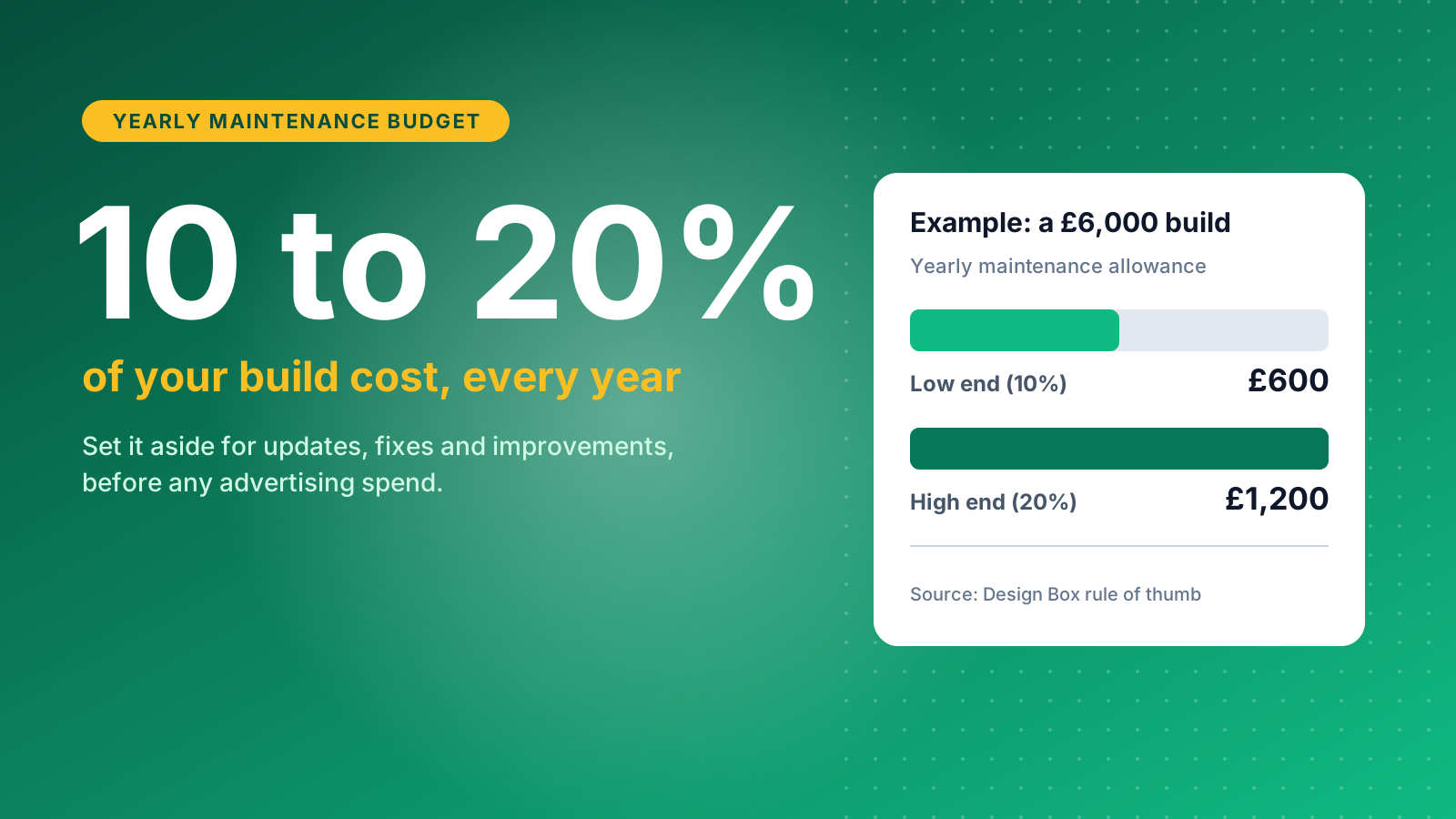
A simple rule is to set aside 10% to 20% of the original build cost every year for maintenance and improvements, before any advertising. On a $5,000 build that is $500 to $1,000 a year. For stores on Shopify, a support and maintenance retainer covers this work in one predictable monthly fee.
How Long an Ecommerce Website Build Takes
Time is cost. Every extra week of agency or freelancer time lands on the invoice, and every week your store is not live is revenue you are not taking.
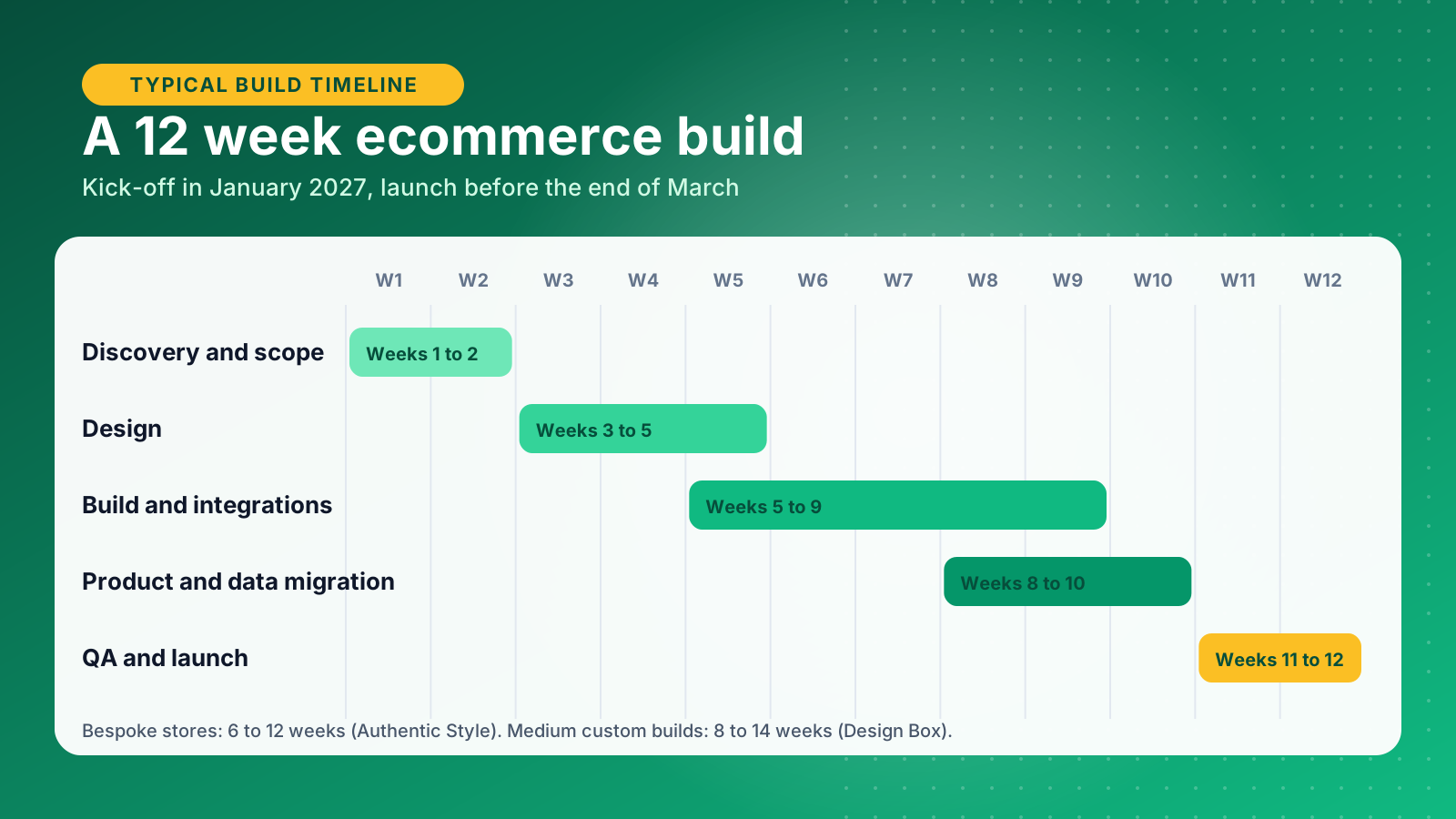
Zoolatech gives two to six weeks for a SaaS storefront, two to four months for a custom SMB build and four to eight months for a mid-market platform. Six to twelve weeks is a realistic window for a professional build on a platform like Shopify, and promises of a fully custom site in two to three weeks deserve scrutiny. A hosted starter store on a ready-made theme can be live sooner if your product data and photography are ready.
The usual delays are not technical. They are late product data, slow feedback rounds and scope changes after design sign-off. A clear holding page and launch plan keeps momentum while the build completes.
How to Get a Quote You Can Compare
Quotes only compare when the brief is the same. Before you contact anyone, write a functionality document and send it to two or three suppliers. Include:
- Ecommerce platform preference, or the questions you need help answering
- Number of products, variants and collections, and where the data lives today
- Must-have and nice-to-have features, listed separately
- Integrations: payments, shipping, accounting, ERP, email, reviews
- Migration needs: customers and customer data, order history, URL redirects
- Who supplies photography, copywriting and design assets
- Launch date and what is driving it
- Support after launch: hours, response times and cost
Ask each supplier to price against the same list, and treat unusually cheap or vague quotes with caution. The cheapest option is not automatically the best one, and a fixed, itemised price protects you from surprise charges.
Keeping the Cost Down Without Cutting Corners
Spending less is sensible. Spending less in the wrong place is expensive. These are the savings that hold up.
Launch a minimum viable store. Resist feature-heavy builds at the start. Learn from real customers, then pay for add-ons that earn their place. A staged launch lowers early spend and shows which features matter.
Start from a proven theme. A strong theme gets you most of the way for a fraction of bespoke design, and the best ones make the journey from product page to checkout simple for customers. Put the saving into the pages that sell: product pages, collection pages and checkout. Our roundup of the best Shopify themes is a good starting point.
Choose the platform for year three, not week one. A cheaper start on the wrong platform can mean a costly replatforming project later.
Get speed and SEO right at the build stage. Fixing them afterwards costs more. See how to speed up your Shopify site, and talk to us about a Shopify Plus build if you are scaling fast. When you are ready to scope your own project, get in touch and we will give you an itemised plan.