 Nic Dunn, CEO, Charle Agency
What Ecommerce SEO Marketing Means in 2026
Ecommerce SEO marketing is the work of making an online store visible to people searching for what it sells, across every surface where that search now happens. That definition has widened considerably. It used to describe ten blue links. It now covers AI Overviews, Google's AI Mode, Google Shopping, and the traditional organic results that still sit underneath all of it.
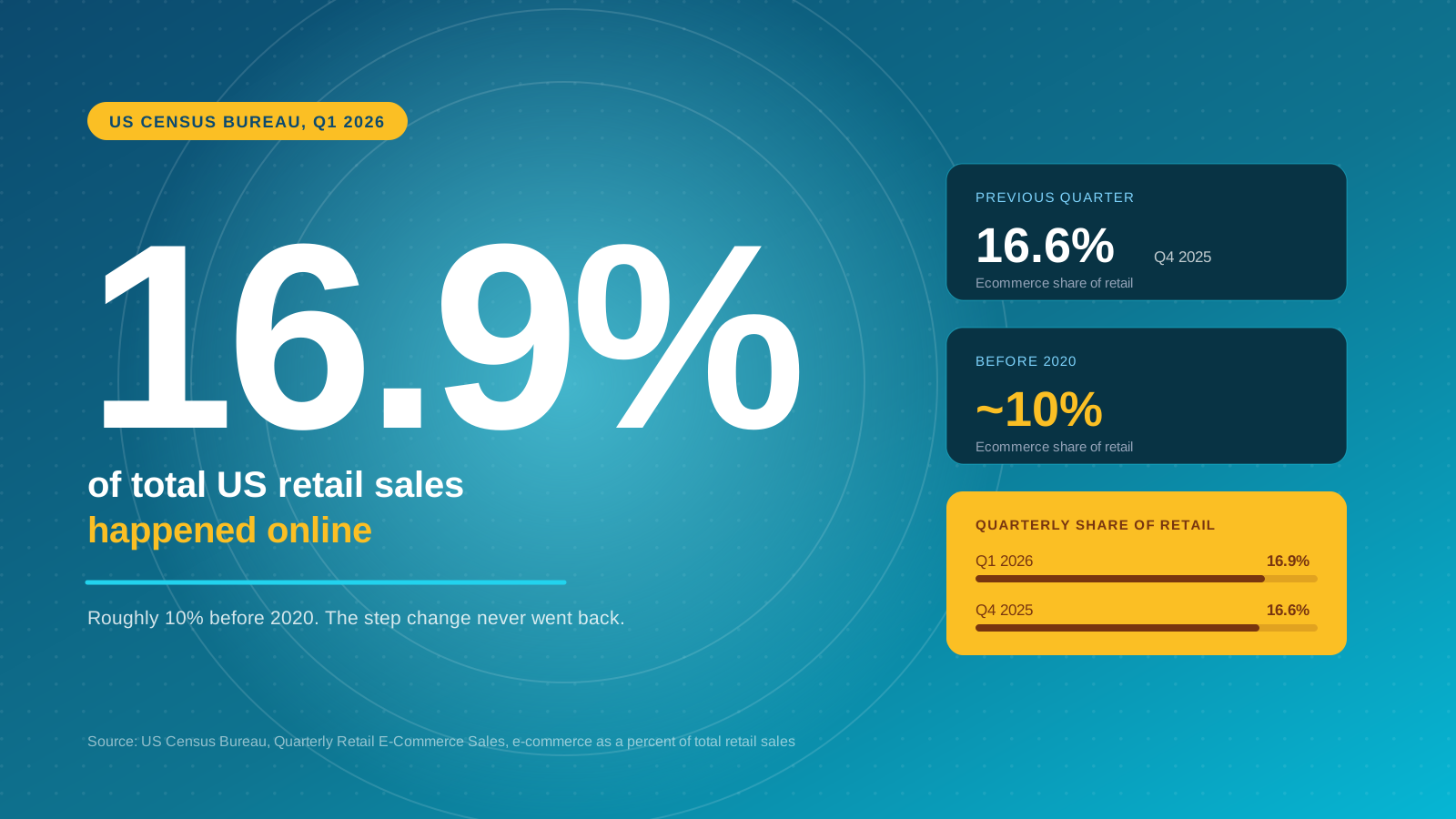
The commercial case has not weakened. Ecommerce accounted for 16.9% of total US retail sales in the first quarter of 2026, according to US Census Bureau figures, up from 16.6% in the fourth quarter of 2025 and from roughly 10% before 2020. That is a permanent step up rather than a pandemic spike that unwound, and the share has risen in almost every quarter since. The money is online and it is growing.
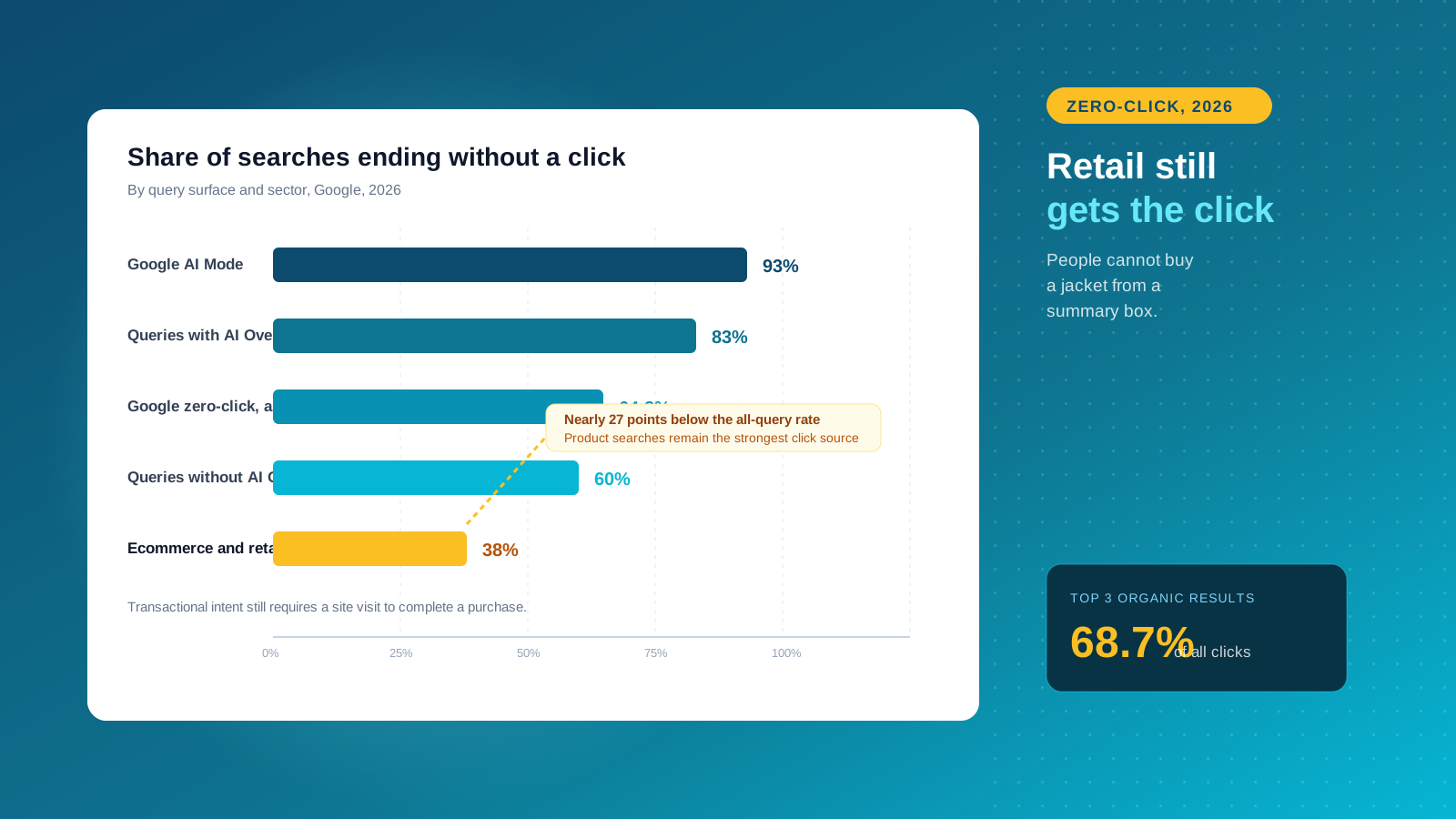
What has changed is the path between a search and a sale. Around 64.8% of Google searches now end without a click of any kind. On queries that trigger an AI Overview, that figure rises to roughly 83%, and Google's AI Mode sits near 93%. Read those numbers in isolation and organic search looks finished.
It is not, and the sector split explains why. Retail and ecommerce queries show a zero-click rate closer to 38%, well below the all-query average. Nobody buys a pair of walking boots from a summary paragraph. Transactional intent still requires a site visit, a size selection and a card. The click is disappearing fastest exactly where it was worth least: definitional questions, quick facts, comparisons that never led anywhere.
The practical consequence for an online store is that top-of-funnel informational content now returns far less traffic than it did three years ago, while commercial and transactional pages hold their value. Effort should shift accordingly. A collection page targeting a category term is worth more attention in 2026 than a 2,000 word explainer that an AI Overview will answer for free.
How ecommerce SEO differs from SEO for other websites
Two things make ecommerce websites different from every other kind of site an SEO team works on. The first is scale: a catalog of 800 products can generate tens of thousands of URLs once filters, variants and internal search results are counted, so crawl efficiency becomes a first-order problem rather than a technical footnote. The second is intent. Most visitors arrive wanting to buy something, which means search results, product data and conversion rates are linked in a way they are not on a publisher site.
That combination changes what good looks like. Ranking is only the halfway point. Customers who land on a page that loads slowly, hides its sizing information, or shows an out-of-stock item with no alternative will bounce, and the engagement metrics that follow feed back into how search engines assess the page. Ecommerce SEO is therefore closer to product work than to publishing, and the teams that treat it that way tend to pull ahead of competitors who treat it as a content exercise.
Start With Intent, Not Search Volume
Most keyword research for ecommerce websites goes wrong in the same way. Someone exports a list of keywords sorted by monthly search volume, picks the biggest numbers, and hands them to a content team. Twelve months later the store ranks for terms that generate sessions and no sales, because nobody checked the search intent behind them.
A better starting point is to sort your catalog by what a searcher is trying to do. Three groups matter, and each needs a different page type behind it.
The three query types that matter
Informational research queries happen before anyone has chosen a product. "How to choose waterproof walking boots" or "leather versus synthetic hiking boots" belong here. These are the queries most exposed to AI Overviews, so they are worth covering for authority and citation rather than for raw traffic.
Non-branded product queries are the commercial heart of ecommerce search. "Waterproof walking boots", "womens gold hoop earrings", "gaming laptop under $800". The searcher knows what they want and has not chosen a retailer. These are the most competitive terms on any catalog because every seller targets them, and they belong on collection pages rather than product pages.
Branded queries are people searching for you, or for a brand you stock. They convert best and cost least to win. They are also the group most affected by AI search, because when a model recommends your brand in an answer, the reader's next move is usually to search your name. Digital PR, reviews and reputation work therefore feed organic search directly rather than sitting beside it.
How to do keyword research for a catalog
Keyword research for ecommerce websites works differently from keyword research for a blog, because the unit of work is a page type rather than an article. Start with your category structure, then find the keywords your customers actually use for each level of it.
Four sources cover most of what you need. Search Console tells you which keywords already bring users to each page, the only data describing your own store rather than the market. Keyword tools such as Ahrefs, Semrush or Moz give search volume, keyword difficulty and the competitors ranking for each term. Marketplace autocomplete, particularly Amazon, reveals the exact language customers use when they have their card out. Internal search logs show what users looked for on your site and did not find, which is often the fastest route to a missing category page.
Judge each candidate on three things rather than search volume alone: how well the keyword matches something you sell, whether the pages currently ranking in the search results are the same type as the page you would build, and whether your domain is competitive against the websites already there. A term with 200 searches a month and clean commercial intent beats one with 8,000 searches that returns nothing but editorial round-ups.
Mapping keywords to page types
Within the non-branded group, separate category keywords from product keywords. Category terms carry the volume and belong to collections. Product terms carry the conversion rate and belong to individual products. A store that maps both correctly stops its own pages competing with each other, which is one of the more common causes of flat rankings across a large catalog. Our guide to product taxonomy covers how to structure that mapping before you write anything.
Keep the mapping in one place, one keyword to one page, and treat it as the specification for everything downstream: titles, meta descriptions, internal linking and content briefs all follow from it. Without it, two category pages end up targeting the same search terms and neither ranks.
One rule holds across all three groups: do not target a term simply because a competitor ranks for it. Domain authority and brand recognition are real ranking inputs. A store with 40 referring domains will not outrank a household name on a head term this quarter, whatever the on-page work looks like.
Where Organic Search Sits Against Paid Ads
Ecommerce SEO marketing does not operate in isolation. Most stores run paid campaigns alongside it, and the sensible question is not which channel wins but what each one is for.
The economics
Paid ads buy traffic immediately and stop the moment the budget does. PPC campaigns suit a product launch, a seasonal push, or testing whether an audience exists for a category before you invest in content around it. Cost per acquisition rises over time as competition for the same keywords increases, and advertising never compounds: last month's spend does nothing for this month's sales.
Organic search behaves the opposite way. Returns arrive months after the work, but they compound. A category page that ranks keeps earning without further spend, and the authority built along the way makes the next page easier to rank. For most established ecommerce businesses, organic is the lower cost channel per order once a program has matured.
Using them together
The two work better in combination than in competition. Paid search data tells you which keywords convert before you commit to an SEO strategy around them, which removes most of the guesswork from prioritization. Shopping campaigns and organic listings can occupy the same search results page, increasing your share of the screen. On head terms where ranking is unrealistic this quarter, ads hold the position while content and links build underneath.
Social media rarely drives meaningful organic traffic directly, but it feeds branded search, produces the reviews and mentions that support authority, and gives content a distribution route beyond search engines.
Collection Pages Are Your Biggest Ranking Asset
Collection pages, called category pages on most other ecommerce websites, rank for the majority of valuable search terms and usually drive more organic traffic than individual products. Most stores treat category pages as a product grid with a title on top. That is the single largest unclaimed opportunity on a typical Shopify catalog, and it is where competitors with weaker products routinely outrank better ones.
The reason is intent. Someone searching "waterproof walking boots" wants to see a range and compare, not to land on one boot. Google knows this, which is why category-style listing pages dominate those search results. If your collection page is thin, Google has nothing to rank and will send the query to a marketplace instead.
What a competitive collection page contains
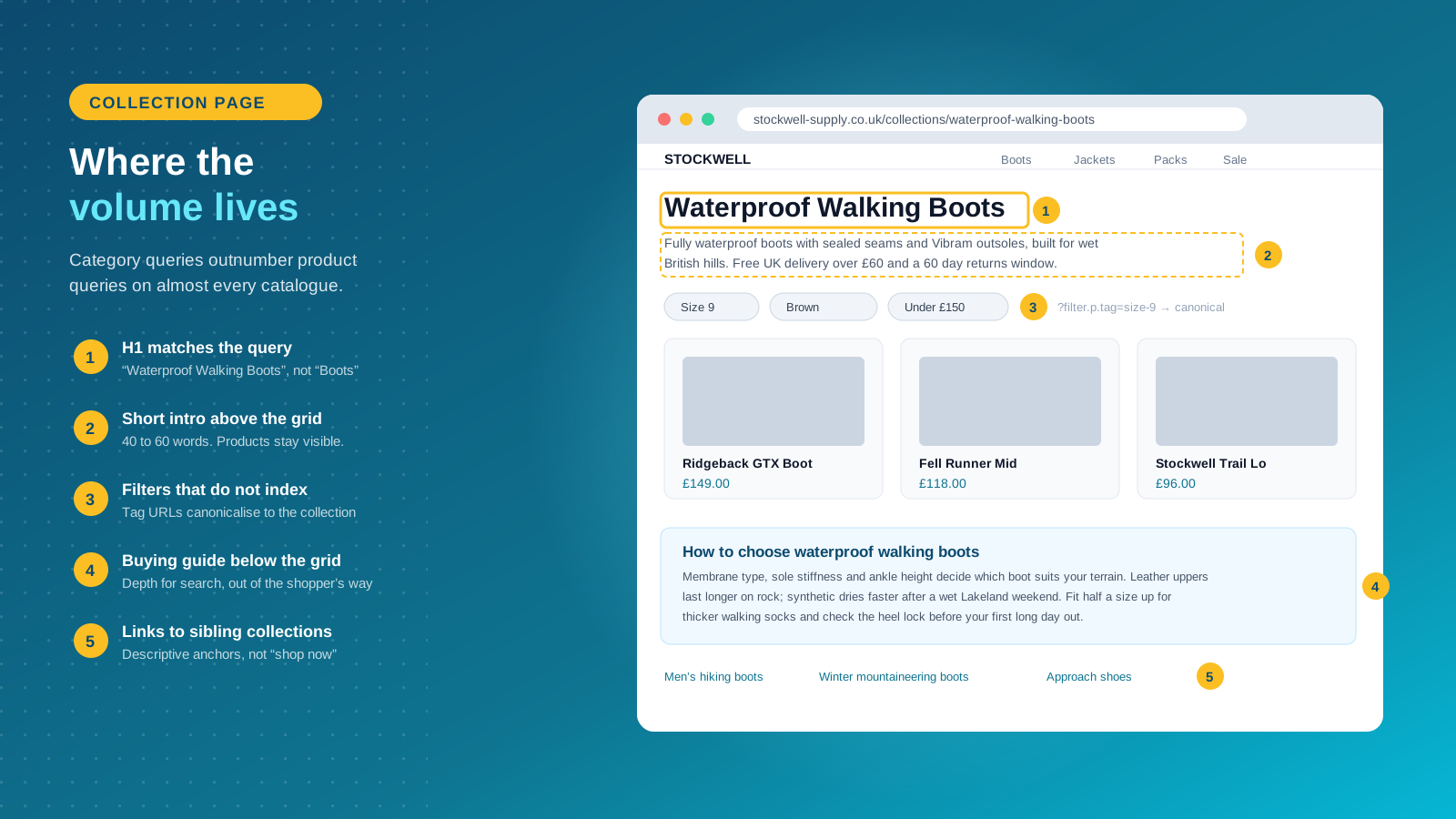
Making a collection page competitive comes down to five things:
- An H1 that matches the query. "Waterproof Walking Boots" beats "Boots" and beats "Our Collection". Match the language shoppers use, not internal merchandising labels.
- A short intro above the grid. Forty to sixty words that say what the range covers, who it suits, and the practical detail a buyer wants, such as free shipping threshold or returns window. Long enough to establish relevance, short enough that products stay visible.
- Substantial content below the grid. This is where the depth goes. A buying guide, sizing help, material comparisons, answers to the questions your customer service team gets weekly. Shoppers who want products are unaffected; search engines get the coverage they need.
- Filters that do not create indexable duplicates. More on this below, but tag and price filters generate URL permutations that will eat crawl budget if left alone.
- Descriptive links to sibling collections. "Men's hiking boots" as anchor text does work that "shop now" never will.
The conflict everyone hits is merchandising against SEO. The commercial team wants products above the fold; search wants copy. Splitting the content, with a short intro above and the substantial guide below, resolves it without either side losing. We cover the full build in our guide to optimizing collections for SEO.
Titles, meta descriptions and the click
Category pages are where title tags do the most work, because they compete directly against retailers selling identical products. Write titles that lead with the category keyword and add the one thing that differentiates you, whether that is range, price position or shipping. Keep title tags under about 60 characters so they are not truncated in the search results.
Meta descriptions do not influence rankings directly, but they decide the click-through rate. Treat them as ad copy: 150 to 160 characters, the primary keyword included naturally, and a concrete reason for customers to choose your listing over the two above it. Free returns, next-day shipping and range size all outperform generic marketing language. Across a large catalog, writing meta descriptions for the top 50 category pages and templating the rest is the realistic approach.
Site structure and internal linking
Site structure turns a set of pages into something search engines can understand. Keep the URL structure shallow enough that any product is three clicks from the homepage, group categories the way customers think rather than the way your inventory system does, and link between related category pages with descriptive anchor text. Breadcrumbs help both users and crawlers place a page within that structure, and they frequently appear in search results.
Product Pages That Rank and Convert
Product pages win on specificity. They rarely compete for head terms, and they should not try. Their job is to capture long-tail searches with named products and precise qualifiers, and then convert the person who arrives.
Product descriptions that earn the ranking
Start by removing manufacturer copy. Dozens of retailers publish the same supplier description, which gives Google no reason to prefer your version and gives a shopper no reason to buy from you rather than the cheaper listing next door. Original descriptions are slow to produce across a large catalog, so prioritize by revenue: rewrite the products that already earn, then work down.
A product description that performs on both axes tends to have two layers. The first 50 to 100 words carry the primary benefit and the defining characteristic, which serves mobile shoppers and gives search engines an early signal. Below that sit specifications, materials, sizing, care instructions and use cases, which serve researchers and give the page enough substance to rank. Our detailed walkthrough of optimizing product descriptions covers the structure in full.
Product images and alt text
Product images carry more SEO weight on ecommerce websites than on any other kind of site, because Google Images and Shopping both draw on them and because image quality drives conversions directly. Use original photography rather than supplier files, shoot multiple angles and a scale reference, and compress properly so the product images do not sink your site speed.
Alt text should describe what the image shows in plain language, including the product name where it reads naturally. It exists first for accessibility and second for search, and alt text written for the first purpose usually serves the second well. Stuffing keywords into alt attributes helps nothing and degrades the experience for customers using a screen reader.
The four elements that separate ranking product pages
Beyond the copy and imagery, four elements consistently separate product pages that rank from ones that do not:
- Reviews on the page, in the markup. Ratings feed rich results and give AI systems something concrete to cite. They also answer objections that no marketing copy can.
- Original photography. Stock images from the supplier appear on every competing listing. Unique imagery supports both differentiation and image search.
- Related products with descriptive links. These serve cross-sell and internal linking at the same time, pushing authority to pages that need it.
- A policy for out-of-stock items. Deleting a discontinued product destroys the ranking and the backlinks pointing at it. Keep the URL live, mark availability accurately in the markup, and surface alternatives. If the product is gone permanently, redirect to the closest match or the parent collection rather than to the homepage.
The out-of-stock question catches out more stores than any other item on that list, because it only becomes visible months later when a category's organic traffic has quietly halved. See our guide to optimizing product pages for SEO for the wider page build.
Technical SEO for Online Stores
Technical problems on ecommerce sites are rarely exotic. They are almost always about URL sprawl: a catalog generating far more addresses than it has products, and a crawler spending its budget on the wrong ones.
Duplicate product paths
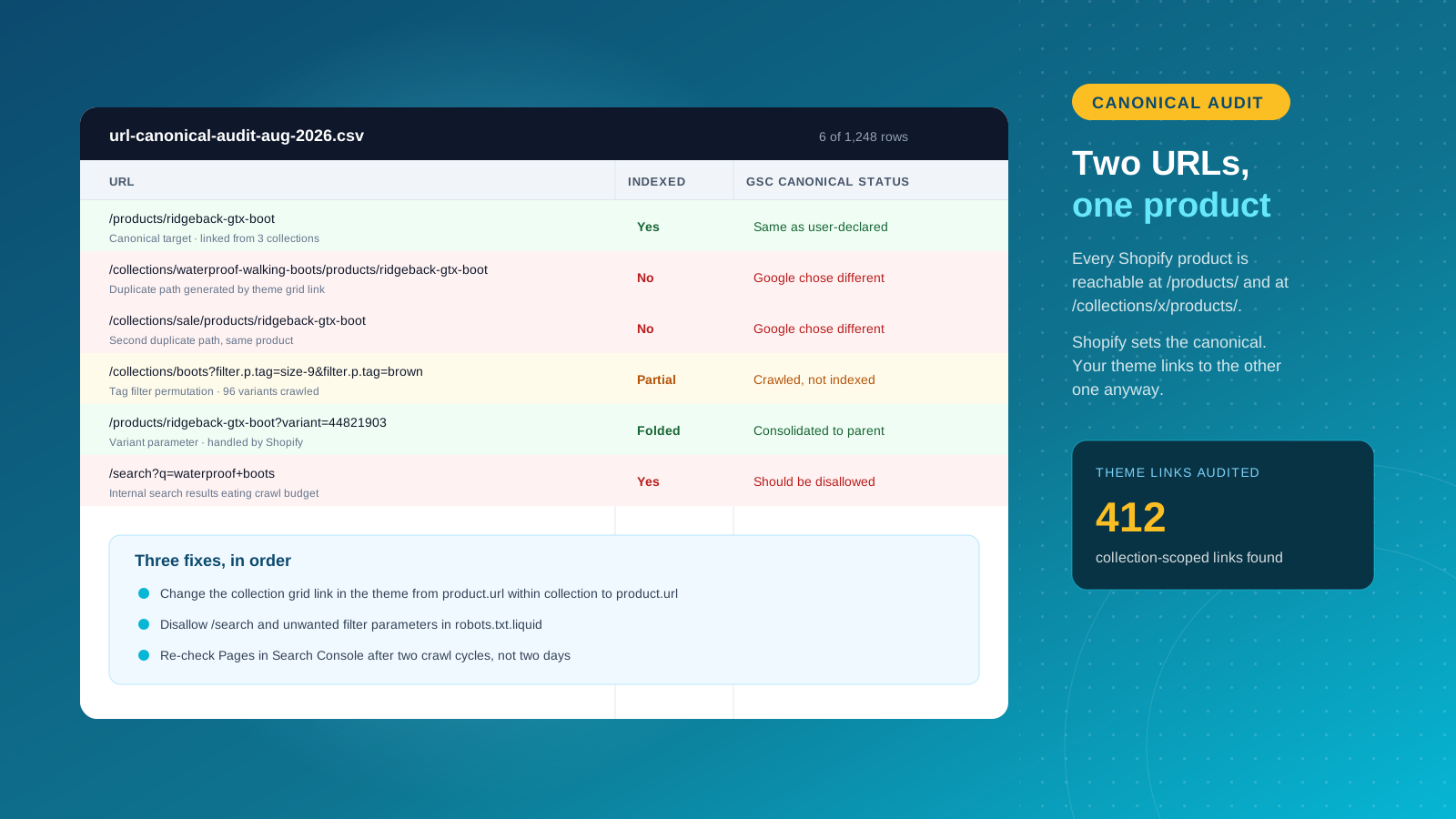
On Shopify, every product is reachable at two addresses. There is the canonical /products/product-handle, and there is the collection-scoped /collections/collection-handle/products/product-handle. Shopify sets a canonical tag pointing at the first. The problem is that many themes link to the second from the collection grid, so every internal link on your store points away from the page you want indexed.
Google usually resolves this correctly. Usually is not always, and on large catalogs the exceptions add up. Check the Pages report in Search Console for the status "Duplicate, Google chose different canonical than user". If those appear against your product URLs, the fix is in the theme: change the collection grid to link to the product URL directly rather than the collection-aware version.
Filters, tags and crawl budget
Faceted navigation is the second source of sprawl. Tag filters and price ranges combine into hundreds of permutations, each a crawlable URL with near-identical content. Internal search results pages do the same thing. A store with 800 products can easily present 40,000 URLs to a crawler, at which point new products take weeks to get indexed because the crawler is busy elsewhere.
Shopify gives you control of this through robots.txt.liquid, which can be edited in the theme code. Disallow internal search paths and the filter parameters you do not want crawled, keep the ones that represent genuine standalone demand, and let canonical tags handle the rest.
URLs, redirects and site depth
Keep URLs descriptive and short. Any product should be reachable within three clicks of the homepage. When you restructure collections, redirect the old paths rather than leaving them to 404, and check for redirect chains afterwards, since Shopify makes it easy to accumulate them across successive migrations.
Structured data
Product schema markup is no longer optional. It tells search engines the price, availability, currency, SKU, GTIN and review rating for each item, and those fields feed rich results, Google Shopping and the product data AI systems draw on when answering shopping questions. Many Shopify themes ship incomplete schema markup, and the gaps rarely surface until you test individual URLs. Our guide to adding product schema covers what to include and how to validate it.
Speed and Core Web Vitals
Interaction to Next Paint replaced First Input Delay as the responsiveness metric, and 200 milliseconds is the threshold to pass in 2026. It is the most commonly failed Core Web Vital, with around 43% of sites above the limit. On ecommerce sites the usual culprit is app scripts: every review widget, upsell tool and analytics tag competes for the main thread on the same page.
The commercial argument for site speed is stronger than the ranking one. Faster pages convert better, and the relationship between page speed and conversions is well documented across retail. Audit your installed apps against actual usage at least twice a year, remove what nobody looks at, and see our guide to speeding up a Shopify site for the technical detail. Mobile deserves particular attention given how much of ecommerce traffic now arrives on a phone, which we cover in mobile SEO for ecommerce.
Content That Builds Authority
Content marketing for ecommerce has narrowed and deepened at the same time. Publishing volume for its own sake stopped working when AI Overviews began answering general questions directly. What still works is content that either supports a purchase decision or gives another publisher a reason to link to you.
Buying guides and category content
Buying guides attached to categories do the first job well. A guide to choosing between boot sole types, placed on or beside the relevant collection, catches research queries and moves the reader towards a product you sell. It is also the kind of content that gets cited, because it contains specifics rather than generalities.
Blog posts still have a role, though a narrower one than in 2020. The posts worth writing now are the ones that answer a question your customers genuinely ask before buying, link into the relevant category, and would still be useful in two years. Seasonal and news-shaped posts age badly and add pages that dilute the crawl budget you spent effort protecting.
Earning links to an ecommerce site
The second job is link acquisition, and ecommerce has an inherent disadvantage here: nobody links to a product page. Original data, tools, calculators and genuinely useful reference material are what earn coverage. Sizing tools, material comparison charts and buyer research all give journalists and bloggers something to point at. Our guide to ecommerce link building goes deeper on the tactics that hold up in 2026.
Branding as a ranking input
Brand authority deserves its own section here because it has become the strongest lever available. When search engines and AI systems decide which answer to trust, they lean on how well established a brand appears across the web. Reviews, press coverage, consistent business information and a recognizable name feed that assessment. For a newer store this ordering matters: building trust signals early does more for rankings than another round of on-page tweaks.
Two practical points. Write in complete, quotable sentences, particularly in opening paragraphs and headings, because that is the format AI systems extract. And define your terms at first mention rather than assuming knowledge, since entity clarity helps both readers and models understand what a page is about.
Optimizing for AI Search
Answer Engine Optimization and Generative Engine Optimization have been treated as separate disciplines from SEO for the last two years. That separation is no longer useful. The inputs are largely the same: crawlable pages, accurate structured data, clear entity definitions, and enough authority that a model is willing to repeat what you say.
Around 56% of marketers already use generative AI somewhere in their SEO workflow, and the surfaces themselves are now substantial enough to plan around rather than watch. What differs from traditional SEO is smaller than the terminology suggests. ChatGPT, Perplexity and Google's own AI features all read the same pages your customers do, and they favor the same signals search engine algorithms reward: clear structure, accurate data and corroborated claims.
What actually helps
Four things genuinely help an online store show up in AI answers:
- Complete product data. Price, availability, currency, GTIN, brand and reviews in the markup. AI shopping features draw on structured product data, and incomplete markup means your products are simply not eligible.
- Answer-shaped content. Lead a section with a direct, self-contained answer, then expand. A model extracting a sentence should get something accurate and useful without the surrounding paragraph.
- Specificity over hedging. Concrete numbers, named materials, real measurements and honest trade-offs get quoted. Vague marketing copy does not.
- Third-party corroboration. Models cross-reference. A claim on your site that is supported by reviews, press coverage and retail listings elsewhere carries more weight than one that appears only on your own domain.
How AI visibility turns into sales
The strategic point is that AI visibility usually converts into branded search rather than a direct click. Someone asks a model for the best hiking boot brands, sees your name, and searches for it. That branded search is measurable even when the AI mention is not, which makes branded query volume one of the more useful proxy signals available. Our article on AI for Shopify stores covers the wider picture.
How to Measure Ecommerce SEO Now
Measurement is where most ecommerce SEO programs fall down in 2026, because the metric everyone reports on is the one most distorted by AI search. Sessions from organic can fall while brand visibility rises, and a report built on sessions alone will describe that as failure.
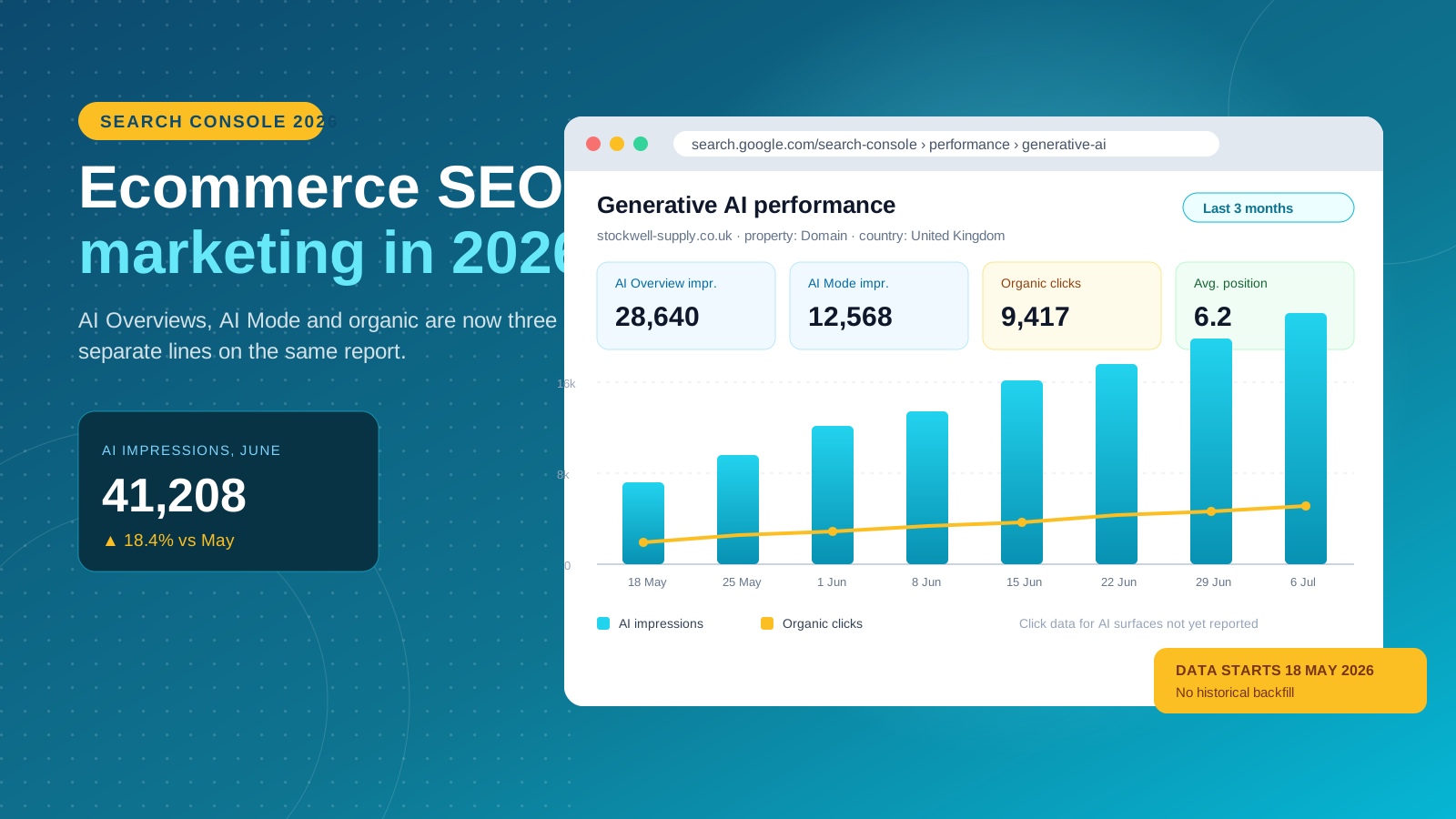
Google made this considerably easier in June 2026 by launching Generative AI performance reports in Search Console, initially to a limited set of sites. The report separates impressions in AI Overviews, AI Mode and AI features in Discover from traditional organic performance, broken down by page, country and device. Data begins on May 18, 2026 with no historical backfill, so the earlier you connect it the more useful the comparison becomes.
Two caveats matter. The report currently shows impressions only, with click data promised for a later version, and the rollout is still limited rather than global. Treat it as a visibility signal rather than a traffic report.
The metrics worth reporting
A measurement set that survives the zero-click shift looks something like this:
- Revenue by landing page, not sessions by landing page. The question is which pages produce orders, and a page with fewer visits and a higher order rate is winning.
- Branded search volume over time. The clearest available proxy for AI and brand visibility, and it moves before revenue does.
- AI impressions against organic clicks, tracked together. Rising impressions with flat clicks is a visibility win awaiting a conversion fix, not a failure.
- Indexation health. Indexed pages against total pages, and the count of URLs flagged with a different canonical than the one you declared. This is the earliest warning system a large catalog has.
- Share of category. How many of your priority category terms return your store anywhere on page one, tracked monthly rather than daily.
User experience signals worth watching
Alongside the search metrics, watch what users do once they arrive. Conversion rates by landing page, engagement time, add-to-basket rate and the proportion of visitors who use internal search all describe whether the page delivered what the search result promised. A collection page with strong rankings and a conversion rate well below its siblings usually has a user experience problem rather than an SEO one, and no amount of further optimization will fix it.
Pair Search Console with your analytics platform rather than choosing between them. Search Console tells you what happened in search; analytics tells you what happened after the click. Neither answers the question alone, and reporting on one without the other is how programs get canceled six months before they would have paid back.
The Order to Work In
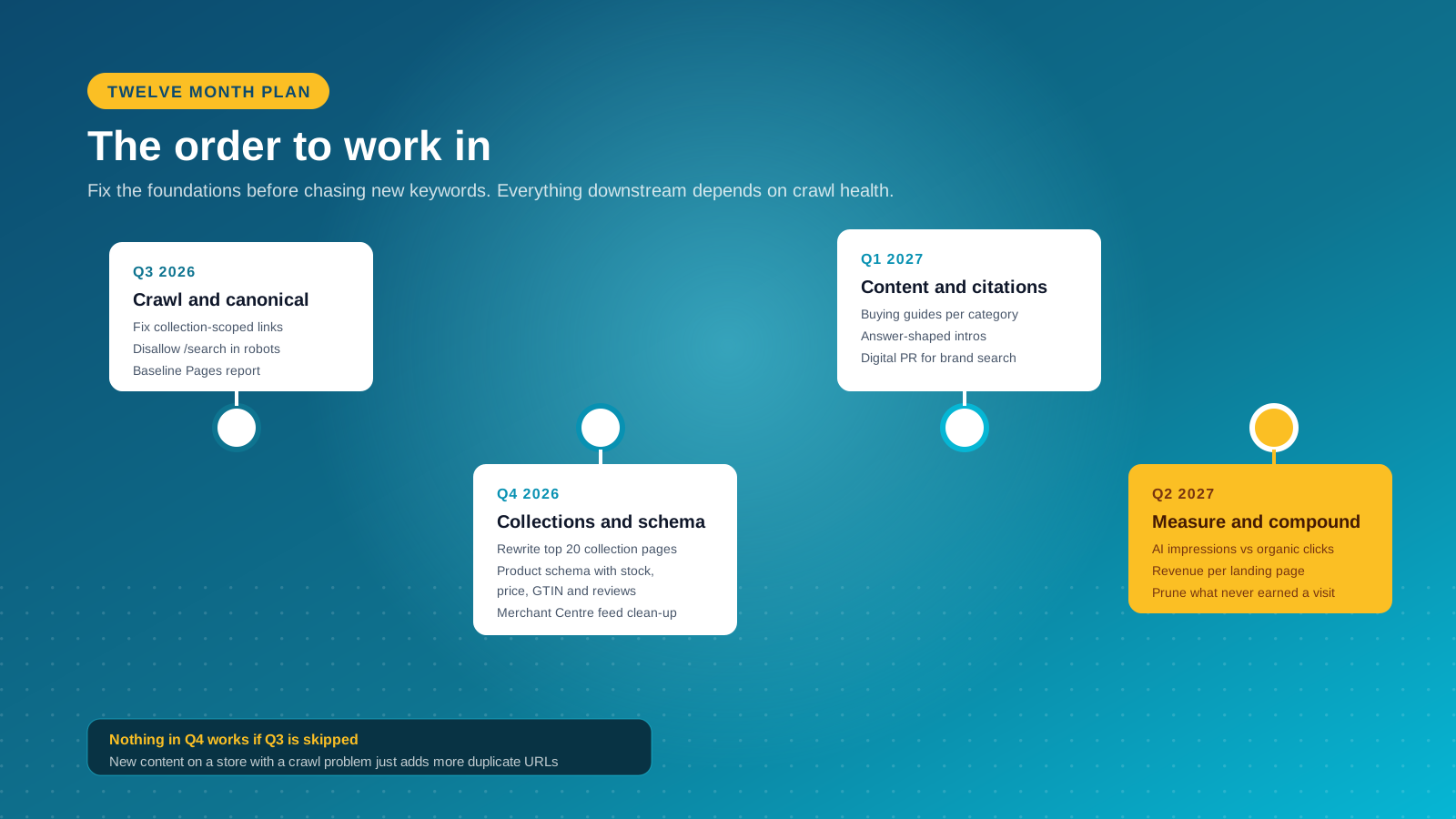
Sequence matters more than completeness. A store that does four things properly beats a store that does fourteen things partially, and some of this work is dependent: publishing new content on a site with a crawl problem simply produces more duplicate URLs.
The order we recommend for most stores:
First, crawl and canonical health. Fix collection-scoped product links in the theme, control filter and internal search URLs through robots.txt.liquid, resolve redirect chains, and take a baseline from the Pages report in Search Console. This is unglamorous and it is the prerequisite for everything else.
Second, collection pages and structured data. Rewrite your top 20 collections against real category demand, complete your product schema, and clean up the Google Merchant Center feed. Shopping results occupy a large share of the screen on product searches, and a broken feed makes a store invisible in the most prominent part of the page.
Third, content and authority. Buying guides per category, answer-shaped introductions, and digital PR aimed at growing branded search. This is the slowest-acting work, which is why it starts once the foundations hold rather than before.
Fourth, measure and compound. Track AI impressions against organic clicks, report revenue per landing page, and prune pages that have never earned a visit. Most catalogs carry a long tail of URLs that dilute crawl efficiency and produce nothing.
For stores selling into more than one market, add hreflang and market structure to the first phase rather than the last, since retrofitting it after a content program means redoing the content. Our guide to international ecommerce SEO covers that build.
Nic Dunn, CEO of Charle, puts the same point more bluntly: the stores that win organic search are the ones that fix their plumbing before they buy new taps. At Charle we have built and optimized Shopify and Shopify Plus stores since 2018, and the pattern holds almost without exception. If you want the platform-specific version of this work, our Shopify SEO guide and technical SEO for ecommerce go a level deeper.