 Nic Dunn, CEO, Charle Agency
Why SEO link building still matters in 2026
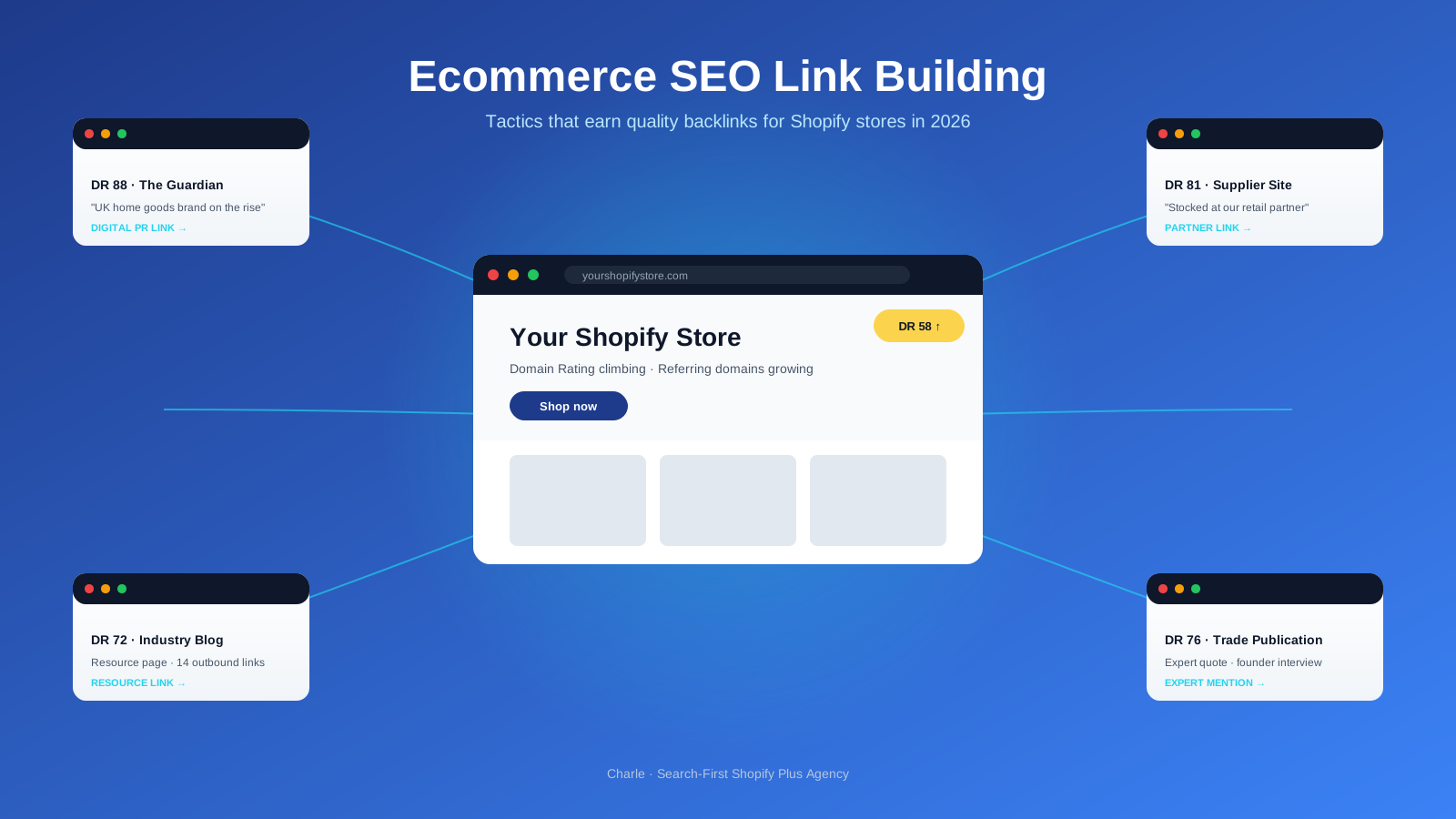
Link building is the practice of earning hyperlinks from other websites back to your own. Google has used links as a ranking signal since 1998, and in 2026 they still sit alongside content quality and user signals as one of the most influential factors in organic search. Semrush's most recent ranking factors study found that 8 of the top 20 factors influencing organic position are directly link-related, which is roughly where the figure has sat for the past decade. The reason is simple: a link from an established site to yours is a vote of confidence that search engines can measure at scale.
What changed is how Google evaluates those votes. According to Google's Search Central documentation, the system now uses machine learning to assess the intent behind each link, not just the authority of the linking site. The power and benefits of a relevant, contextually placed link from a respected industry publication are worth more than ever, while a bulk-purchased link from a low-quality blog is now likely to be ignored or, worse, contribute to a manual action. For example, the same publication can pass meaningful authority to one site and almost nothing to another, depending on the editorial context around the link.
For US ecommerce sites, the link building opportunities are sharper than almost anywhere else because the competition for organic search results is the most intense. You're not only competing with other DTC brands in your category — you're competing with Amazon, Walmart, Target, Etsy and the major retail giants for every commercial keyword. ALM Corp's 2026 analysis showed organic click share dropped by up to 23% in product categories like headphones over a single year, while paid results now capture 36% of clicks in some niches. In that environment, every link you earn matters more, and relevance matters more than volume. Ahrefs research consistently shows that 95% of web pages have zero backlinks, and the typical ecommerce website that does attract attention from blogs and editorial coverage tends to compound that advantage year after year. The median Shopify store we audit has fewer than 30 referring domains pointing at commercial pages. That gap is where rankings are won. For more benchmarks on how ecommerce search performs across categories, our ecommerce SEO statistics report has the latest data on conversion rates, search results behavior and revenue benchmarks.
There is also a new dimension to consider. Brand mentions correlate roughly three times more strongly with visibility in AI search than traditional backlinks do, according to recent research analyzing AI Overview citations. Link building is no longer only about ranking factors. It is about being visible in the surfaces where your future audience is searching, whether that's Google SERPs, ChatGPT, Perplexity or the AI Overview answer above the organic results.
For a wider view of how organic search fits into a Shopify strategy, start with our Shopify SEO guide, which covers the on-page and technical foundations that link building amplifies.
What Google considers a high-quality backlink in 2026
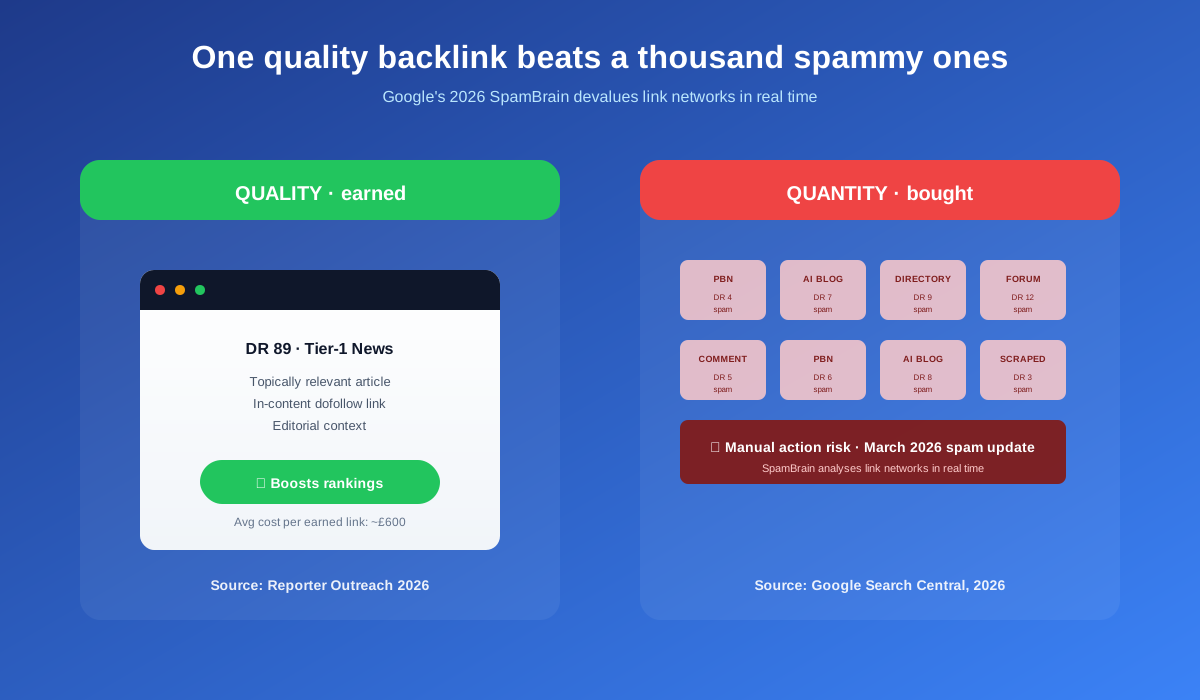
Not all links are equal. After the March 2026 spam update, Google's SpamBrain system was upgraded to analyze link networks in real time rather than during periodic algorithm sweeps. The practical effect is that the quality bar for a useful backlink is higher than it has ever been.
From our work auditing Shopify Plus backlink profiles, a high-quality backlink in 2026 has eight characteristics:
- Topical relevance: The linking page covers a topic genuinely related to the destination. A link from a sustainability publication to a sustainable homeware brand carries far more weight than a link from a generic business blog. Relevance is the multiplier most SEOs underestimate.
- Domain authority that fits the context: Higher Domain Rating helps, but only when paired with relevance. A DR 90 spam site is worth less than a DR 50 niche publication, and a DR 35 blog tightly aligned with your category can outperform a DR 70 general business site.
- Editorial placement: The link sits within meaningful content, surrounded by editorial context, not stuffed into a footer or a sidebar widget. Google's quality models now distinguish between editorial body links and boilerplate links and treat them very differently.
- Natural anchor text: The anchor reads like something a journalist would write, not a keyword-stuffed phrase you would never see in print.
- A healthy anchor text distribution across the profile: A natural backlink profile mixes branded anchors, naked URLs, generic phrases like "this guide", and the occasional partial-match keyword. If more than 15% to 20% of your anchors are exact-match commercial keywords, that's a red flag SpamBrain looks for.
- Reasonable link velocity: The rate at which new referring domains arrive should look organic. A site that earns five new referring domains a month for a year, then suddenly attracts 400 in a week, will be flagged for review. Steady, consistent growth is what natural editorial coverage looks like.
- The right link attribute: Google recognizes four link attributes that change how a link is treated.
dofollow(the default) passes ranking authority.rel="nofollow"doesn't pass ranking signals but still drives referral traffic.rel="sponsored"identifies paid placements and is ignored for rankings.rel="ugc"marks user-generated content like blog comments and forum posts and is also discounted. The links worth pursuing are dofollow editorial placements. Sponsored and ugc links can still help brand visibility, but don't expect a ranking lift from them. - Genuine intent: Google's AI now assesses why a site is linking to you. A link earned because your content is useful behaves differently to one placed in a sponsored slot.
None of these are new ideas in isolation. What is new is the precision with which Google can now identify each of them at scale. Manual reviewers used to spot-check thousands of links a month. SpamBrain now evaluates billions of link signals in close to real time, and it treats the eight elements above as a single pattern, not as separate boxes to tick.
Link tactics that no longer work (and that can hurt you)
Before getting to what works, it's worth being clear about what doesn't. The October 2025 and March 2026 spam updates explicitly targeted several tactics that were still being sold by some agencies. Using them today carries direct ranking risk, and for ecommerce sites that risk lands straight on revenue.
Private blog networks (PBNs). Networks of expired domains rebuilt purely to host paid backlinks have been a Google target for over a decade, but SpamBrain can now identify the linking fingerprint, hosting patterns, and content style of a PBN in real time. The links are devalued and the receiving site can be hit with a manual action.
AI-generated guest post farms. The March 2026 update introduced a distinct violation category for sites publishing thin, machine-generated content with the sole purpose of embedding paid backlinks. Any site you place a guest post on should have genuine editorial standards, human review, and a real audience that engages with the posts. If a service offers hundreds of placements a month at low cost, it is almost certainly running an AI farm.
Bulk directory submissions. Submitting your store to hundreds of low-quality directories was a tactic from the early 2010s. Those links are now either ignored or actively flagged. The exception is reputable, curated industry directories where placement is editorial — joining the Better Business Bureau, your local Chamber of Commerce, or a specific trade body in your category still carries trust signals.
Comment and forum profile links. Adding your URL to blog comments or forum signature fields no longer moves rankings. Most platforms now apply nofollow by default, and Google's relevance models discount the signal even when it is dofollow. Genuine, on-topic forum and community contributions are different and still useful for AI search visibility (more on that below).
Paid links without disclosure. Paying for a link without a sponsored or nofollow attribute violates Google's link spam policies and, for US brands, runs into a second problem: the FTC's endorsement guidelines require clear disclosure of any paid or material relationship behind a recommendation. The risk is not theoretical: J.C. Penney lost most of its organic visibility in 2011 after a New York Times investigation surfaced a paid-link scheme, and Forbes, BMW, and Overstock have all taken manual-action hits for similar reasons. SpamBrain's 2026 detection makes those outcomes more likely, not less. We've seen brands recover only after disavowing entire campaigns of paid placements.
Reciprocal link schemes. Agreed-upon "I'll link to you if you link to me" arrangements with unrelated businesses are pattern-detected and devalued. Natural editorial exchanges between genuinely relevant sites are fine. Schemes are not.
The pattern across all of these is the same. Google's improving ability to identify the intent behind a link means that any tactic that exists primarily to manipulate rankings, rather than to earn a recommendation, is on borrowed time.
Digital PR: the most effective link tactic in 2026
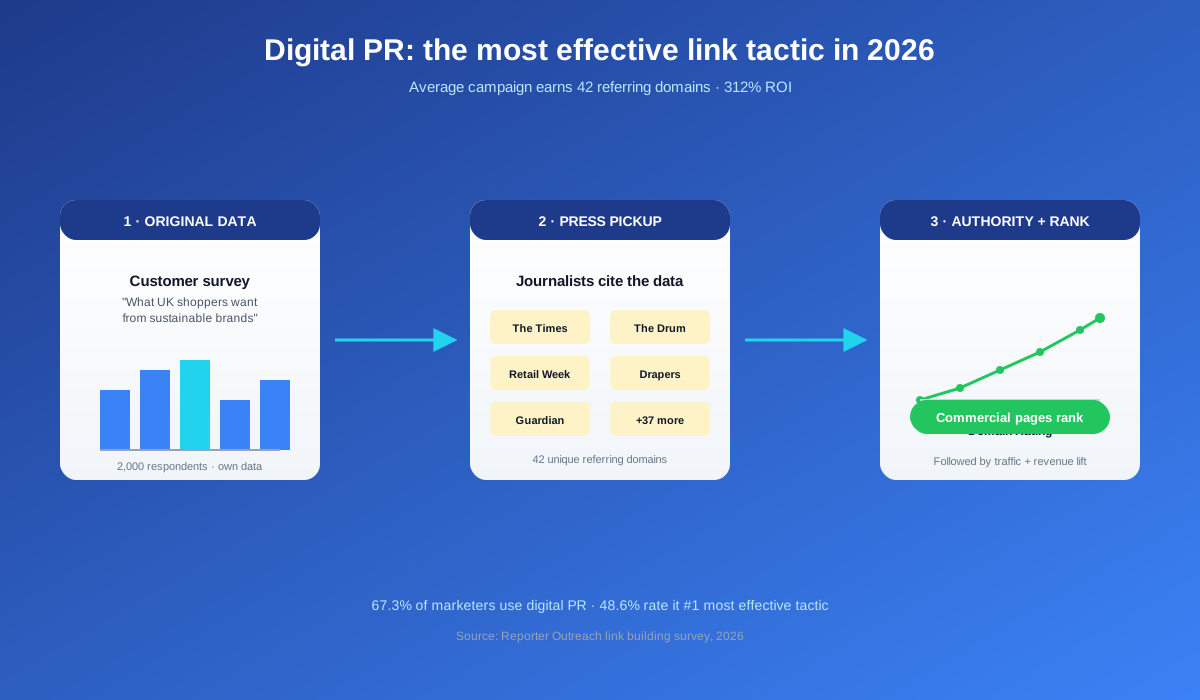
If one trend defines link building right now, it's the rise of digital PR. According to a 2026 industry survey from Reporter Outreach, 67.3% of marketers now use digital PR as a primary link building tactic, and 48.6% of SEO professionals rate it the single most effective method for earning authoritative backlinks. The average digital PR campaign earns links from 42 unique referring domains, with more than a fifth coming from publications with a Domain Rating between 70 and 79. Among the largest ecommerce sites tracked, 72% run digital PR as a core channel, compared with only 32% among the smallest. The size gap is the strategy gap.
Digital PR is the practice of creating newsworthy, citation-worthy content and pitching it directly to journalists, editors, and content creators. It is closer to traditional public relations than to traditional SEO, but the SEO benefit is substantial because the links earned are exactly the kind Google values most: editorial, topically relevant, placed in real journalism.
What makes a digital PR campaign actually work? In our experience running these for Shopify Plus brands, the campaigns that earn meaningful coverage almost always have one thing in common: original data. Over 90% of successful digital PR campaigns are built on either original research, proprietary data analysis, or expert commentary that journalists genuinely want to cite. Generic opinion pieces struggle. A well-designed survey of 2,000 of your customers does not. Blume, a wellness brand, surveyed women about their period experiences in puberty and earned coverage in Forbes and other high-authority publications from a single dataset.
For ecommerce brands, the most reliable digital PR formats are:
- Customer surveys exploring shopping behavior, category-specific preferences, or attitudes to current issues like sustainability, second-hand resale, or AI shopping assistants
- Trend reports using your own sales or browsing data to reveal what is genuinely happening in your category, with month-on-month or seasonal breakdowns journalists can build a story around
- Expert commentary from your founder or technical lead on issues journalists are already covering, fielded through platforms like Featured, Qwoted and Help a B2B Writer
- Cultural studies tied to major US shopping moments — Black Friday, Cyber Monday, Amazon Prime Day, back-to-school, Mother's Day, Father's Day — where you provide a fresh angle on a story already in the news cycle
The ROI is real. The same Reporter Outreach research puts the average ROI of digital PR campaigns at 312%, well above traditional link building approaches and ahead of most content marketing channels. US publications worth building partnerships with include the Wall Street Journal, New York Times, Bloomberg, Forbes, Fast Company, Inc., Wirecutter, RetailDive, Modern Retail and Glossy, depending on your category. For consumer lifestyle brands, GQ, Vogue, Esquire and Bon Appétit reliably link out to product recommendations from credible sources. The catch is that digital PR is harder to execute than buying links. You need a real story, a journalist list, and the patience to wait for pickup. The brands that commit to it and treat it as a long-term focus consistently outperform those that don't.
Ten ecommerce link building strategies that work in 2026
Digital PR is the most effective approach, but it isn't the only one. The brands we work with most successfully combine four or five complementary tactics. Here are the ten we see working most reliably for ecommerce sites in 2026, in roughly the order we'd prioritize them for a Shopify Plus store starting from a thin backlink profile.
1. Buyer's guides and comparison content. Long-form guides like "the best Merino base layers for cold weather running" or "the best espresso machines under $500" naturally attract links from journalists and bloggers writing about that category. They also serve as internal link hubs that pass equity to your collection and product pages. The best guides take a real position, include original testing or scoring, and answer the questions a buyer actually asks before purchase.
2. Resource page outreach. Curated resource pages in your niche already exist to link out. If your guide, calculator, or tool genuinely improves the list, a polite, specific pitch has a high acceptance rate. This is one of the easier link types to justify because the page is built to send readers elsewhere, and editors who manage resource hubs actively look for fresh additions.
3. Unlinked brand mention reclamation. Use tools like Ahrefs Content Explorer or Google Alerts to find websites that mention your brand name without linking. A short, friendly email asking for the link to be added typically converts at 20% to 40% in our experience. These are some of the highest-quality links you'll earn because the editor already chose to mention you, and the request is to improve the user experience for their readers rather than to ask a favor.
4. Broken link building. Find broken outbound links on relevant industry sites, then suggest your content as the replacement. This works because you are solving a real problem for the editor: a broken link hurts their page. Tools like Screaming Frog, Ahrefs and Check My Links can identify broken links at scale across resource pages and "best of" roundup posts.
5. Original research and surveys. Run a survey on a topic your customers care about, write up the findings with clear insights for the reader, and pitch the data to journalists in your category. This is the foundation of most successful digital PR campaigns and tends to keep earning links for years after the initial pickup. Infographics and a single hero image built from the same data give publishers a visual asset to embed, which materially improves pickup rates.
6. Expert roundups and journalist queries. Platforms like Featured, Help a B2B Writer, and Qwoted let journalists request expert quotes and surface real subject-matter expertise for the stories they are writing. Your founder or technical lead can earn high-DR placements by responding thoughtfully to a small number of relevant requests each week. The replacement for the old HARO platform, Connectively, was discontinued in late 2024, but Featured has effectively taken its role for the US market. A consistent 30 minutes a day on these platforms tends to compound into one or two quality links a week and a stream of brand mentions on top.
7. Partner and supplier partnerships. Genuine business partnerships, where a supplier lists you as a retail partner, a complementary company co-authors content with you, or two non-competing brands cross-promote each other to similar audiences, produce links that pattern-detection systems treat as natural because they reflect real commercial activity. The line you don't cross is paying for the placement.
8. Newsworthy product launches and seasonal moments. If you are launching a product that genuinely deserves coverage, a proactive press outreach campaign in the weeks before launch can earn meaningful pickup. The same principle applies to seasonal moments and major events: holiday gift guides for Thanksgiving, Black Friday, Cyber Monday and Christmas all start being researched 6 to 8 weeks before publication. Memorial Day, Fourth of July, back-to-school and Amazon Prime Day all create predictable editorial windows. Get your story and product samples in front of editors early.
9. Niche edits and contextual link insertions. A niche edit is a link placed inside an existing, already-indexed article on another site. The targets that work are blog posts that already rank for a relevant query, written by an author with a real audience, where your link genuinely improves the resource for readers. Because the page is already crawled and indexed, the link passes value quickly. Used badly, niche edits are paid-link risk; used well, with relevance-first targeting, they're one of the cleanest ways to add a link to a specific category page.
10. Inclusion in "best of" product roundups. Roundup posts like "best running shoes for flat feet" or "top kitchen mixers under $400" rank well for buying-intent queries and link directly to specific products. Wirecutter, The Strategist (New York Magazine), Forbes Vetted, and CNN Underscored are the heavyweight US examples, but every category has its own ecosystem. Getting featured earns you a contextual link from content that also drives qualified traffic. The pitch is straightforward: offer a sample, explain why your product belongs on the list, and follow up once. Editors with these posts typically refresh them annually, which creates a recurring opportunity for new entrants.
For more context on the SEO foundations that make these tactics pay off, our technical SEO for ecommerce guide covers the on-site work that ensures the link equity you earn is actually distributed across your store.
The supplier and dealer page opportunity most Shopify stores miss
One of the easiest ecommerce link building wins almost nobody talks about: ask the brands you stock to list you on their stockist or "where to buy" pages. If you're an authorized retailer for a manufacturer, the brand often maintains a dealer directory, partner page, or retail locator. Getting added is usually a single email and provides a topically perfect link from a high-trust company in your category.
The process is straightforward:
- List every brand and supplier you currently stock, including private-label suppliers if any of them have a public-facing website
- Visit each brand's site and look for "where to buy", "stockists", "authorized retailers", "find a dealer", or partner directory pages
- Email the brand's wholesale or marketing contact, explain that you're an active stockist, and request inclusion with your store URL and a short description of your business
For a multi-brand Shopify store carrying 20 to 50 suppliers, this single exercise can produce 10 to 25 relevant editorial links, most of them from sites Google already trusts in the category. They're not glamorous, but they're some of the most defensible links in an ecommerce backlink profile because they reflect a real commercial relationship.
The same principle applies to industry associations, trade bodies, certification schemes and award programs you genuinely qualify for. A vegan brand earning a Certified Vegan trademark, a sustainable homeware company joining a B Corp directory, a children's brand listed by the Toy Association, or a sportswear brand affiliated with a national sports body all gain a link that combines authority with topical relevance. Pick the associations that match your category and that your target audience already recognizes.
The product page link problem and your internal linking architecture
Here is the issue every ecommerce SEO eventually runs into: editors, journalists, and bloggers almost never link directly to a product page or a collection page. They link to articles. They link to guides. They link to data. They occasionally link to a brand's homepage. Product pages and category pages, which are the pages you most want to rank, sit in a structural blind spot. BuzzStream's most recent link building trends report found that 68% of link builders prioritize links to blog posts, while just 14% prioritize links to product pages, which gives you a sense of how hard the commercial-page link problem is to solve directly.
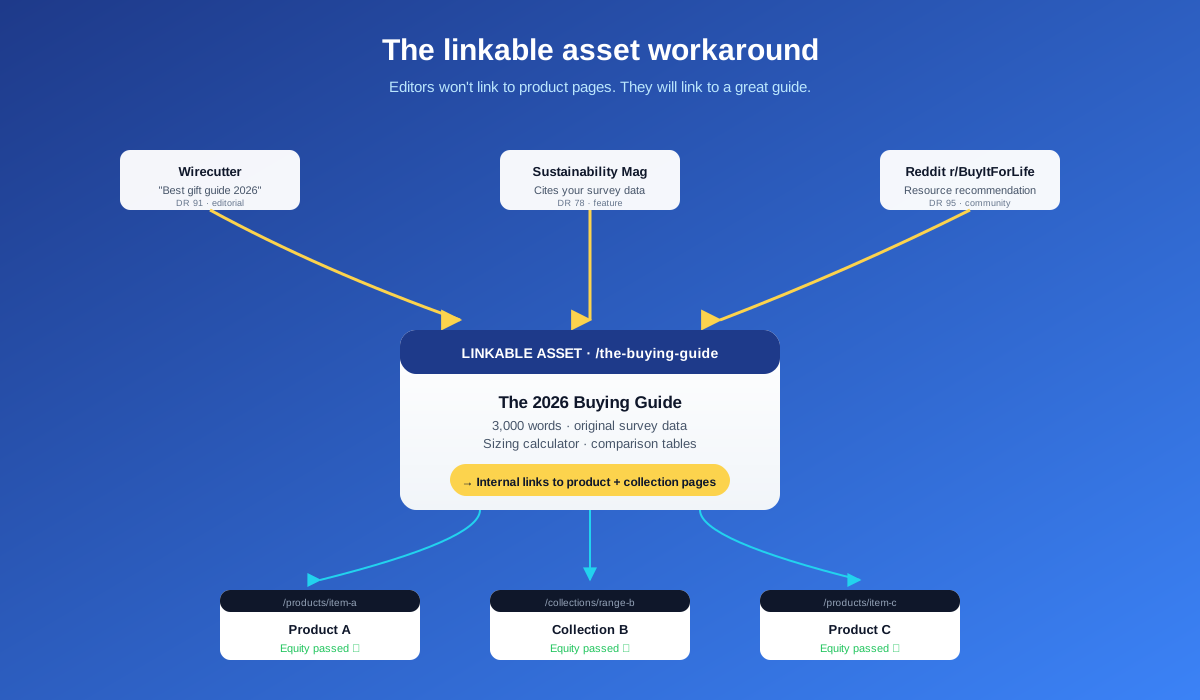
The workaround that consistently works is the linkable asset model. You build a piece of content on your own domain that genuinely deserves links, you earn those links to it, and you use internal linking to pass the resulting authority to your commercial pages.
For ecommerce sites, the linkable asset is almost always one of three formats:
- A definitive buyer's guide for a category you sell, written with depth and original perspective rather than recycled manufacturer copy
- An interactive tool like a sizing calculator, a comparison tool, a gift-finder, or a cost-of-ownership calculator
- An original data study or infographics-led report that journalists and SEOs in your category will reference for years
The asset earns links because it deserves them. Internal links from the asset then carry equity to the product and collection pages it references. The goal of the linkable asset model is to give the rest of the internet, your existing users, and AI engines a single page they want to point at — and then quietly route that authority to the pages that close revenue. Done well, this lets you rank for commercial keywords without ever needing a direct backlink to the product page itself.
This is also why our team treats SEO architecture and link building as a single discipline. The links you earn are only as useful as the internal linking structure that distributes them. A great asset with poor internal linking is a wasted opportunity, and the scale of the problem in ecommerce is bigger than most teams realize. Reboot Online's 2025 analysis of ecommerce backlink profiles found that 86% of ecommerce brands have unoptimized internal linking, and even among the highest-visibility US stores tracked, 41% are still getting internal architecture wrong. Most link equity in ecommerce never reaches the page it should.
For Shopify stores specifically, the internal linking shape is unusual and worth pointing out. The default Shopify navigation passes most equity from the homepage to collection pages, and from collection pages to products. A linkable asset sitting on a blog or content path is structurally distant from that flow. To fix it:
- Link from each content asset directly to the most relevant collection pages using descriptive, varied anchor text
- Link from the asset to two or three specific products it discusses, with anchors that read like a recommendation rather than a CTA
- Link from your main navigation, footer or homepage to the asset itself so it pulls equity from the highest-authority pages on the store
- Audit for orphaned product pages with no internal links pointing in from content; these are invisible to authority flow even when they exist in the sitemap
- Keep the click-depth shallow: any commercial page more than three clicks from the homepage will struggle to rank for competitive terms, and the deeper a page sits the more friction it adds to UX as well as SEO
This is the part most ecommerce teams get wrong, and it's also the cheapest part of a link building program to fix. The impact of a single afternoon spent fixing orphaned pages and adding contextual internal links from your three highest-traffic blog posts is often larger than a month of fresh outreach. We cover the on-page side of this in detail in our guide to optimizing collection pages for SEO.
Where to amplify link-worthy content so it actually gets seen
A linkable asset that nobody knows about is a wasted asset. The brands that earn the most links from a single piece of content are usually the ones that put real effort into distribution across the channels where journalists, publishers and creators actually spend time. Social media doesn't pass direct link equity, but it amplifies your content to the individuals who do create links and the AI systems that decide which brands to surface.
YouTube and video content. A founder explainer video, a tutorial, or a product comparison video on YouTube earns its own visibility from YouTube's recommendation algorithm and gets cited in blog posts, AI Overviews and ChatGPT product responses far more often than text alone. Video is also the format AI search engines cite most consistently when answering "how to" and "best for" questions, and the engagement signals YouTube generates feed back into both product reviews and editorial pickup. US-based reviewers on YouTube (MKBHD, The Verge, Engadget on the tech side, and a long tail of niche category reviewers) drive measurable referral traffic on top of the link impact.
Instagram, TikTok and Pinterest. These platforms drive product discovery for visual categories and feed brand mentions to creators who go on to write longer-form blog posts or YouTube reviews. Pinterest in particular acts as a long-tail visual search engine: a strong pin from a buyer's guide can drive ongoing organic traffic for years. TikTok product mentions increasingly trigger blog coverage from publishers who track viral product moments — the #TikTokMadeMeBuyIt cycle now feeds editorial coverage in Buzzfeed, PopSugar, Glossy and beyond. Instagram remains the easiest place to seed product samples with US micro-influencers and earn the contextual mentions that lead to editorial pickup.
Reddit and niche forums. Reddit's prominence in Google search results has risen sharply, and threads in subreddits like r/BuyItForLife, r/SkincareAddiction, r/MaleFashionAdvice, r/MealPrepSunday and category-specific communities now rank on page one for many product-related questions. Direct self-promotion is a fast way to a ban, but genuine, helpful discussions where your brand name comes up organically build the kind of community-led credibility that both Google and AI engines reward. Niche forums, Discord communities and Substack newsletters do the same job for narrower audiences.
Marketplaces, including Amazon, Walmart and Target Plus. A strong presence on third-party marketplaces won't usually produce dofollow links to your own store, but it builds the brand entity signals that AI search engines use to decide which companies to recommend. Yotpo's research found that brands syndicating reviews to Walmart Marketplace, Google Shopping, Amazon and Meta shops see indirect lifts in branded search and unlinked mentions, both of which feed downstream link earning. iFLY collected and syndicated 1,000 new reviews to Walmart in 40 days after migrating their reviews stack — the kind of marketplace presence that drives both direct revenue and the brand signals AI engines pick up on.
Email newsletters and industry digests. A single mention in a newsletter that goes to 50,000 industry readers — Modern Retail, Glossy, Lean Luxe, Future Commerce, 2PM — can produce more meaningful pickup than 20 social posts. Make sure trade publishers and category newsletters in your niche know when you publish anything genuinely link-worthy — a four-line note from someone on your team to a specific editor often outperforms a press release blast and lifts the chances of a follow-on blog post by the same writer.
None of these channels replace direct outreach. They give your content the exposure it needs to reach the people who do the linking, and over time they build the brand presence that makes outreach work better the next time you do it.
Brand mentions and the new AI search era
The most consequential shift in 2026 isn't a new spam update. It's the rise of AI Overviews, ChatGPT search, Perplexity, and the other AI-generated answer surfaces. These systems decide what to cite based on a different signal mix from traditional search, and the implications for link building are significant.
Research from a major analysis of AI Overview citations in early 2026 found that brand mentions correlate roughly three times more strongly with AI search visibility than traditional backlinks do. The correlation coefficient was 0.664 for brand mentions compared with 0.218 for backlinks. Put plainly: in AI search, being talked about matters more than being linked to. Ahrefs' 2025 study of 75,000 brands reached a similar conclusion, with branded web mentions showing the strongest correlation of any single factor with AI Overview visibility.
This doesn't mean backlinks no longer matter. Traditional Google search still uses links as a primary ranking signal, and AI Overviews are layered on top of the same underlying organic results. But it does mean that link building strategy in 2026 needs to optimize for two outcomes at once: links that pass authority for classical SEO, and unlinked mentions that build the entity-level signal AI systems use to decide who to cite.
In practice, this changes how we run digital PR campaigns. A press placement that mentions your brand name but doesn't include a dofollow link used to be seen as a failure. In 2026, it's a win for AI visibility even if the SEO benefit is muted. The two systems reward different things, and the most resilient brands are building for both. There's also a measurable conversion advantage: a 2026 Search Engine Land analysis of 94 US ecommerce sites found that ChatGPT referral traffic converted at a 31% higher rate than non-branded organic search, and Seer Interactive's study showed brands cited inside an AI Overview earned 35% more organic clicks than brands not cited at all. ChatGPT shopping is still small as a share of total organic revenue (around 1.48% in the same study), but it's growing fast and the conversion-rate advantage is real.
Understanding which side of the link-versus-mention split serves your goal in any given month is becoming a real skill, and the brands that get it right tend to be the ones already publishing dedicated content on AI search and using Shopify apps that surface their entity data cleanly to crawlers. The other layer worth flagging is the role of structured data and author entities. AI search systems like Google's AI Overviews, Gemini, ChatGPT search, and Perplexity rely heavily on entity recognition to decide who to cite, and they cite pages with clean schema markup, named authors with verifiable bios, and consistent brand information across the web at a much higher rate than pages without those signals. Shopify stores that publish Organization schema, BlogPosting schema with a Person author, and FAQPage schema on relevant articles materially improve their odds of being surfaced. The technical groundwork for AI citation is closer to traditional SEO than many brands realize. Our GEO optimization guide covers AI search positioning in detail, and our guide to schema markup for product data covers the structured data side.
Common ecommerce link building mistakes
Most of the link building failure cases we see auditing Shopify Plus stores trace back to a small number of repeated mistakes. Avoid these and you're ahead of the majority of competitors in your niche.
Building everything to the homepage. Your homepage already has more authority than any other page on your site. Pointing every link at it concentrates equity where it's least useful. Spread external links across content assets and collection pages so the authority lands closer to where ranking matters.
Ignoring internal linking entirely. Earning external links without a strong internal architecture is like pouring water into a bucket with holes. The 86% of ecommerce brands with unoptimized internal linking are leaking authority every day. Audit your contextual internal links quarterly and add new ones every time you publish or earn a significant placement.
Chasing high-DR placements with no topical relevance. A DR 80 link from a general business news site to your candle store does almost nothing. Relevance is the multiplier, and a DR 35 candle-and-home-fragrance blog will often outperform a DR 70 generalist publisher.
Generic, scaled guest posting. The pitch that works in 2026 is one specific, well-researched article idea sent to one publication whose audience matches yours. The pitch that doesn't work is a templated message sent to 500 sites. Google can detect the resulting footprint, and editors with any standards can spot the request the moment it hits their inbox.
Over-optimized anchor text. If every backlink to your "women's running shoes" collection uses that exact anchor, Google reads it as manipulation. Use a mix of branded anchors, naked URLs, generic phrases, and the occasional partial-match keyword. Keep exact-match commercial anchors under 15% to 20% of the total profile.
Expecting results in 90 days. A link earned this month may not move rankings for three to six. BuzzStream's industry survey found that 75% of link builders are given six months or less to prove value, which is half what the work actually needs. The brands that compound results are the ones treating link building as a 12-month program, not a campaign.
Skipping content entirely. If your site is 100% product listings with no guides, tools, examples or data, you have nothing to point outreach at. Even a small library of 10 to 15 well-built linkable assets gives a link team something to work with, and the resulting links can support every category page on the store via internal architecture. Focus your content efforts on topics with genuine commercial relevance — the resources that earn the best links are usually the ones that also serve a buying decision.
How to measure link building success
Link building is a long-horizon investment. Rankings rarely move in the first month, and the brands that abandon link building too early are usually the ones who didn't set up the right measurement framework. Here are the metrics we track for our Shopify Plus clients, in roughly the order they should improve.
Referring domains. The number of unique domains linking to your site is the most direct measure of link building output. Track it in Ahrefs or Semrush. A healthy ecommerce site should be adding 5 to 15 new referring domains a month from real link building activity. Sudden spikes can indicate spam.
Domain Rating or Domain Authority. Both Ahrefs DR and Moz DA are aggregate scores reflecting the strength of your backlink profile. They move slowly. A 5-point DR increase over a year of consistent link building is a meaningful win.
Keyword position changes on target pages. The pages you are pointing links at, directly or through internal linking from linkable assets, should see ranking improvements within 3 to 6 months. Track a basket of 20 to 30 commercial keywords against the pages they target.
Organic traffic to commercial pages. Ultimately, link building should improve revenue-generating traffic. Watch organic sessions on collection pages and high-intent product pages in Google Analytics 4 and Search Console. Improvements here are the proof that the link equity is reaching the right destinations.
Referral traffic. Good editorial links also drive direct referral traffic, especially from publications your customers read. This isn't an SEO metric, but it's a useful sanity check on link relevance. Links from genuinely relevant publications send real visitors. Links from spam don't.
Brand mentions and AI citations. Track unlinked mentions of your brand name across the web using Ahrefs Brand Radar, Google Alerts or a dedicated PR monitoring tool, and watch how often you're cited in AI Overviews and ChatGPT responses for category queries. These are the leading indicators of AI search visibility, and they tend to move before traditional search rankings do. Tracking the impact of mentions alongside links is what separates the brands compounding both signals from the ones chasing just one.
A realistic timeline for a Shopify Plus store starting with a weak backlink profile is 3 to 6 months for the first meaningful ranking lifts, and 12 to 18 months for compounding effects on traffic and revenue. According to industry benchmarks, the average cost per earned quality link in the US in 2026 sits around $750 to $950, and 64% of brands spend over $3,000 a month on link building, with the largest DTC programs running $5,000 to $10,000 a month across digital PR and niche outreach. The brands that win are usually the ones treating it as an ongoing program, not a one-off campaign. For a wider list of on-page and technical actions that pair with link building, work through our Shopify SEO checklist.
If you'd like expert support with link building and ecommerce SEO, our SEO agency team works with Shopify Plus brands on the full program: content, technical SEO, and the link building strategies that connect them. Get in touch to discuss your store.