 Nic Dunn, CEO, Charle Agency
What an Ecommerce Tech Stack Actually Is
An ecommerce tech stack is the set of connected software systems that run an online retail business, from the storefront a customer sees through to the ERP that books the revenue. It covers the ecommerce platform, payment gateway, product data, inventory and order management, marketing automation, customer support, analytics and fulfillment.
The word "stack" is borrowed from software engineering, where it described technologies layered on top of one another: a database, an application layer, a front-end. In ecommerce the layering is looser. What matters is less the hierarchy and more the joins. A tech stack is defined by how its parts exchange data, not by how many parts it has.
Front-end, back-end and the joins between them
Most ecommerce platforms now hide the traditional split. On a hosted platform the database, the cloud hosting and the back-end application are the vendor's problem, and what you control is the front-end, the plugins and apps bolted onto it, and the APIs connecting everything to your other systems. On a self-hosted platform such as Adobe Commerce you own all of it, including patching, scalability and security.
That trade is the single biggest architectural decision in the stack. Hosted platforms remove a category of work. They also remove a category of control. Neither is automatically right, and the answer depends on whether your engineering capacity is a real asset or an aspiration.
The test that actually matters
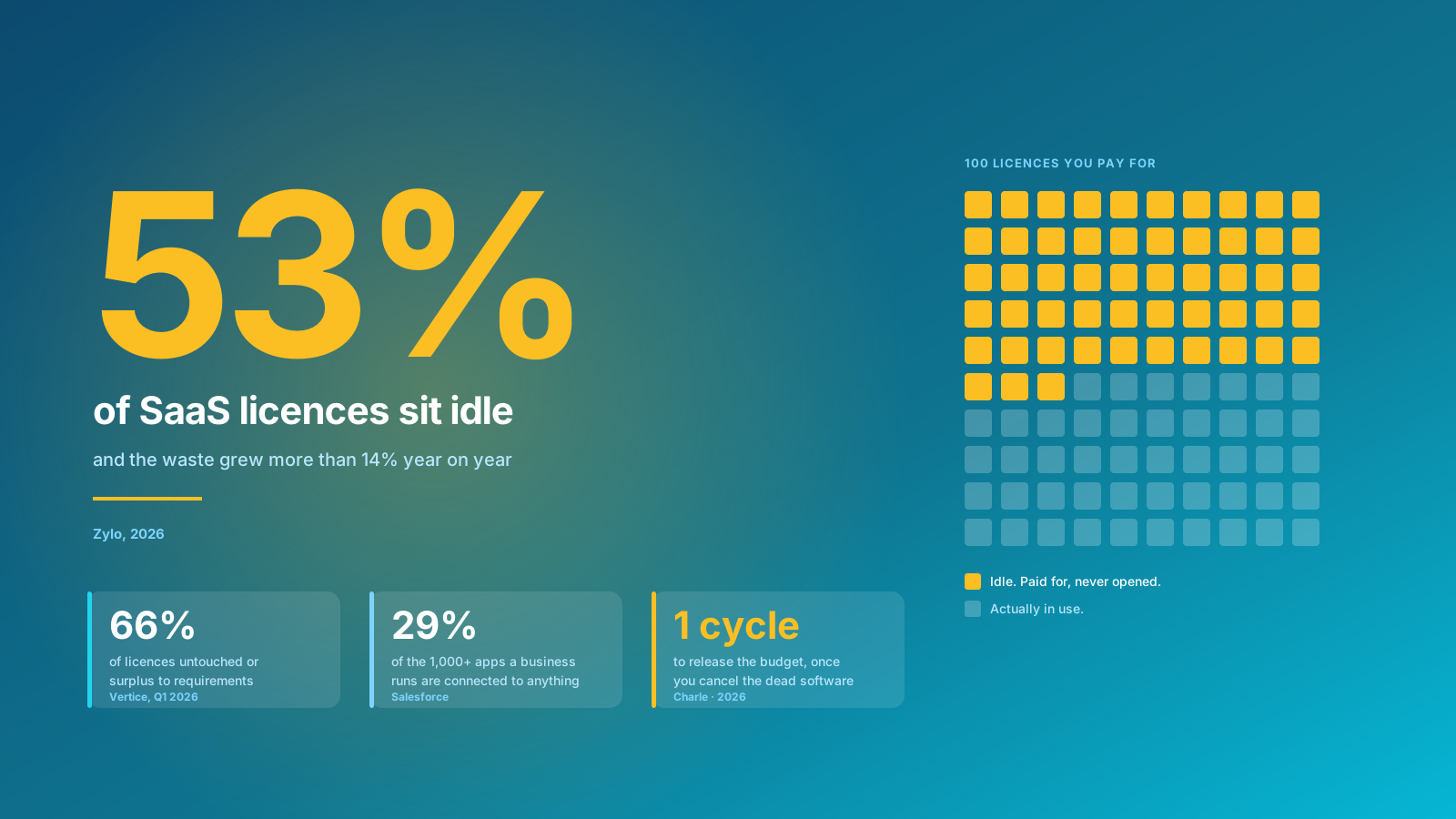
Salesforce research found that businesses typically run more than 1,000 applications with only 29% of them connected to anything else. The tools exist. The data does not move between them. Every disconnected system becomes a place where someone has to export a spreadsheet, and every spreadsheet is a decision made on stale numbers.
For a mid-market brand on Shopify, the practical test is simple. Can you answer "what is the margin on this order, after returns and shipping" without opening more than one system? If the answer is no, you have a collection of tools rather than a stack. The same test applies to stock levels, to customer lifetime value, and to sales by channel. Each of those questions crosses at least three systems, and each one exposes a different broken join.
The Layers of a Modern Ecommerce Tech Stack
Nine layers cover almost every ecommerce business. Not every brand needs all nine as separate systems, and consolidating two or three into one platform is usually the right move early on.
- Commerce platform: the storefront, catalog, cart and checkout. Shopify, Shopify Plus, Adobe Commerce, BigCommerce, WooCommerce, Centra. Platforms in this layer differ mostly on pricing model and how much of the back-end they manage for you.
- Payments and checkout: payment processing through Shopify Payments, Stripe, Adyen, PayPal or Klarna, plus the payment gateways behind them. Roughly 70% of online carts are abandoned, and around one in five of those drop-offs trace back to a cart or checkout that is unclear or slow.
- Product data: product information management (PIM) and digital asset management (DAM), holding SKUs, specifications and assets. Critical the moment you sell across more than one channel or language.
- Inventory and order management: an OMS or inventory management system that holds a single stock position and routes orders across web, retail and wholesale.
- Finance and ERP: QuickBooks, NetSuite, Microsoft Dynamics, Acumatica. This layer is where most over-buying happens.
- Content and CRM: a CMS for editorial and landing pages, plus the customer record of who bought what and the segmentation that drives everything downstream.
- Marketing and retention: Klaviyo, Attentive, Yotpo, Recharge. Email and SMS remain the highest-return channels for most DTC brands.
- Service and post-purchase: helpdesk, returns and exchanges. Gorgias, Zendesk, Loop, Returnly. This is where customer experience is either recovered or lost.
- Analytics and measurement: GA4, server-side tracking, attribution, and search performance data. Analytics is the layer that tells you whether the other eight are working.
The two layers brands consistently underrate
Product data is the one brands underestimate most often, because the pain only shows up at expansion: new market, new marketplace, new currencies, new size chart, and suddenly the catalog needs restructuring under deadline. A PIM bought calmly costs a fraction of a PIM bought in a panic.
Measurement is the other. Without reliable analytics you cannot tell whether a change moved conversion rates or whether the week was just good. Brands routinely spend six figures on operations and nothing on the ability to measure their effect.
What is optional until it is not
Everything beyond those nine is conditional. Subscriptions matter if you sell consumables. Wholesale management matters if you sell to retailers. Loyalty matters when repeat rate becomes the growth lever. Buying these before the underlying behavior exists is the most common way brands end up paying for software nobody opens.
The same applies to the options within each layer. A brand selling forty SKUs in one market does not need the personalization engine that a brand selling four thousand across nine markets does. Match the tool to the operations you actually run today.
Why Ecommerce Tech Stacks Go Stale
Stacks rarely fail all at once. They decay through four specific routes, and recognizing which one you are dealing with changes the fix.
1. The platform stops keeping up
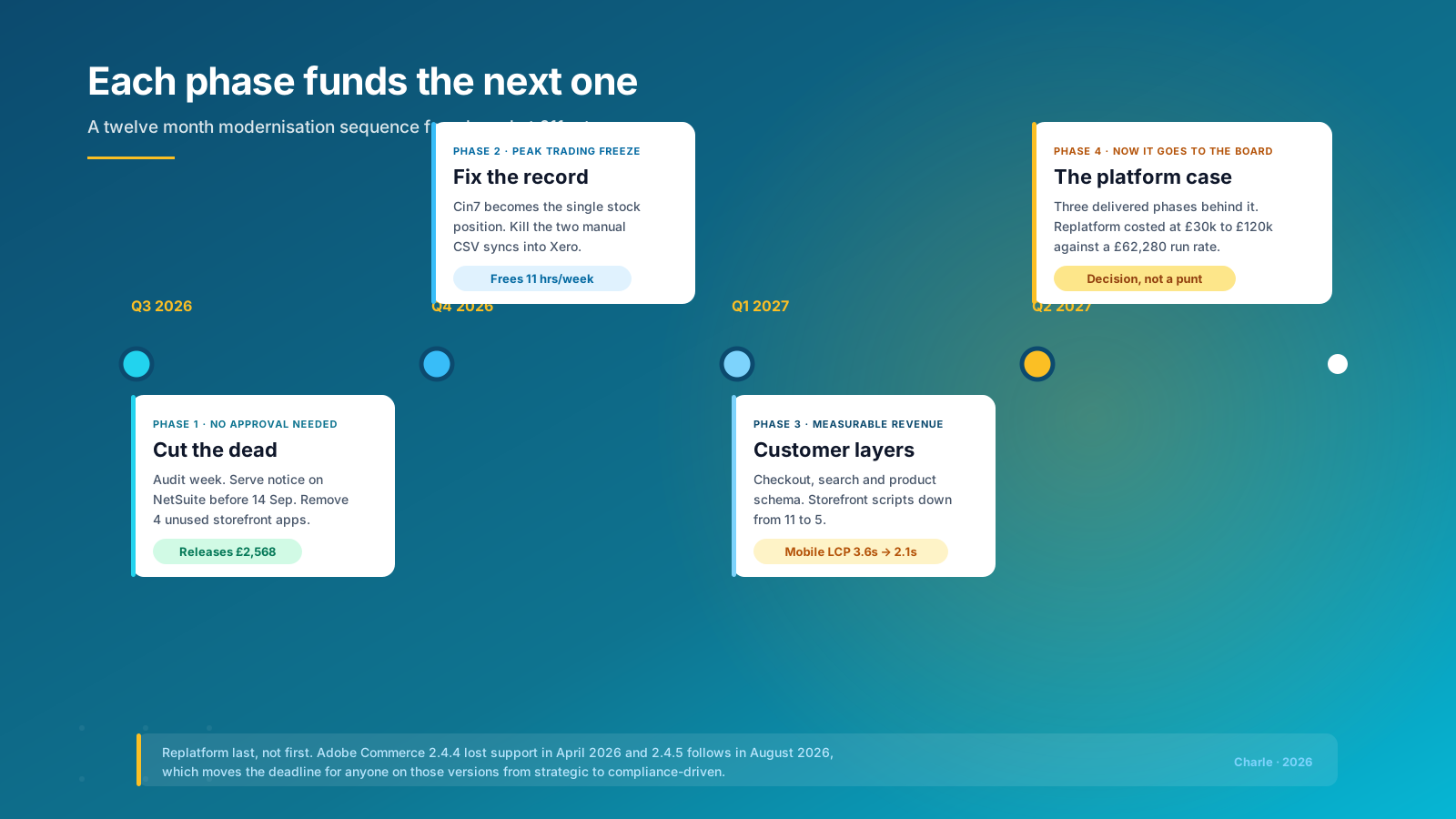
This is the loudest failure and often the least urgent. A platform becomes a genuine constraint when it blocks a revenue-generating change, not when it feels dated. The exception is when support ends. Adobe Commerce 2.4.4 reached end of support in April 2026 and 2.4.5 follows in August 2026, which turns a strategic question into a PCI compliance and security question for anyone still on those versions. Unpatched payment processing is not an architecture debate.
2. Tools accumulate faster than they are removed
Nobody plans app sprawl. It arrives one urgent request at a time. Industry data on software waste is consistent and grim: Zylo's 2026 analysis found 53% of SaaS licenses sit idle, with waste growing more than 14% year on year, while Vertice put the share of untouched or surplus licenses at 66% in Q1 2026. The same dynamic runs through ecommerce app stacks, just with smaller invoices and less scrutiny, because a $59 monthly plugin never reaches the finance review that a $59,000 platform does.
3. The stack was bought for a future that has not arrived
Ben Hardy, Chief Operating Officer at Astrid & Miyu, described this well at the UK Retail Technology Show. At around £9 million in revenue, roughly $11 million, his team kept being told they needed an ERP, and chose an inventory management system instead, on the basis that the cost and complexity of ERP would have slowed them down exactly when they needed to move. The brand then pivoted quickly onto trends like welded bracelets going viral. Buying for the business you hope to be is how stacks get heavy before they get useful, and how scalability you will not need for three years starts costing you today.
4. Nobody owns the joins
Individual tools have owners. The integrations between them usually do not. When a sync breaks, it breaks quietly, and someone starts reconciling by hand. That manual workaround then becomes the process, and the broken integration never gets fixed because a person is now doing its job.
These four failures compound. A dated platform makes integration harder, which encourages point solutions, which multiply the joins nobody owns. By the time it surfaces as a strategy problem it has usually been an operations problem for two years.
How to Audit Your Stack in a Week
Before changing anything, get an honest picture of what you are running. This takes about a week of part-time effort and it is the single highest-return exercise in the whole process.
Day one: list everything, including the invoices
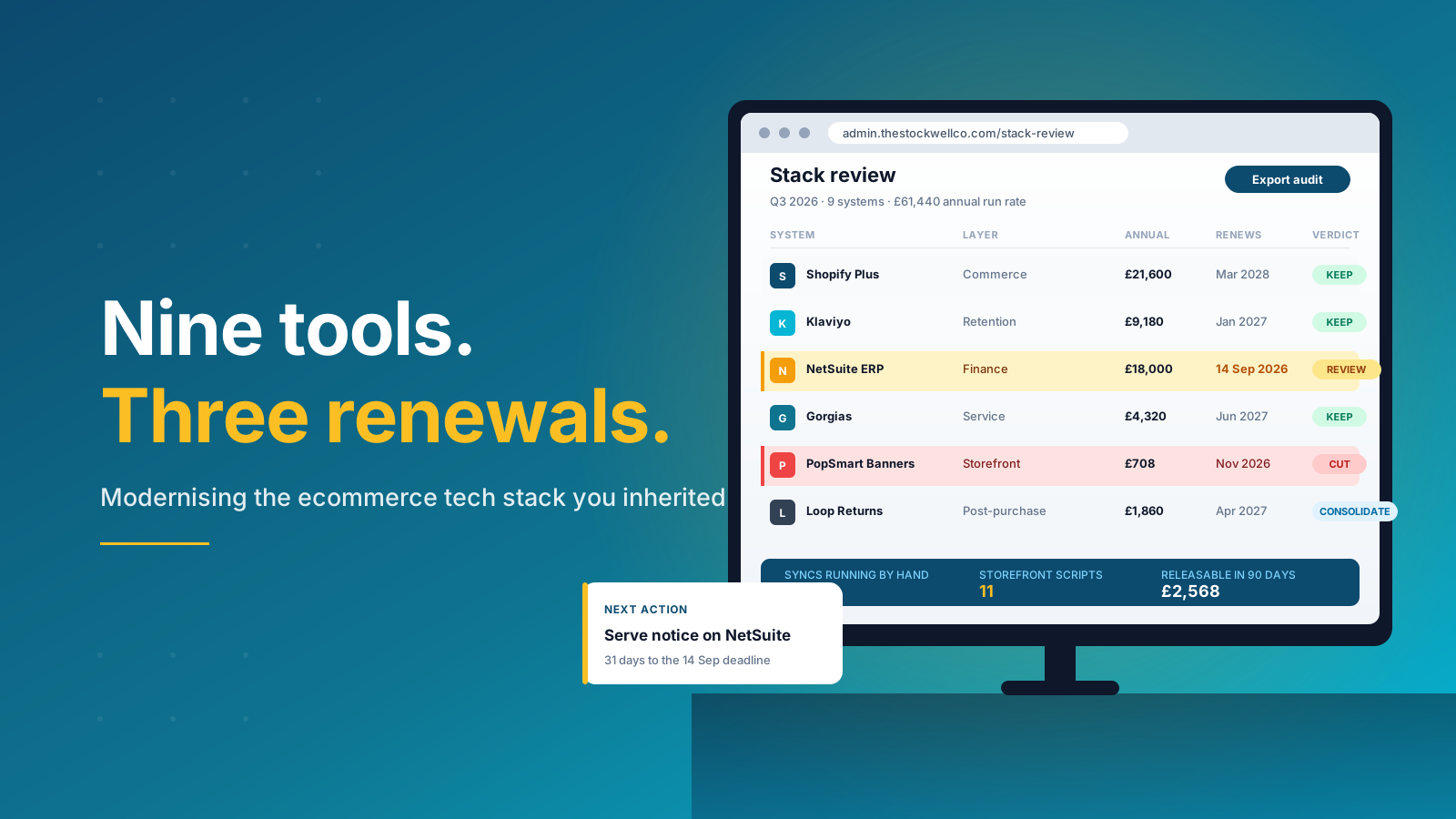
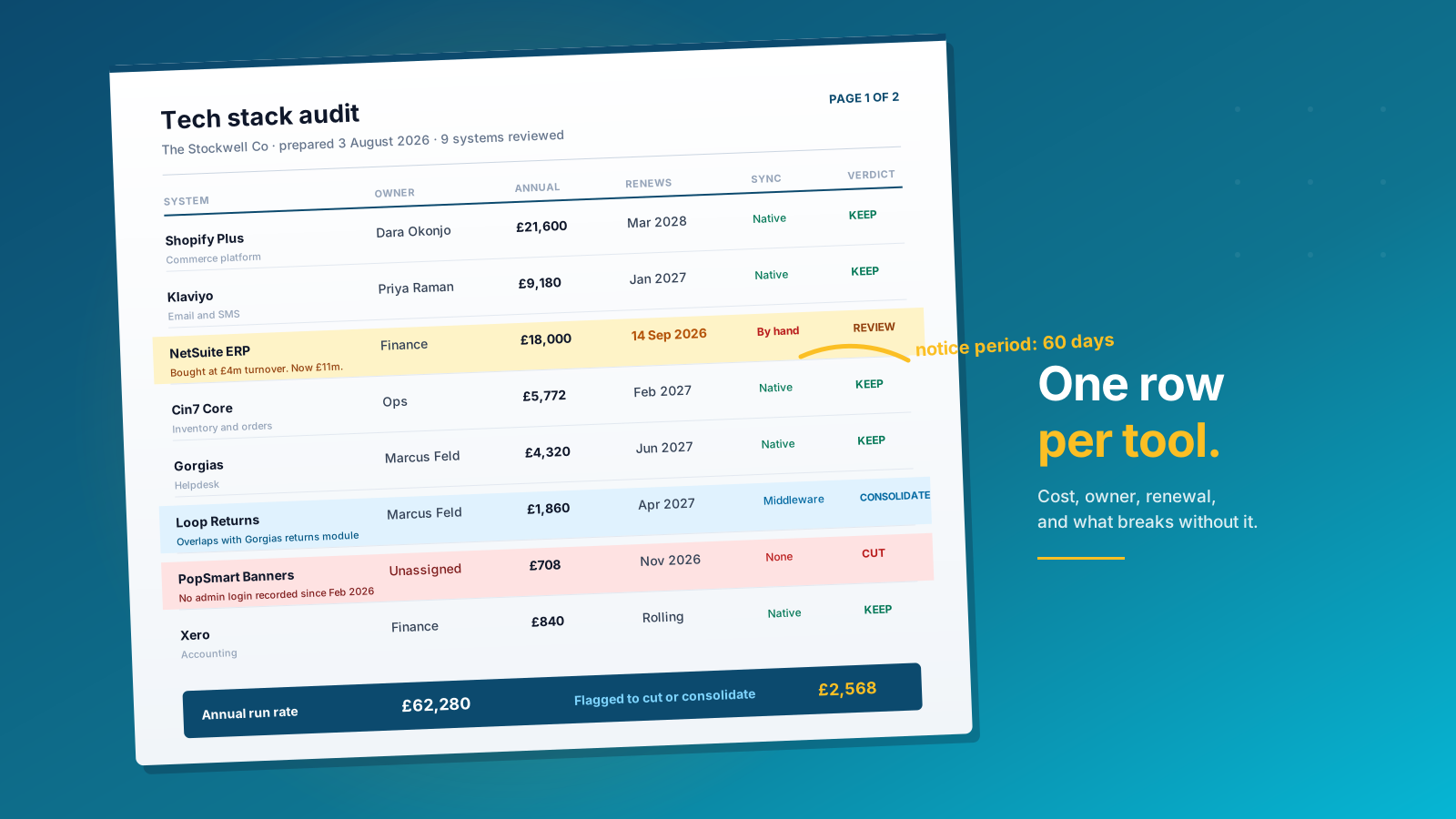
Pull your Shopify app bill, your card statements, and your accounts payable ledger. Software that nobody remembers buying shows up in the ledger long before it shows up in a conversation. Build one row per tool with five columns: what it does, who owns it, annual cost, renewal or notice date, and what breaks if it disappears tomorrow. Include pricing tiers, because several tools will have quietly moved up a band as your order volume grew.
Day two: map the data flows
For each tool, write down what data goes in and what comes out, and by what mechanism. Native integration, an API, middleware, CSV upload, or a person. The rows where the mechanism is "a person" are your real backlog. Pay particular attention to anything touching orders, stock levels or customer records, because those are the joins whose failure is expensive rather than annoying.
Day three: check actual usage
Log in. Most platforms show last activity or seat usage. A tool that no user has opened in ninety days is either automated in the background or dead, and it is worth knowing which. Check which team members hold logins too, because orphaned admin access is both a security issue and a sign that nobody owns the tool.
Day four: measure the performance cost
Run PageSpeed Insights against a product page, then look at what is loading. Every storefront app and plugin is adding weight to a page a customer is waiting on. Note which scripts fire before the cart and checkout render, because those have the most direct effect on sales.
Day five: score and sort
Give every tool one of four verdicts. Keep, because it earns its place. Consolidate, because another tool in the stack already does this. Replace, because the job matters but this tool is failing at it. Cut, because nothing depends on it. Resist the urge to add a fifth option for tools you feel uncertain about, because uncertainty is how software survives audits.
Richard Voyce, technology lead at UK retailer The Conran Shop, uses a version of this that we like: a live spreadsheet of agencies, vendors and suppliers with agreement deadlines, so that when a contract flashes red it becomes a prompt to count how many problems that supplier has caused. Renewal dates are leverage. Most brands discover theirs a two weeks after auto-renewal, at which point the decision has been made for them.
What to Replace First
When several parts of the stack are dated at once, sequencing matters more than selection. Replace in the wrong order and you rebuild the same integration twice.
First, the systems of record
If your stock position is wrong, no amount of clever merchandising fixes it. Inventory, order and product data sit upstream of almost everything else, so they get resolved first. Replacing a review app while your catalog data is unreliable is decorating a house with a leaking roof. This is also the layer where consolidation pays fastest, because a single reliable source for SKUs and stock levels removes work from every team that touches orders.
Second, the platform, but only if it is genuinely blocking
Replatforming is the most expensive move available. A Magento to Shopify migration typically runs $25,000 to $150,000 depending on complexity, and B2B, multi-store or ERP-integrated builds commonly reach $80,000 to $250,000. The case usually stacks up on total cost of ownership rather than features: legacy Magento estates commonly cost $50,000 to $150,000 a year in hosting, maintenance and developer time, before anyone has shipped a new feature. Compare that against the pricing of hosted ecommerce platforms and the arithmetic often settles the strategy on its own. We covered the decision in more depth in our guide to ecommerce platform migration versus optimization.
Third, the layers customers feel
Cart and checkout, search, product pages, post-purchase. These have the shortest path to revenue and the clearest measurement, which makes them useful for funding the rest of the program. Improvements here show up in conversion rates within a reporting cycle, which is the kind of evidence that keeps a modernization budget alive.
Last, the layers only your team feels
Reporting tools, internal dashboards, workflow software. These are genuinely valuable and they are also the easiest to defer, because the cost of the current version is absorbed by people rather than customers.
One rule cuts across all of it: consolidate before you specialize. If three tools each solve a third of a problem, one platform that solves two thirds of it is usually the better stack, even though it is the worse product on paper. Every integration you remove is an integration that cannot break.
The App Sprawl Tax on Shopify
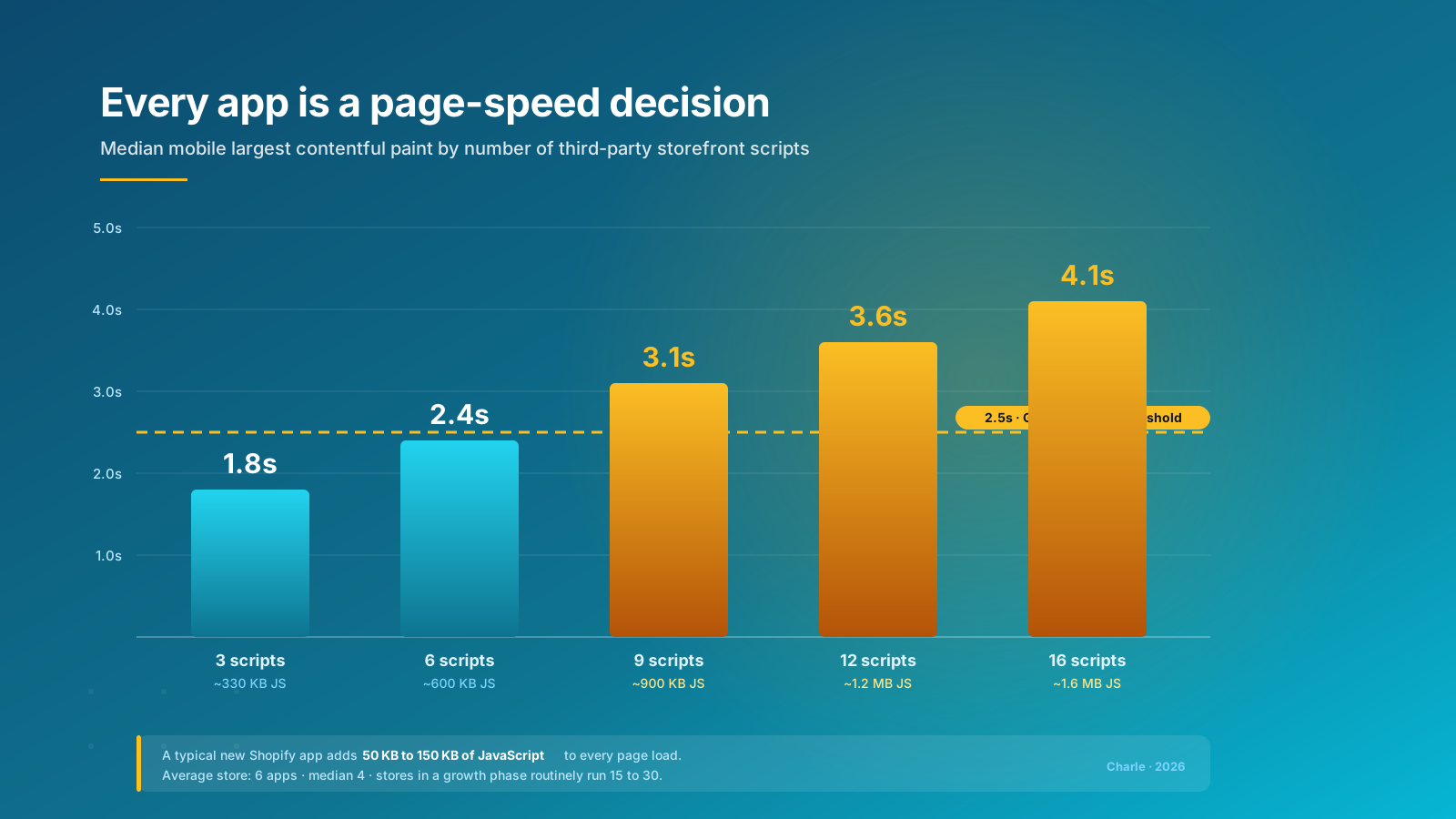
Shopify's app ecosystem is the platform's biggest advantage and its most reliable source of self-inflicted damage. The average Shopify store runs around six apps with a median of four, but stores in a growth phase routinely stack fifteen to thirty.
The performance cost
The cost is not only the subscription. Every storefront app or plugin that injects JavaScript adds to what the user's browser has to download and execute. A typical new app contributes 50KB to 150KB of JavaScript to every page load. The effect compounds: stores loading more than eight third-party app scripts show a median mobile largest contentful paint above 3.0 seconds, while stores running three or fewer stay under 2.0 seconds. Largest contentful paint is the Core Web Vitals metric most Shopify stores fail on, and it correlates directly with conversion rates.
The damage concentrates where it hurts most. Scripts that fire on product pages and in the cart delay the moment a customer can act, and every additional second between intent and checkout is a share of sales you do not get back. Page speed optimization on Shopify is mostly app triage, not clever engineering.
The duplication cost
Paying twice for the same capability is extremely common because features migrate. Your email platform adds reviews. Your helpdesk adds live chat. Your theme ships with a countdown timer. The apps you bought for those jobs stay installed because removing them feels risky, and now three systems are competing to own the same interaction, each with its own pricing tier and its own scripts.
How to unwind it
The practical fix is unglamorous. Audit storefront apps separately from back-office apps, because only the first group carries a performance tax. For each one, disable it, measure the page, and see whether anything or anyone notices. Keep a written record of what each app is for and who asked for it, so the next person does not have to reverse-engineer the decision. Our guide to the best Shopify apps covers which categories genuinely justify a dedicated tool.
Composable, Headless or Hybrid
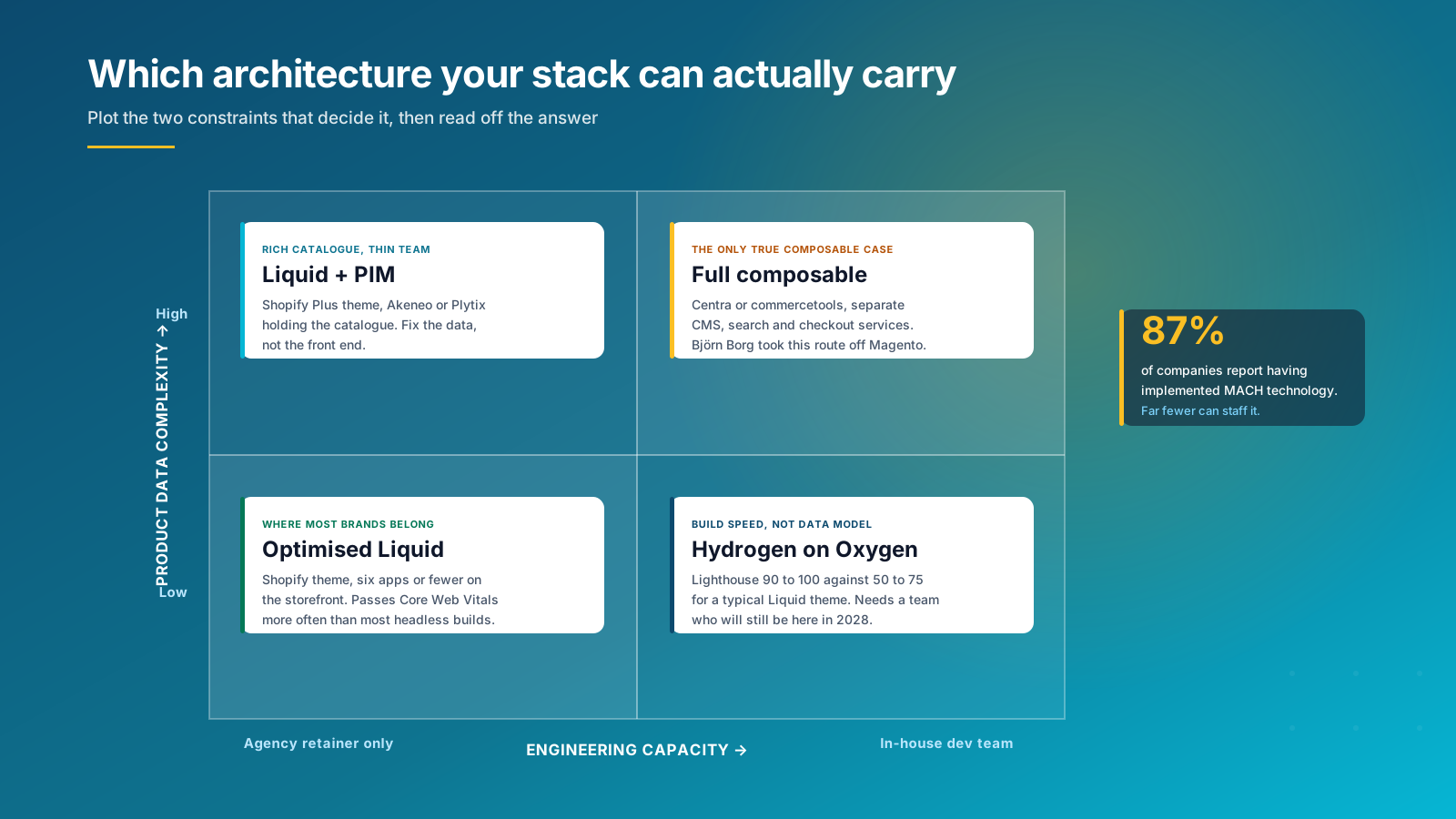
Composable commerce is the architectural answer to stale stacks: build from independently replaceable services connected by APIs, so any component can be swapped without touching the rest. Adoption figures are high, with 87% of companies reporting they have implemented MACH technologies and the average technology stack expected to be around 61% MACH-based.
When composable earns its cost
The argument is real. Centra documents fashion brands including Björn Borg moving off monolithic Magento estates specifically because apparel product logic, with its sizes, colors, cuts and market-specific size charts, does not fit neatly into platforms designed for simpler catalogs. When the constraint is genuinely the data model, the flexibility and scalability of a composable stack pay for the extra operations overhead. Brands selling into multiple markets with different currencies, tax treatments and fulfillment partners tend to reach that point first.
When it does not
The counter-argument is the one the composable literature tends to skip. On Shopify specifically, headless is no longer exotic. Hydrogen on Oxygen is a mature option in 2026 and posts Lighthouse scores in the 90 to 100 range against 50 to 75 for typical Liquid themes. In the field, though, Shopify's own data shows Liquid storefronts passing Core Web Vitals at higher rates than most headless implementations, because a synthetic optimization score and a well-run production site are different things. A composable front-end still needs someone to own its hosting, its build pipeline, its CMS integration and its security patching, and those roles are easier to write into a plan than to fill.
Our position
Headless is a good decision when three conditions hold together: you have engineering capacity or a long-term agency relationship, you have a specific business problem that Liquid cannot solve, and Shopify is your long-term commerce home. Where only one or two hold, a well-optimized Liquid theme with a disciplined app stack beats a headless build with nobody to maintain it. We have written more on this in our guide to composable commerce and our look at headless brands on Shopify.
The Layer Most Stacks Are Missing
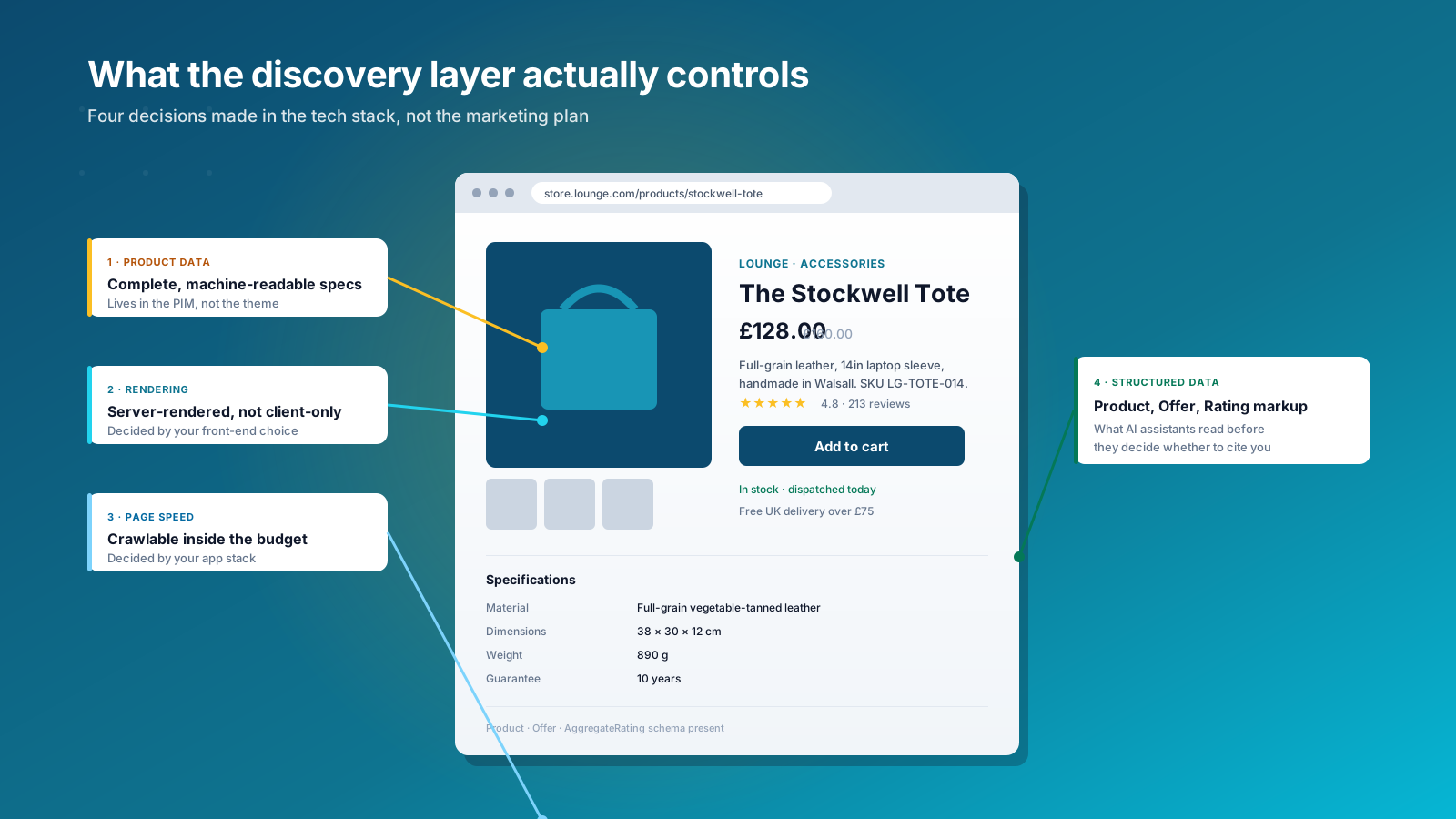
Read the standard ecommerce tech stack guides and one layer is absent from all of them: discovery. Platform, payments, ERP, email and analytics all get their section. How customers find the brand in the first place gets treated as a marketing activity rather than a piece of infrastructure.
That made sense when discovery meant buying ads. It makes much less sense now. Google search results carry AI Overviews, and a growing share of product research starts inside ChatGPT, Perplexity and Gemini rather than a search box. Those systems read structured data, they favor pages that answer questions in quotable form, and they cite sources that are technically legible.
Why this is an infrastructure problem
Whether your product schema is complete, whether your collection pages render server-side, whether your specifications are machine-readable, and whether your site is fast enough to be crawled properly are all decisions made in the tech stack, not the marketing plan. A headless build with poor schema is less discoverable than a plain Liquid theme with good schema. The same is true across marketplaces and channels: the quality of your product data decides how well you show up everywhere it is syndicated.
What owning the layer looks like
Treat discovery as a named layer with an owner, the same as payments or fulfillment. In practice that means structured data coverage across products and collections, server-rendered content for anything you want indexed, a measurement setup in your analytics that reports on organic and AI-sourced traffic separately, and someone accountable for all three. Give it a place in the stack diagram and a line in the budget, or it will keep being nobody's job. Our technical SEO guide for ecommerce covers the implementation detail.
Budgeting the Modernization
Modernization programs fail on funding more often than on technology. The costs are visible and immediate while the benefits are diffuse and delayed, which is a difficult shape to take to a board.
The pricing you are comparing against
Start with the honest numbers. Shopify Plus in the US starts at $2,500 per month on the flat-rate model, which applies while monthly platform revenue stays under roughly $800,000, after which variable platform fees take over. Standard Shopify plans start at $39 per month, so the pricing question is really about which tier your order volume and feature requirements put you in. A migration from a legacy platform runs $25,000 to $150,000 for most mid-market brands. App and SaaS subscriptions across a growing stack commonly land between $250 and $1,000 a month, and agency support sits on top of all of it.
The cost you are already paying
Set those against what the current stack costs, which is almost always understated. Count the licenses nobody uses, the cloud hosting and patching on self-managed infrastructure, the developer time spent maintaining custom integrations and their databases, and the hours your team spends moving data by hand. That last figure is usually the largest and the least documented, because it never appears on an invoice.
Fund it in phases that each pay for the next
Cut the dead software first, because it releases budget within one billing cycle and requires no approval. Use that saving to fund the consolidation work, which reduces integration overhead. Use the operational time released to fund the customer-facing improvements, which produce measurable revenue. Only then take the replatform to the board, with three completed phases behind you and a track record rather than a business case built on hope.
Set a review cadence and keep it. Quarterly, check that each tool is still doing the job it was bought for. Annually, review the whole stack for cost, complexity, scalability and performance. The brands that avoid the next round of decay are the ones that treat this as maintenance rather than a project.
Ecommerce Tech Stack Examples by Stage
Stack requirements track revenue and operations rather than ambition. These are the shapes we see working, based on the Shopify builds we have delivered.
Under $1M: five tools, no more
Shopify with Shopify Payments, Klaviyo for email, a shipping integration such as Shippo or ShipStation, GA4 for analytics, and QuickBooks. Inventory and orders live in Shopify. There is no ERP, no PIM, and no helpdesk beyond a shared inbox. Anything else at this stage is buying complexity you then have to manage, and complexity at this scale is paid for in the time of the two or three people who can least spare it.
$1M to $10M: the consolidation years
Shopify or Shopify Plus, Klaviyo across email and SMS, a dedicated helpdesk once ticket volume passes what an inbox can hold, a returns platform to protect customer experience, and an inventory management system before an ERP. This is the range where app sprawl does the most damage, because the team is growing faster than its documentation and every new hire brings a preferred tool. It is also where a second sales channel usually appears, which is what turns product data from a tidy-up job into a real system.
$10M and above: integration becomes the job
Shopify Plus, a PIM if you sell across markets or channels, a genuine ERP, an OMS holding a single stock position across retail, wholesale, marketplaces and web, server-side tracking, and a defined discovery layer. At this scale the differentiator is not which platforms you have picked, because everyone has broadly the same list. It is whether the data moves between them without a person in the middle, and whether the team can answer a question about margin or stock without three exports and a reconciliation.
The pattern across all three is the same: fewer systems, better connected, reviewed on a schedule. A stack of five tools that share data cleanly will beat a stack of twenty that do not, at every revenue level.
If you are working through a modernization and want a second opinion on sequencing, our Shopify Plus agency team runs stack audits as a standalone piece of work. Get in touch to talk it through.