 Nic Dunn, CEO, Charle Agency
How We Picked These Agencies (And Why Charle Is Not On The List)
Read enough of these rankings and a pattern emerges. Most of the pages competing for this term are directories rather than editorial, and every one of them has a commercial layer. One sorts by "Sponsored" unless you change it and discloses that certain agencies pay for placement. One ranks agencies in randomized order within quality tiers and says so, which is the most honest position in the category. One weights AI visibility at 60% of its score, measured across 200 tracked prompts, with no weighting at all for client outcomes or awards.
Charle is a Shopify agency. We build and grow ecommerce stores. We do not sell social media management, we are not competing for the same brief, and no agency on this list has paid us anything. That is the whole reason this ranking is worth reading: we have no position to defend and no bottom line riding on which name sits at number one.
Here is the methodology, stated plainly so you can disagree with it.
Verified client outcomes. We looked for case studies that name a client, a starting position and a finishing number. Follower growth on its own does not count. An agency that cannot show the brief alongside the campaign is showing you a portfolio, not a track record.
Depth in a named discipline. Some of these teams are closer to a branding studio, some are closer to a performance shop, and knowing which you are looking at saves a wasted quarter. Social has fragmented into distinct disciplines, and organic community management, paid social media advertising, creator programs and content production now demand different skills and different creatives. Agencies that claim all of them equally are usually subcontracting most of them.
Platform relationships and certifications. Meta Business Partner, TikTok Marketing Partner and Google Premier Partner status all require sustained spend and passed assessments. Combined with verified review platforms and industry recognition, they are the closest thing this category has to independent verification.
Published thinking. We read each agency's blog and trend research. Agencies that publish specific, checkable observations about platform behavior tend to run on evidence internally too, and the ones producing generic listicles tend to produce generic work. It is an imperfect proxy that has never once misled us.
Transparency about scope and pricing. Agencies willing to tell you what a retainer covers before you sign are usually the ones who will tell you what went wrong in month four. Evasiveness at the sales stage is predictive.
Independent verification. Where an agency claimed a headcount, a client or an acquisition, we checked it. Several claims from other rankings did not survive that check, which is why the list below is 12 names rather than 25.
Best US Social Media Agencies: Comparison Table
Here is a quick comparison of the 12 best social media marketing agencies in the USA for 2026. Each agency has been evaluated on their expertise, client results, team size, and specializations.
| Rank | Agency | Location | Specialism | Best For |
|---|---|---|---|---|
| 1 | The Social Shepherd | UK + US | Full-service, results-driven | Brands wanting ROI focus |
| 2 | Disruptive Advertising | Utah | Performance marketing | Revenue-focused brands |
| 3 | Sociallyin | Atlanta | Creative and community | Engagement-focused brands |
| 4 | LYFE Marketing | Atlanta | Full-service SMM | Small to mid-size brands |
| 5 | NoGood | New York | Growth marketing | Startups and scale-ups |
| 6 | Firebelly Marketing | Indianapolis | Social-only focus | Food and beverage |
| 7 | Fresh Content Society | Chicago | Content creation | Content-heavy campaigns |
| 8 | We Are Social | NYC + LA | Global creative campaigns | Enterprise brands |
| 9 | inBeat Agency | Montreal + US | UGC and micro-influencers | Influencer campaigns |
| 10 | Silverback Strategies | Washington DC | Data-driven social | Analytics-focused brands |
| 11 | Movement Strategy | New York | Community building | Community-led growth |
| 12 | Sculpt | Iowa City | B2B social | B2B and tech brands |
12 Best Social Media Marketing Agencies in the USA (2026)
We have researched, reviewed, and in some cases worked alongside these agencies over the years. Here are our picks for the best social media marketing agencies in the USA for 2026, with honest assessments of what each does well and where they excel.
1. The Social Shepherd
- Location: UK and US offices
- Team Size: 70+ specialists
- Notable Clients: Uniqlo, easyJet Holidays, Premier Inn, Passenger, Bio Oil
- Best For: Brands wanting measurable ROI from social
The Social Shepherd has earned its reputation as one of the leading social media agencies through consistent delivery of results. They won Best Large Social Media Agency at the UK Social Media Awards in both 2023 and 2024, and took Social Media Agency of the Year at the UK Agency Awards in 2025. Their US presence means American brands can access this award-winning expertise.
What sets The Social Shepherd apart is their focus on outcomes rather than vanity metrics. Their team of over 70 specialists covers organic social, paid social, creative content, and influencer marketing. They hold Meta, Google Premier Partner, TikTok, and Pinterest partner status, giving them early access to platform features and beta tests that benefit their clients.
Their influencer marketing approach deserves special mention. Rather than relying purely on technology to find influencers, they take a human-led approach backed by data. Their team thoroughly vets potential partners before any campaign launches, examining past performance and audience authenticity. This results in influencer campaigns that actually convert rather than just generate impressions.
Key services: Organic social media management, paid social advertising, creative content production, influencer marketing campaigns, TikTok strategy, social commerce.
Why choose them: If you want an agency that treats your budget like their own and focuses relentlessly on return on investment, The Social Shepherd delivers. Their award-winning track record speaks for itself.
2. Disruptive Advertising
- Location: Pleasant Grove, Utah
- Team Size: 150+ employees
- Notable Clients: Adobe, Death Wish Coffee, Guitar Center, Nani Swimwear
- Best For: Brands focused on revenue, not vanity metrics
Disruptive Advertising is a performance-driven social media marketing agency that focuses on turning clicks into measurable revenue. With over $1 billion in paid social ad spend managed, the agency prioritizes real ROI over vanity metrics. Their client roster includes major brands like Adobe, Death Wish Coffee, and Guitar Center.
What makes Disruptive different is their obsession with measurement and optimization. They do not just run campaigns and hope for the best. Every dollar spent is tracked, analyzed, and optimized for performance. For ecommerce brands especially, this data-driven approach translates directly to revenue growth.
Their team specializes in paid social across Meta, TikTok, LinkedIn, and Pinterest. They also offer creative services to ensure ad content performs as well as the targeting and bidding strategies behind it. This integrated approach means creative and media work together rather than in silos.
Key services: Paid social advertising, social media strategy, creative production, landing page optimization, analytics and reporting.
Why choose them: If you care about revenue more than follower counts and want an agency that lives and breathes performance marketing, Disruptive Advertising has the track record and expertise to deliver measurable results.
3. Sociallyin
- Location: Atlanta, Georgia
- Team Size: 50+ employees
- Notable Clients: Dick's Sporting Goods, Toyota, Samsung, TGI Friday's
- Best For: Brands wanting creative campaigns with community focus
Sociallyin serves clients across a wide range of industries with a hands-on, collaborative approach. Their team of creative strategists, analysts, and social media specialists focuses on developing custom content, influencer campaigns, community management, and social advertising strategies. Reviews highlight a 100% satisfaction rate with clients praising their flexibility and responsiveness.
Their Atlanta headquarters houses content studios for photography and video production, meaning creative work stays in-house rather than being outsourced. This allows for faster turnarounds and better quality control on visual content that performs well on social platforms.
Sociallyin takes community management seriously, understanding that social media is not just about broadcasting but about building genuine relationships with audiences. Their community managers engage authentically rather than using canned responses, which builds brand loyalty over time.
Key services: Social media management, content production, community management, paid social advertising, influencer marketing, social selling.
Why choose them: If you want a hands-on partner that treats your social presence like their own and excels at community building, Sociallyin brings creative talent with a collaborative approach.
4. LYFE Marketing
- Location: Atlanta, Georgia
- Team Size: 50+ employees
- Notable Clients: Small to mid-size businesses across industries
- Best For: Growing businesses wanting full-service support
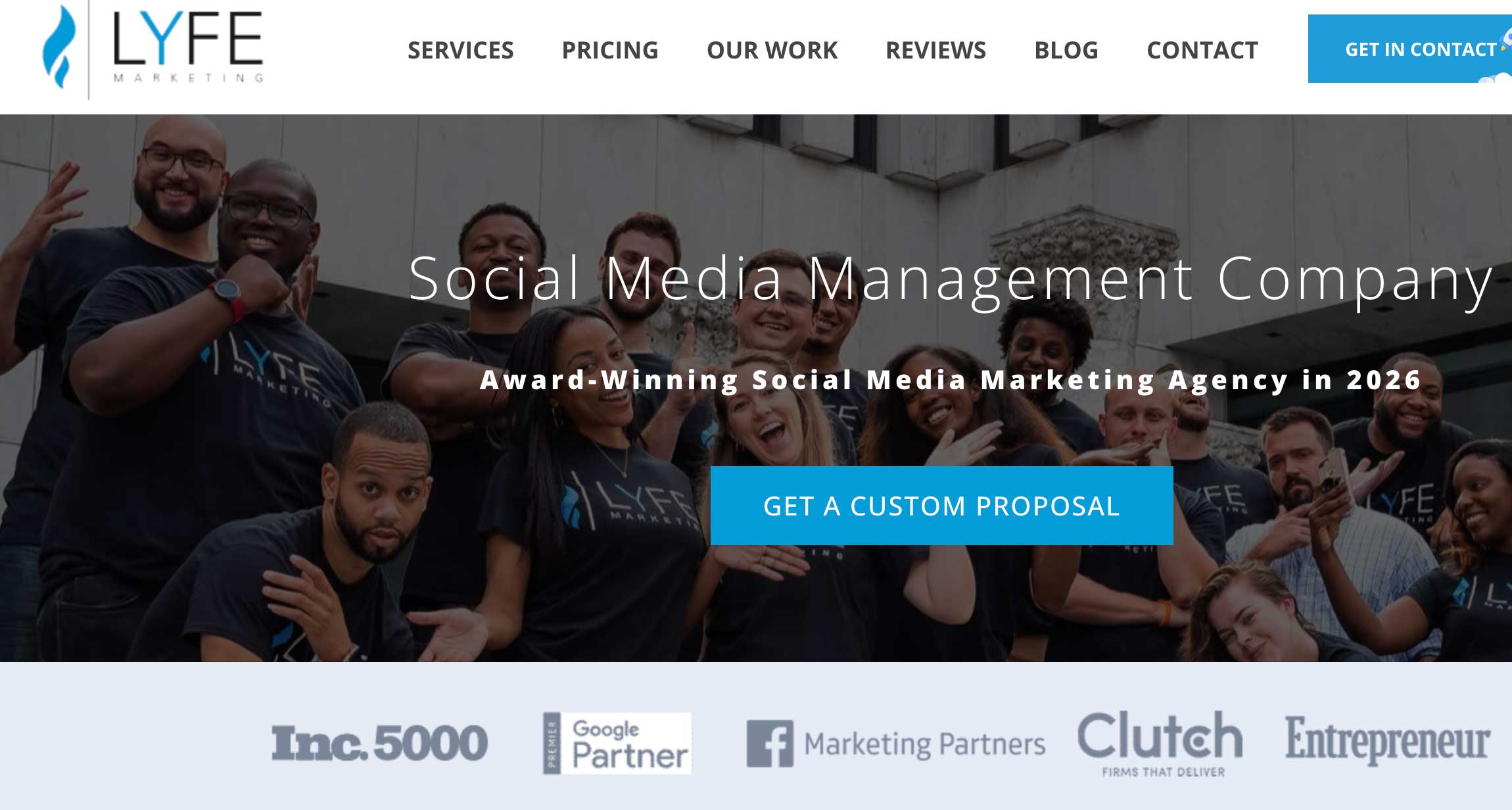
LYFE Marketing is an award-winning social media agency that has generated over $304 million in revenue for their clients. They specialize in helping small to mid-size businesses grow through comprehensive social media marketing services that include both organic and paid strategies.
What sets LYFE apart is their focus on accessibility. While many top agencies price out smaller businesses, LYFE offers professional social media marketing at price points that growing companies can afford. They understand the unique challenges smaller brands face and tailor strategies accordingly.
Their services span the full spectrum of social media marketing including management, advertising, content creation, and consulting. This full-service approach means clients can consolidate their social efforts with one partner rather than juggling multiple vendors.
Key services: Social media management, paid social advertising, content marketing, email marketing, PPC management.
Why choose them: If you are a growing business that needs professional social media support without enterprise-level pricing, LYFE Marketing offers proven expertise at accessible price points.
5. NoGood
- Location: New York City
- Team Size: 50+ employees
- Notable Clients: TikTok, Nike, Ghostery, Intuit, Fratelli Carli
- Best For: Startups and scale-ups wanting growth
NoGood is a New York-based agency that turns creativity into growth. They have worked with major brands like TikTok, Nike, and Intuit, helping them test content fast and scale what works. Their growth sprint method mixes data and design in a systematic approach to finding what resonates.
Their methodology involves launching multiple creative ideas, measuring which ads or posts perform best, then doubling down on the winners. This experimental approach means budgets flow toward proven performers rather than gut instincts. For startups especially, this efficient use of resources can make the difference between success and failure.
NoGood specializes in working with venture-backed startups and scale-ups that need to grow fast. They understand the pressure to show results quickly and have developed processes that deliver rapid learning and optimization.
Key services: Growth strategy, paid social, content marketing, SEO, conversion rate optimization, creative production.
Why choose them: If you are a startup or scale-up that needs to grow fast and cannot afford to waste budget on unproven strategies, NoGood's experimental approach finds what works quickly.
6. Firebelly Marketing
- Location: Indianapolis, Indiana (team across US)
- Team Size: 25+ employees
- Notable Clients: Fiji Water, Sony, Cisco, Karma, Abbot's Butcher
- Best For: Brands wanting social-only expertise
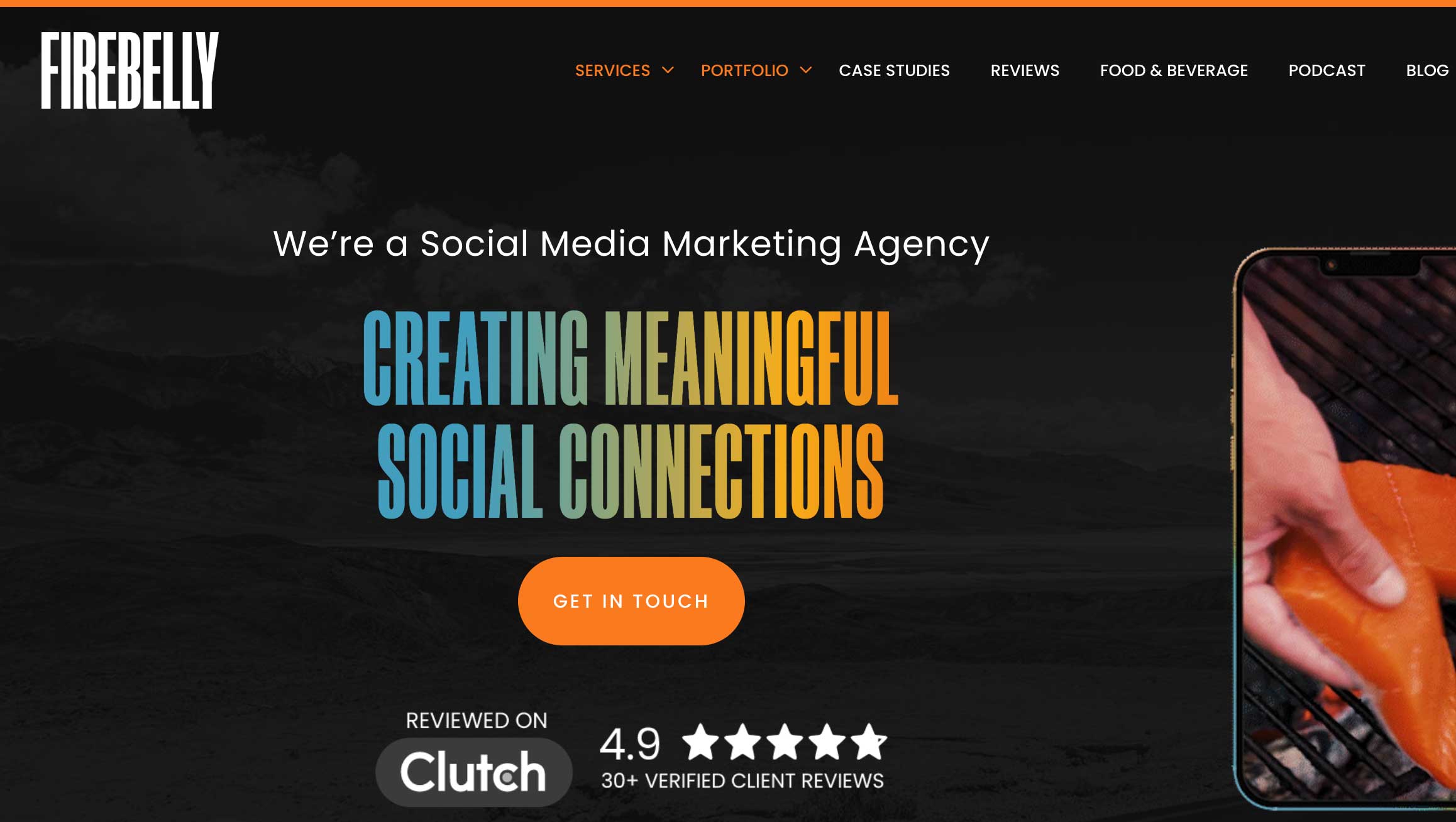
Firebelly is a social media marketing agency that focuses exclusively on social. While many agencies offer social as one service among many, Firebelly has chosen to specialize. This focus means deeper expertise and dedicated attention to the platforms where your audience spends time.
They have particular strength in the food and beverage industry, with clients including Fiji Water and emerging brands in the better-for-you food space. This vertical expertise means they understand the unique challenges and opportunities in food marketing, from seasonal campaigns to influencer partnerships with food creators.
Firebelly emphasizes transparency in their client relationships, providing clear reporting and honest assessments of what is working. Their social audits help brands understand their current position before developing strategies for improvement.
Key services: Social media management, social media advertising, social media audits, influencer marketing, content creation.
Why choose them: If you want an agency that lives and breathes social media rather than treating it as an afterthought, Firebelly's specialized focus delivers deeper expertise.
7. Fresh Content Society
- Location: Chicago, Illinois
- Team Size: 30+ employees
- Notable Clients: Brands across food, automotive, legal, hospitality
- Best For: Brands needing strong content production
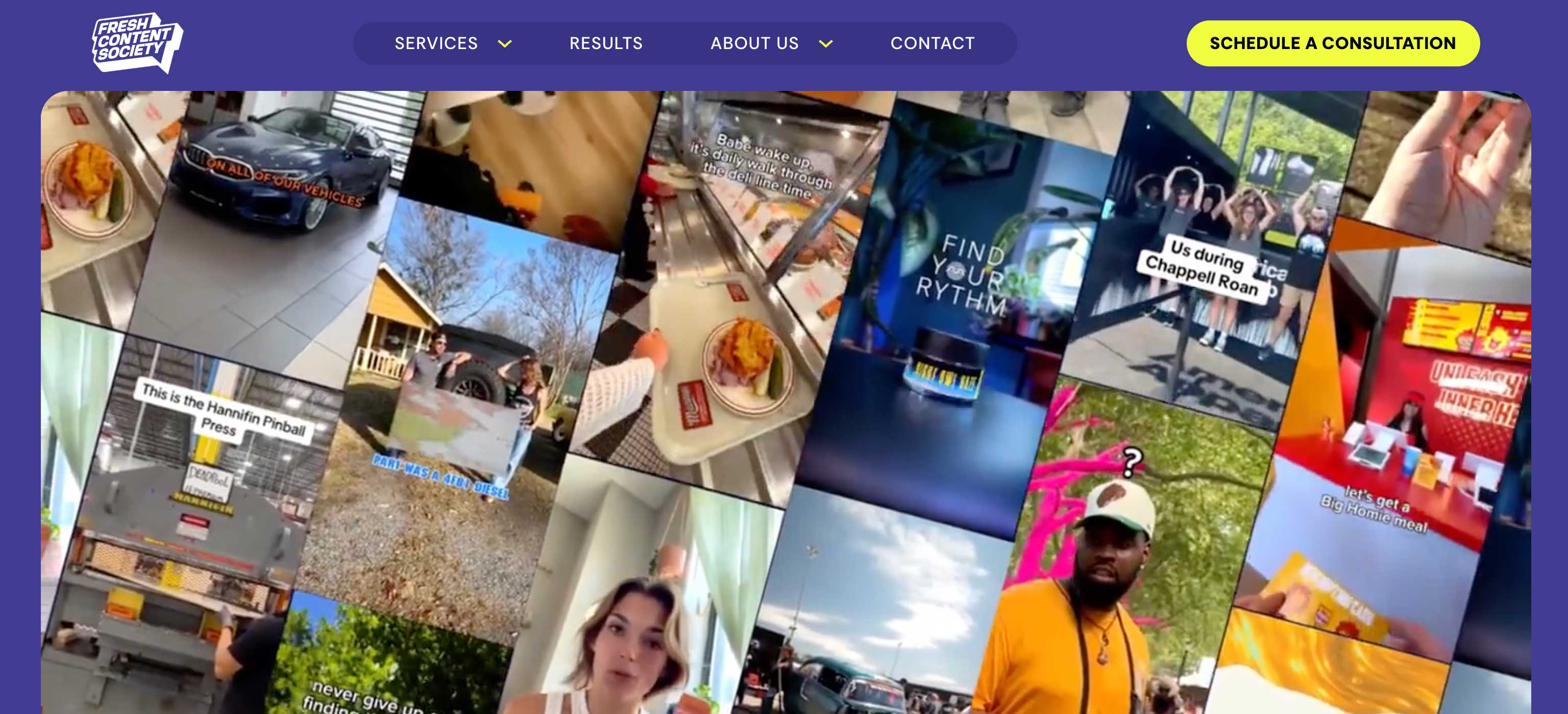
Fresh Content Society specializes in social media management, content creation, and online branding. Their reviews reflect consistent satisfaction with approximately 95% of clients praising their ability to increase follower growth, engagement, and brand awareness across platforms.
Their strength lies in content production. They understand that social media success requires a constant stream of high-quality content, and they have built systems to produce that content efficiently. From photography and video to graphics and copywriting, their in-house team handles the full creative process.
Fresh Content Society works across multiple industries including food and beverage, automotive, legal, hospitality, and retail. This breadth gives them perspective on what content strategies work across different verticals while developing specific expertise in each sector they serve.
Key services: Social media management, content creation, community management, paid social, influencer partnerships.
Why choose them: If content production is your biggest challenge and you need a partner who can consistently create engaging social content, Fresh Content Society has the creative systems to deliver.
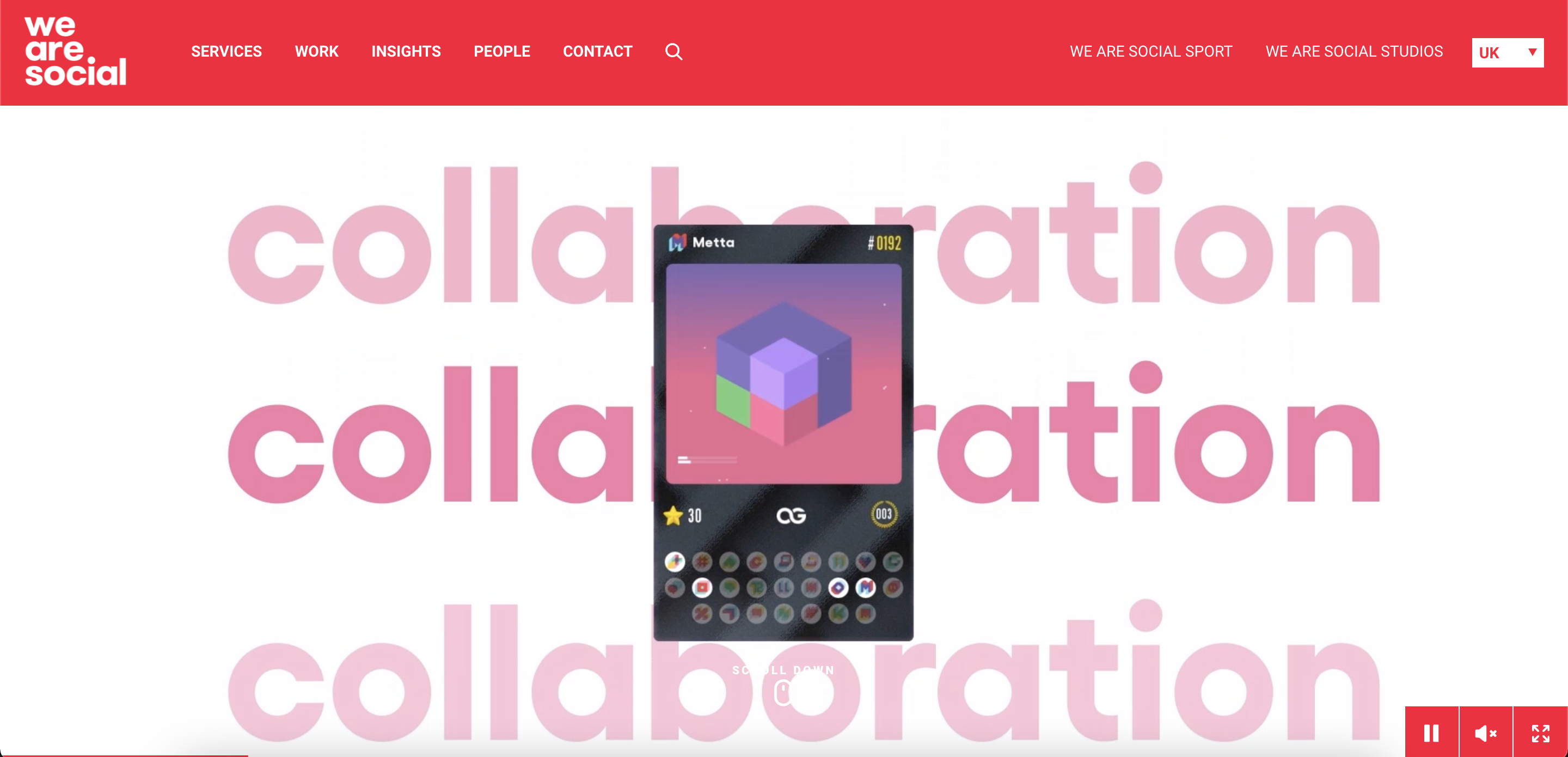
8. We Are Social
- Location: New York City and Los Angeles
- Team Size: 1,300+ people worldwide
- Notable Clients: adidas, Netflix, Samsung, Audi, Google
- Best For: Enterprise brands needing global presence
We Are Social is a global powerhouse in social media marketing. With over 1,300 people across 19 offices spanning four continents, they bring a scale that few agencies can match. Their US presence in New York and Los Angeles serves American brands while connecting to global creative resources.
What makes We Are Social different is their deep understanding of online communities, cultures, and subcultures. They do not just create content; they create ideas worth talking about. Their campaigns for brands like adidas, Netflix, and Samsung consistently push creative boundaries while delivering commercial results.
Their size means they can handle complex global campaigns that require coordination across markets, languages, and platforms. They understand how social behaviors differ across regions and can adapt strategies accordingly. For enterprise brands with international ambitions, this global perspective is invaluable.
Key services: Social strategy, creative campaigns, influencer marketing, community management, social listening, gaming activations, content production.
Why choose them: If you are an enterprise brand needing a social partner with global reach and creative firepower, We Are Social has the scale and talent to deliver campaigns that shape culture.
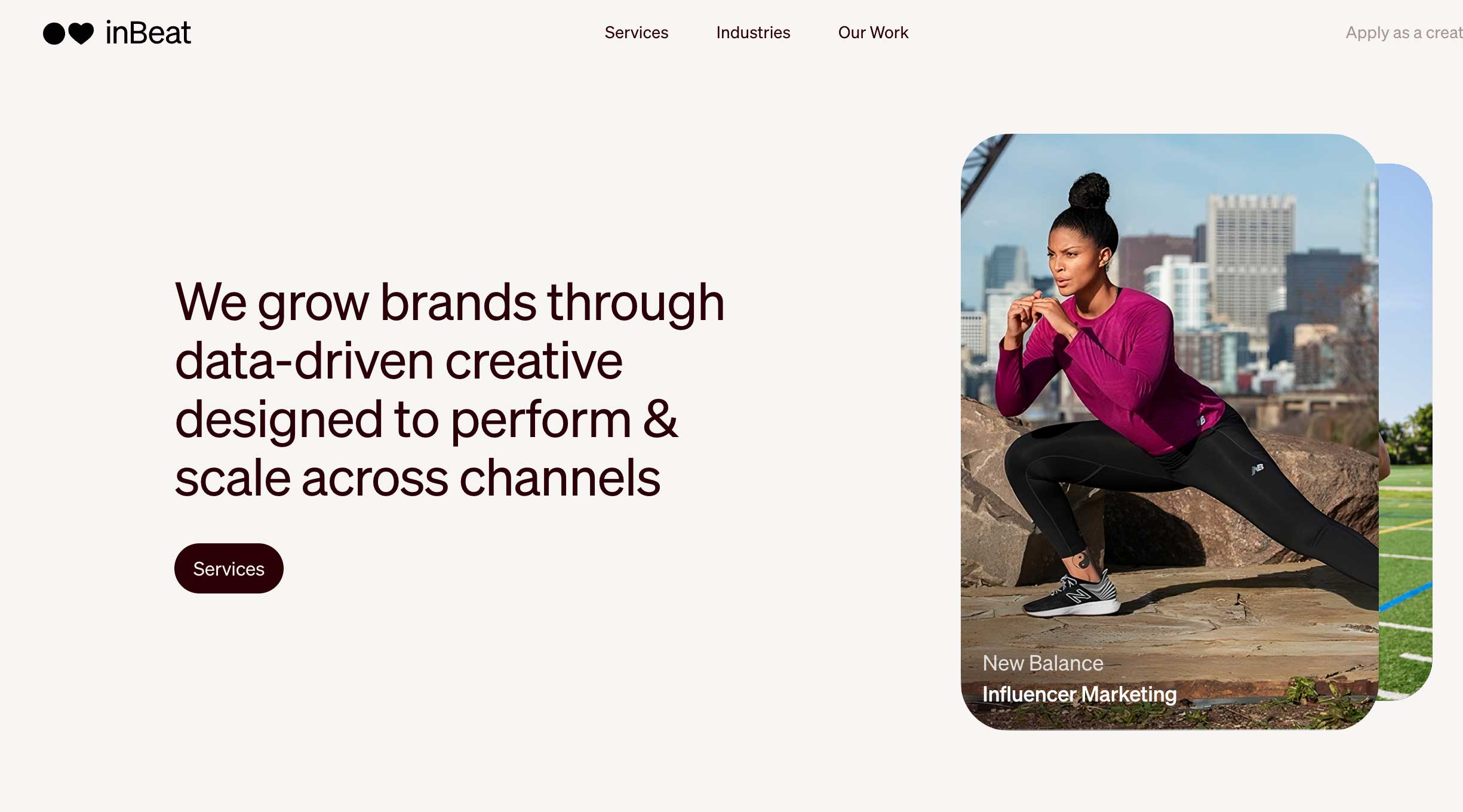
9. inBeat Agency
- Location: Montreal and US presence
- Team Size: 40+ employees
- Notable Clients: New Balance, Disney, Nissan, Linktree, NielsenIQ
- Best For: Brands wanting UGC and micro-influencer campaigns
inBeat specializes in user-generated content (UGC) and micro-influencer marketing, offering personalized, scalable services to enhance brand social media impact. They go the extra mile to connect brands with top-tier creators, ensuring tailored, high-engagement campaigns that drive growth.
Their approach focuses on micro and nano influencers rather than expensive celebrity partnerships. These smaller creators often deliver better engagement rates and more authentic connections with audiences. inBeat has built systems to identify, vet, and manage these creators at scale.
Notable clients include New Balance, Disney, Nissan, Linktree, and NielsenIQ. This diverse roster demonstrates their ability to adapt influencer strategies across different industries and campaign objectives.
Key services: Micro-influencer marketing, UGC production, paid social advertising, content creation, influencer gifting campaigns.
Why choose them: If you believe authentic creator content outperforms polished brand advertising, inBeat can build and manage micro-influencer campaigns that generate genuine engagement.
10. Silverback Strategies
- Location: Arlington, Virginia (Washington DC area)
- Team Size: 50+ employees
- Notable Clients: B2B and enterprise brands
- Best For: Brands wanting data-driven social strategies
Silverback Strategies is an award-winning performance marketing agency recognized by Inc. 5000, Clutch, and The Washington Post's Top Workplaces. They blend creativity with analytics to help brands grow across social media platforms like Meta, TikTok, LinkedIn, and YouTube.
Their social media advertising strategies are grounded in data, optimized through experimentation, and built to convert attention into measurable results. For brands that value analytics and want to understand exactly what their social investment delivers, Silverback provides the transparency and rigor to make informed decisions.
Based in the Washington DC area, they have particular strength with B2B brands and organizations that need sophisticated measurement and attribution. Their approach appeals to marketing teams that need to justify budgets with clear ROI data.
Key services: Paid social advertising, social media strategy, creative production, analytics and reporting, conversion optimization.
Why choose them: If you need to prove social media ROI to stakeholders and want an agency that speaks the language of data, Silverback Strategies brings analytical rigor to creative campaigns.
11. Movement Strategy
- Location: New York City
- Team Size: 30+ employees
- Notable Clients: Warner Bros, Netflix, Amazon, HBO Max
- Best For: Brands wanting community-led growth
Movement Strategy specializes in community building and emerging platforms, taking an audience-centric approach to social media marketing. They understand that sustainable social success comes from building genuine communities rather than just accumulating followers.
Their client roster includes major entertainment brands like Warner Bros, Netflix, and HBO Max, demonstrating expertise in building engaged fan communities around content properties. These communities become assets that drive awareness for new releases and maintain engagement between major launches.
Movement Strategy stays ahead of emerging platforms and trends, helping brands establish presence on new channels before they become saturated. This forward-looking approach positions their clients to capture attention as platforms evolve.
Key services: Community management, social strategy, content creation, emerging platform strategy, influencer partnerships.
Why choose them: If you want to build a genuine community around your brand rather than just broadcast content, Movement Strategy understands how to create and nurture engaged audiences.
12. Sculpt
- Location: Iowa City, Iowa
- Team Size: 20+ employees
- Notable Clients: B2B tech and SaaS brands
- Best For: B2B companies wanting social expertise
Sculpt specializes in social media advertising for growth-stage B2B and tech brands. Their strategies focus on LinkedIn and Meta campaigns that generate qualified leads and increase brand credibility. While most agencies on this list focus on consumer brands, Sculpt understands that B2B social requires fundamentally different approaches.
B2B buyers research extensively on social before making purchasing decisions, and Sculpt helps brands be present and credible during that research phase. Their content strategies emphasize thought leadership and educational content that positions clients as experts in their fields.
For technology companies and B2B brands that have struggled with consumer-focused agencies, Sculpt offers specialist expertise in a sector where most social agencies lack experience.
Key services: LinkedIn advertising, B2B social strategy, thought leadership content, paid social, lead generation.
Why choose them: If you are a B2B or tech company tired of agencies that do not understand your sales cycle and audience, Sculpt offers genuine specialist expertise in B2B social marketing.
What Does a Social Media Marketing Agency Do?
Social media marketing agencies help brands across the United States grow their audiences and drive revenue through social platforms. These professionals provide social media solutions that improve brand visibility and build authority in your market. The services vary between agencies, but typically cover several core areas.
Content creation forms the foundation. This includes developing content strategies, creating ideas aligned with brand goals, and producing social media content through photography, videography, and graphic design. Good agencies understand each platform's requirements and create native visuals and video rather than repurposing the same material everywhere. They also help craft your brand story through compelling blog articles and posts.
Social media management covers the day-to-day operation of social channels. Agencies publish content, respond to comments and messages, engage with communities, and maintain brand presence consistently. This requires understanding brand voice, community guidelines, and platform best practices.
Paid social advertising involves planning, creating, and optimizing campaigns on platforms like Meta, TikTok, LinkedIn, and Pinterest. Effective paid social requires understanding audience targeting, creative formats, bidding strategies, and performance measurement. Top agencies hold partner status with major platforms.
Influencer marketing connects brands with creators who can amplify their message to relevant audiences. This includes identifying suitable influencers, negotiating partnerships, managing campaigns, and measuring results. The best agencies have established relationships and proprietary data on influencer performance.
Strategy and reporting ties everything together. Agencies develop social strategies aligned with business objectives, set KPIs, track performance, and optimize based on results. Their knowledge of platform algorithms and audience behavior is the reason brands see improved customer engagement and consistency in their messaging. Regular reporting keeps brands informed about what is working and where improvements can be made.
Benefits of Hiring a Social Media Agency
Hiring a social media agency makes sense for brands that want to take their social presence seriously without building large internal teams. Here are the main benefits.
Access to specialist expertise is the primary advantage. Social media moves fast, and agencies employ specialists who live and breathe these platforms daily. They understand algorithm changes, new features, emerging trends, and platform best practices. Building this expertise internally takes years and constant attention.
Tools and technology come included with agency partnerships. Professional social media management requires scheduling tools, analytics platforms, creative software, influencer databases, and advertising technology. Agencies spread these costs across clients, making enterprise tools accessible to brands of all sizes.
Scalability allows brands to flex their social efforts up or down as needed. Launching a new product might require intensive campaign support, while quieter periods need only maintenance. Agencies can adjust resources accordingly, which is harder with fixed internal headcount.
Fresh perspective brings ideas that internal teams might miss. Agencies work across multiple brands and industries, seeing what works elsewhere and applying learnings to new clients. They can challenge assumptions and suggest approaches that insiders might not consider.
Cost efficiency often favors agencies when you calculate the full cost of internal teams including salaries, benefits, training, tools, and management time. A single social media manager cannot match the breadth of expertise an agency provides, yet hiring multiple specialists quickly becomes expensive.
How Much Do US Social Media Agencies Cost in 2026?
US social media agency retainers run from around $3,000 a month for a small organic program to $25,000 a month and above for a full-funnel programme covering strategy, paid social media advertising, creator partnerships and in-house content production. Media spend sits on top of every one of those figures and is paid to the platform, not the agency.
The US market is unusually transparent about this compared with most others, and the published numbers are worth knowing before you take a call. Directory minimum project sizes cluster at $1,000, $5,000, $10,000, $25,000 and $250,000. Published hourly rates run from under $25 to $300. One national agency advertises packages from $500 a month, which is an order of magnitude below everyone else and tells you exactly what level of service to expect.
| Scope | Monthly retainer | What you get | Typical buyer |
|---|---|---|---|
| Emerging, 2-3 platforms | $3,000 to $10,000 | Content calendar, light creative, community management, monthly reporting | Startups and small brands |
| Mid-market, 3-5 platforms | $10,000 to $25,000 | Paid and organic, creative testing, creator support, biweekly reporting | Growing ecommerce and DTC brands |
| Enterprise | $25,000 to $50,000+ | Dedicated team, high-volume creative, custom dashboards, weekly reporting | National brands and multi-market programs |
| Content production add-on | $2,000 to $10,000 | Photography, video, copywriting, design, usually billed separately | Any brand without an in-house studio |
| Paid social management | $2,000 to $8,000 | On top of ad spend, sometimes billed as a percentage instead | Performance-led brands |
Watch the lead form, not the article. A useful trick: several agencies publish a $3,000 entry tier in their content and then set the lowest option on their own contact form at $8,500 or $10,000 a month. The form is the honest number, because it is the one that qualifies the sales team's time.
Hourly rates tell you what you are actually buying. Published US rates run from under $25 to $300 an hour. Anything under $50 usually means offshore execution or a junior with a template. The $100 to $150 band is where most credible independent agencies sit. Above $200 you are paying for named senior creatives, a consultancy layer, or a holding company overhead.
Watch the alignment between fee and media spend. A percentage-of-spend structure quietly rewards the agency for spending more rather than spending well. A flat fee with a documented optimization process removes that conflict. If an agency insists on a percentage model, ask what happens to their fee in a month where the right answer is to cut budget.
New York and Los Angeles carry a premium. Higher paid-auction competition, faster creative fatigue and higher creator rates all push the number up. That premium buys market experience rather than proximity, and there is no reason a national brand needs a New York agency simply because it sells in New York.
Social Media for Shopify and Ecommerce Brands
Here is the strangest thing we found while researching this guide. Across sixteen of the highest-ranking pages for this topic in the US and the UK, the word Shopify appears in body copy exactly once, inside a client testimonial. Ecommerce shows up as a filter tag on directory listings and as a single line in a services menu. Not one page discusses social media for an online store in language a merchant would actually recognize.
That matters because the brief is genuinely different. A Shopify brand is not buying brand engagement, it is buying revenue at a defensible cost of acquisition, and the mechanics of getting there do not look much like the mechanics of a hospitality or CPG social program.
Blended CAC beats platform ROAS. Meta will report a return on ad spend that counts every view-through conversion it can claim. Your Shopify dashboard will report total revenue and total orders. The number that matters is total marketing spend divided by new customers, calculated across every channel in the same window. Agencies that only ever quote in-platform ROAS are quoting the most flattering available metric. Ask for the blended figure alongside it, every month, from the first month.
Creative volume is the real lever, not targeting. Meta's targeting has been progressively automated to the point where the audience is mostly a solved problem and the creative is the variable. A serious paid social program for an ecommerce brand ships dozens of creative variants a month, kills the losers fast and scales the winners. Ask any agency how many distinct creative concepts they will produce monthly and how they decide what to retire. If the answer is a number below ten, they are managing a budget rather than running an optimization program.
Catalog and feed quality is social media optimization. Advantage+ catalog campaigns, Instagram Shopping and TikTok Shop all read your product feed. Titles, images, availability, price and product type flow straight from Shopify into the ad unit, which is why well-optimized product data pays for itself twice over. A brand with a messy catalog is handicapping its paid social before a single dollar is spent.
TikTok Shop and Instagram Shopping change the funnel shape. Social commerce lets a customer discover and buy without ever reaching your website, which is excellent for first-purchase volume and awkward for lifetime value, because the customer relationship and the data can sit with the platform rather than with you. Decide deliberately whether you are using these channels for acquisition or for revenue, because the two require different targets and different reporting.
Post-purchase attribution beats the pixel. Since iOS tracking changes, the single most reliable attribution tool available to a Shopify brand is a post-purchase survey asking customers how they heard about you. It is cheap, it is directional, and it consistently tells a different story from the ad platforms. Any agency that dismisses it is protecting its own reported numbers.
Creator content usually outperforms studio content in the feed. Ecommerce brands that treat content creators as a supply chain rather than as a media buy tend to win. The output goes into paid as well as organic, which changes the economics of a creator program entirely. Ask whether the agency has usage rights built into its creator contracts by default, because retrofitting them is expensive.
Social does not sit on its own digital island. The same product photography, the same offer architecture and the same customer data feed your email program, your paid search and your site. Brands that brief social in isolation end up paying three times for the same assets and telling three slightly different stories.
None of this means a Shopify brand needs a Shopify specialist for social. It means the questions in your brief should be commercial, and the agency should be comfortable being measured on revenue rather than on reach.
How to Choose the Right Social Media Agency
Choosing a social media agency requires matching your needs with agency capabilities. Here are the key factors to consider.
Define your objectives first. Are you looking to build brand awareness, drive website traffic, generate leads, or increase sales? Different agencies excel at different outcomes. An agency brilliant at viral content might not be the best choice for B2B lead generation.
Consider industry expertise. Some agencies specialize in specific sectors like fashion, food, B2B, or ecommerce. An agency with experience in your industry will understand your audience, competitors, and what content resonates. They will also have relevant case studies to demonstrate their capabilities.
Evaluate their own social presence. How an agency manages their own social channels reveals a lot about their capabilities and approach. If they cannot create engaging content for themselves, be skeptical about their ability to do it for you.
Ask about their process. Understanding how an agency works helps assess fit. How do they develop strategies? What does their reporting look like? How often will you communicate? Who will work on your account? Good agencies are transparent about their methods.
Check references and case studies. Ask for references from current or recent clients, ideally brands similar to yours in size or sector. Case studies should include specific results rather than vague claims about increased engagement.
Understand pricing structures. Agencies charge in different ways: monthly retainers, project fees, performance-based pricing, or combinations. Ensure you understand exactly what is included and what would incur additional costs. Cheaper is not always better if it means cutting corners.
Assess cultural fit. You will work closely with your agency, so personalities matter. Do they understand your brand? Do you trust their recommendations? Are they responsive and professional? A brilliant agency that is difficult to work with will cause more problems than it solves.
Ask who owns your strategy in month three. This is the single most useful question in the whole process and almost nobody asks it. Agencies pitch with founders and senior strategists, then hand the account to a junior once the ink dries. Get the answer in writing: name the person, name their hours, and name what happens when they leave. An agency that cannot commit to this at the sales stage will not improve after you sign.
Prefer a named specialism over a full-service menu. Plenty of agencies list audience research, copywriting, content creation, creator outreach, community management and paid all in one breath. In smaller shops, most of that is subcontracted to third parties and merely coordinated by your account manager. Ask which disciplines sit in house and which do not. Agencies with genuine in-house creatives are better value even at a higher headline rate, because you are not paying a coordination margin on somebody else's work.
Check that paid and organic are not split across two suppliers. The most common structural failure in social right now is fragmentation, with organic run by one team and paid by another and neither seeing the other's data. Organic is where you find out which creative works. Paid is where you scale it. Splitting them slows learning, wastes production budget and makes it impossible to tell which piece of content actually earned the sale.
Decide whether you want a supplier or an extension of your team. Both are legitimate. A supplier takes a brief and delivers against it, which suits brands with a strong internal marketing lead and a clear brand identity already in place. An extension of your team sits in your channels, joins your standups and argues with you, which suits brands who need someone to own the thinking. Agencies rarely offer both, and mismatched expectations here account for most of the relationships we watch break down in month four.
Look for quick wins alongside the long game. A good first 90 days should produce something measurable early, whether that is a creative format that outperforms your current baseline or a cheap fix to how your social media channels are set up. Agencies who tell you nothing will move for six months are managing your expectations rather than your activity, and the two are not the same thing.
Ask what tooling comes with the retainer. Most agencies run a suite of scheduling, listening and reporting tools that would cost you several hundred dollars a month to license directly. Ask whether you get dashboard access or only the exported deck, because read-only access to the live data changes the quality of every conversation you have afterwards.
Start with a 60 to 90 day pilot. Rather than committing to twelve months on a pitch deck, agree a defined scope with a named commercial target and a written exit if it is missed. Expect 30 to 60 days for onboarding, creative testing and measurement setup, with meaningful traction at 60 to 90 days. An ecommerce marketing calendar is a useful shared artifact for scoping that first window. Good agencies welcome this because it shortens their sales cycle. Agencies that resist it are protecting a revenue forecast, not your outcome.
Agency, Freelancer or In-House Team?
Before you shortlist anyone, it is worth deciding whether an agency is the right answer at all. The three models fail in different ways, and the failure mode matters more than the headline cost.
An in-house team gives you brand depth, fast approvals and cultural proximity. Nobody understands your products, your customers or your tone of voice better than someone who sits in your building. What in-house teams typically lack is platform specialism, production resource and outside perspective. One person cannot credibly own Instagram, TikTok, LinkedIn, YouTube and paid social simultaneously, and the moment they leave, the institutional knowledge walks out with them. Budget roughly $65,000 to $95,000 a year for a social media manager in a major US market, plus tools and production, before you have shot a single piece of content.
A freelancer executes well against a clear brief and costs a fraction of an agency. What a freelancer very rarely does is set strategy, and almost never has the production capability to make a brand look expensive. Freelancers work best when you already know what you want made and simply need capable hands to make it, and worst when you are hoping someone will tell you what to do.
An agency comes in two shapes worth separating. A social specialist does one thing deeply. A full-service digital marketing agency folds social into search, email and web, which is better for coordination and usually worse for platform depth. Either way, an agency gives you strategists, writers, designers, paid specialists and reporting infrastructure without building the team yourself, plus benchmark data drawn from other clients in other categories that no in-house team working on a single brand can replicate. The trade-off is that you are one client among many, approvals take longer, and you are exposed to whoever is actually assigned to your account.
For most mid-sized brands the strongest structure is not one of the three but a combination: a strong in-house lead who owns brand positioning, the roadmap and approvals, working with an external partner who brings platform expertise, production capacity and a wider view of what is working across the market. That model fails least often, and it puts someone inside the business who can hold the agency to account rather than accepting whatever lands in the monthly deck.
Social Media Marketing Trends for 2026
The social media landscape continues evolving rapidly. Here are the key trends shaping social media marketing in 2026.
AI-powered content creation has become mainstream. Agencies now use AI tools to generate content ideas, create initial drafts, produce variations for testing, and personalize content at scale. The best agencies use AI to enhance human creativity rather than replace it, combining machine efficiency with human judgment and brand understanding.
Short-form video dominates across all platforms. TikTok's influence has pushed Instagram Reels and YouTube Shorts to prominence, and even LinkedIn has embraced video content. Brands that cannot create compelling short-form video content struggle to maintain visibility and engagement.
Social commerce has matured. Shopping features are now standard across major platforms, allowing users to discover and purchase without leaving social apps. Brands with strong social commerce strategies see significant revenue directly from social channels rather than just using them for awareness.
Community-led growth is replacing broadcast marketing. Brands are building owned communities on Discord, private Facebook groups, and community platforms. These spaces allow deeper relationships with customers and create brand advocates who amplify messages organically.
Authenticity over polish continues gaining importance. Audiences, particularly younger demographics, prefer genuine, behind-the-scenes content over highly produced advertising. User-generated content and creator partnerships often outperform branded content because they feel more authentic.
Platform diversification has become essential. Relying on any single platform is risky given algorithm changes and shifting user behavior. Smart brands maintain presence across multiple platforms while focusing resources where their specific audience is most active.
Social Media Services Explained
Understanding the full range of social media services available helps you choose the right solutions for your brand. Most agencies offer a combination of these services, though some specialize in specific areas.
Content strategy and development forms the backbone of effective social media marketing. This involves researching your audience, analyzing competitors, and creating a content calendar that aligns with business goals. A solid content strategy ensures every post serves a purpose rather than posting randomly and hoping something works.
Platform-specific management recognizes that each social network requires different approaches. Instagram demands visual excellence and Stories content. LinkedIn needs thought leadership and professional insights. TikTok requires trend awareness and authentic, less polished content. Facebook works well for community building and events. Reddit offers community-driven discussions and niche audience targeting. The best agencies understand these nuances and tailor content accordingly.
Social media campaigns go beyond daily posting to create focused initiatives around product launches, seasonal events, or brand awareness pushes. These campaigns typically combine organic content, paid advertising, and sometimes influencer partnerships to maximize impact and conversions over a defined period.
Community management and engagement keeps your audience connected to your brand. This means responding to comments, managing direct messages, moderating discussions, and proactively engaging with relevant conversations. Strong community management builds genuine connections that translate into brand loyalty.
Social listening and monitoring tracks mentions of your brand, competitors, and industry topics across platforms. This intelligence informs content strategy, identifies potential crises early, and reveals opportunities to join relevant conversations. Many agencies use sophisticated tools to monitor sentiment and trends.
Paid social advertising amplifies your reach through targeted campaigns on platforms like Meta, TikTok, LinkedIn, and Pinterest. This includes audience targeting, creative development, budget management, A/B testing, and continuous optimization to improve conversions and reduce cost per acquisition.
Analytics and reporting measures success and guides future strategy. Good agencies provide regular reports covering reach, engagement, follower growth, website traffic, and conversions. More importantly, they interpret data to provide actionable recommendations rather than just presenting numbers.
Industries That Benefit from Social Media Agencies
While virtually every business can benefit from social media marketing, certain industries see particularly strong results from agency partnerships. The best agencies have experience across multiple sectors, though some specialize in specific verticals.
Ecommerce and retail brands see direct revenue impact from social media. Product discovery increasingly happens on social platforms, and features like Instagram Shopping and TikTok Shop enable direct conversions. DTC (direct-to-consumer) brands particularly benefit from agency expertise. Agencies help ecommerce brands showcase products, build desire, and drive sales through compelling visual content and targeted advertising.
Food and beverage companies thrive on social media because their products are inherently visual and shareable. From restaurants to CPG brands, social content can make audiences hungry and drive both online sales and foot traffic. This sector often benefits from influencer partnerships and user-generated content campaigns.
Fashion and beauty brands have built empires through social media. Platforms like Instagram and TikTok are natural homes for style inspiration, tutorials, and product launches. The best fashion agencies understand seasonal trends, work with relevant influencers, and create content that inspires purchase decisions.
Travel and hospitality uses social media to inspire wanderlust and drive bookings. Hotels, airlines, tourism boards, and travel brands all benefit from showcasing experiences through stunning visual content. Stories and user-generated content from actual travelers build authenticity and trust.
Technology and SaaS companies use social media differently, focusing on thought leadership, educational content, and community building. LinkedIn becomes particularly important for B2B technology brands, while consumer tech companies may focus more on YouTube demonstrations and TikTok creativity.
Healthcare and wellness brands must navigate strict regulations while building trust and educating audiences. Social media helps humanize healthcare organizations and connect with patients on topics from fitness to mental health. Agencies with healthcare experience understand compliance requirements.
Financial services face similar regulatory challenges but can use social media effectively for education, brand building, and customer service. Fintech companies particularly benefit from social media to differentiate from traditional institutions and reach younger demographics.
Manufacturing and logistics companies often underestimate social media potential. B2B social media, particularly LinkedIn, helps these businesses showcase expertise, recruit talent, and build relationships with potential clients. Employee advocacy and behind-the-scenes content humanize industrial brands.
Professional services including law firms, accountancies, and consultancies use social media for thought leadership and lead generation. LinkedIn content that demonstrates expertise attracts potential clients, while others use social proof and client success stories to build credibility.
Real estate professionals increasingly rely on social media to showcase properties and build personal brands. From luxury listings in Miami and California to commercial developments in Texas, agents and brokerages use platforms like Instagram and Facebook to reach buyers. Video tours, neighborhood guides, and market updates drive engagement and generate qualified leads.
Questions to Ask Before Hiring an Agency
Before signing with any social media agency, ask these questions to ensure they are the right fit for your brand. Their answers reveal much about their expertise, processes, and whether they will deliver results.
Can you show me your portfolio and case studies? Any credible agency should have examples of previous work and measurable results. Look for case studies relevant to your industry or business size. Ask about specific metrics: follower growth, engagement rates, website traffic, conversions, and revenue impact.
Who will actually work on my account? Agencies often pitch with senior experts but assign junior staff to accounts. Understand who your day-to-day contact will be, their experience level, and how much senior oversight they receive. Ask to meet the actual team before signing.
How do you develop content strategy? Good agencies start with research: audience analysis, competitor review, and brand understanding. They should explain their process for developing content themes, calendars, and creative approaches. Avoid agencies that jump straight to tactics without strategic foundation.
What does your reporting look like? Ask to see sample reports from other clients (anonymized if needed). Reports should be clear, actionable, and focused on metrics that matter to your business. Weekly or monthly reporting with regular review calls is standard for most engagements.
How do you handle approvals and feedback? Understand the workflow for content creation and approval. How far in advance do they plan? How do they incorporate your feedback? What happens if you need last-minute changes? Clear processes prevent frustration on both sides.
What tools and technology do you use? Professional agencies use enterprise tools for scheduling, analytics, social listening, and advertising management. Ask about their tech stack and whether you get access to dashboards or reports. Some agencies use proprietary tools that provide competitive advantages.
How do you stay current with platform changes? Social media evolves constantly. Ask how the agency keeps up with algorithm changes, new features, and emerging platforms. Look for evidence of continuous learning: certifications, platform partnerships, conference attendance, and published thought leadership.
What happens if results disappoint? No agency can guarantee specific outcomes, but they should explain how they diagnose problems and adjust strategy. Ask about their process for optimization and how they have handled underperforming campaigns in the past.
Can you provide client references? Speaking directly with current or former clients reveals the reality of working with an agency. Ask references about communication quality, responsiveness, results delivered, and whether they would recommend the agency to others.
What to Expect When Working with an Agency
Understanding the typical agency relationship helps set realistic expectations and ensures productive collaboration from day one.
Onboarding takes time. Expect the first four to six weeks to focus on discovery, strategy development, and setup. Good agencies invest heavily in understanding your brand, audience, competitors, and goals before creating content. Rushing this phase leads to generic, ineffective work.
Results build gradually. Organic social media growth takes time. Paid campaigns can show results within days, but building genuine audience connections and community takes months of consistent effort. Set realistic timelines: three to six months for meaningful organic growth, twelve to eighteen months for significant business growth impact.
Communication is crucial. Establish clear communication channels and cadences from the start. Most agencies provide weekly or biweekly updates with monthly strategy reviews. Responsive agencies answer questions within a business day and flag issues proactively rather than waiting for you to notice problems.
Collaboration improves results. The best outcomes come from true partnership between brand and agency. You understand your business, products, and customers better than anyone. Agencies bring social expertise and outside perspective. Combining both creates stronger strategies than either could develop alone.
Flexibility matters. Social media moves fast, and opportunities emerge unexpectedly. Good agencies can pivot quickly for trending moments, respond to current events, or adjust strategy based on performance data. Rigid agencies that cannot adapt will miss opportunities and struggle with crisis situations.
Reviews should be honest. Regular reviews should celebrate successes but also honestly assess what is not working. Agencies that only share good news are hiding problems. Look for partners who proactively identify issues, explain what went wrong, and propose solutions.
Contract terms vary. Most agencies prefer minimum commitments of three to six months, recognizing that social media requires sustained effort. Month-to-month arrangements exist but often come with premium pricing. Understand cancellation terms, notice periods, and what happens to content and accounts if you part ways.
Red Flags to Avoid When Choosing an Agency
Not every agency delivers on their promises. Watch for these warning signs that suggest an agency may not be the right choice for your brand.
Guaranteed results. No legitimate agency can guarantee specific follower counts, engagement rates, or revenue outcomes. Social media involves too many variables outside agency control. Agencies that promise specific numbers are either lying or planning to use questionable tactics like buying followers.
Lack of case studies or references. Established agencies should have multiple examples of successful work. New agencies might have limited portfolios, but should at least demonstrate relevant experience from team members' previous roles. Reluctance to share examples or provide references suggests something to hide.
One-size-fits-all packages. Your brand has unique needs, and strategy should reflect that. Agencies that push identical packages on every client are not investing in understanding your specific situation. Customized proposals that address your particular challenges indicate genuine strategic thinking.
Poor communication during the sales process. How an agency communicates before you sign indicates how they will communicate after. Slow responses, missed meetings, vague answers, and pushy sales tactics are warning signs. If they cannot be responsive when trying to win your business, expect worse once you are a client.
No clear process or methodology. Professional agencies have defined processes for onboarding, strategy development, content creation, and reporting. Ask about their methodology. Agencies that cannot explain their approach clearly either lack one or are making it up as they go.
Unrealistic pricing. Extremely low prices suggest inexperienced staff, offshore content creation, or unsustainable business models. Extremely high prices without clear justification may indicate inflated overhead or excessive profit margins. Quality agencies price competitively based on the value they deliver.
Resistance to transparency. Good agencies welcome questions about their methods, tools, and team. Those who deflect questions, refuse to explain processes, or seem evasive about how they work may be hiding something. Trust requires transparency from both sides.
No integration with other marketing. Social media works best when integrated with broader digital marketing efforts including SEO, email marketing, website design, and PR. Agencies that operate in silos without considering how social connects to other channels miss opportunities and create disjointed customer experiences.
Reviews and recommendations that look purchased. This is a real and documented problem in this category. On the largest social media marketing subreddit, moderators have publicly flagged multiple agencies for astroturfing, describing them as paying for accounts to pose as satisfied customers and seeding positive sentiment across threads. The same forum thread contains an agency name repeated five times in near-identical wording by different accounts. Treat any recommendation that arrives with suspicious enthusiasm and no specifics as marketing rather than evidence, and weight a small number of detailed, named, verifiable reviews far above a large number of five-star ratings with nothing written in them.
A service menu wider than the team. If an agency of fifteen people claims strategy, production, paid, influencer, community, analytics and consultancy as in-house capabilities, at least half of it is being bought in. That is not automatically wrong, but you should know it, because subcontracted work carries a margin and a communication gap and neither is visible on the invoice.
Reporting that never mentions money. A monthly report full of impressions, reach and follower growth with no line connecting any of it to revenue, leads or cost per acquisition is a report designed to be un-falsifiable. Ask for a sample report from a live client before you sign and check whether a commercial metric appears anywhere in it.
Measuring Social Media Success
Understanding how to measure social media performance helps you evaluate agency effectiveness and make informed decisions about your marketing investment.
Awareness metrics track how many people see your content. This includes reach (unique users who saw your content), impressions (total times content was displayed), and follower growth. These metrics matter most for brands focused on building recognition and expanding their audience.
Engagement metrics measure how people interact with your content. Likes, comments, shares, saves, and clicks indicate content resonance. Engagement rate (engagement divided by reach or followers) provides a standardized way to compare performance across posts and time periods.
Traffic metrics show how social media drives visitors to your website. Track social referral traffic in Google Analytics, monitoring both volume and quality (bounce rate, pages per session, time on site). UTM parameters help attribute traffic to specific posts and campaigns.
Conversion metrics connect social media to business outcomes. Track leads generated, email signups, purchases, and revenue attributed to social. Most analytics platforms and advertising tools provide conversion tracking, though attribution can be complex across long customer journeys.
Customer metrics measure social media's impact on customer relationships. Monitor response time, resolution rate, and customer satisfaction for social customer service. Track customer lifetime value differences between socially-engaged customers and others to understand relationship value.
Brand metrics capture less tangible but important outcomes. Social listening tools measure share of voice (how often you are mentioned compared to competitors), sentiment (positive versus negative mentions), and brand awareness through survey research.
ROI calculation compares investment to return. Total your social media costs including agency fees, advertising spend, tools, and internal time. Compare against revenue attributed to social, leads generated, or awareness built. ROI can be challenging to calculate precisely, but directional understanding helps budget decisions.
Benchmarking matters. Compare your metrics against industry benchmarks and your own historical performance. What constitutes good engagement varies dramatically across industries and platforms. Agencies should provide context for numbers rather than presenting metrics in isolation.
How to Audit an Agency's Reported Numbers
Every agency you speak to will show you numbers. Almost nobody explains how to check them, which is why buyers end up trusting the deck with the best design rather than the campaign with the best result. These are the checks we run when a client forwards us a proposal.
Divide impressions by spend. A US paid social CPM typically sits somewhere between $6 and $20 depending on the platform, the audience and the season. If a case study claims seventeen million impressions from a campaign, the implied budget is somewhere between $102,000 and $340,000. If the agency also describes it as a small-business campaign, one of the two claims is wrong. This single sum invalidates a surprising number of case studies.
Separate platform-attributed conversions from incremental ones. Meta, TikTok and Google each claim credit for conversions they influenced under their own attribution windows, which means the sum of the platforms routinely exceeds the total orders in your Shopify admin. That is not fraud, it is overlapping measurement, but an agency reporting only in-platform conversions is reporting the most generous available version of its own performance. Ask for the platform figure and the back-end figure side by side and ask them to explain the gap. An agency that can explain the gap calmly is one that understands measurement.
Ask what the number was before. A 400% increase in leads is meaningless without the starting point. Four leads becoming twenty is a different story from four hundred becoming two thousand, and both are legitimately reported as 400%. Percentages without baselines are the most common way a modest result gets dressed up as a transformation.
Check whether the metric moved or the definition did. Engagement rate can be calculated against reach or against followers, and the two produce wildly different numbers for the same post. When a reported rate improves sharply between two months, confirm the denominator did not change. This applies equally to cost per result when the campaign optimization goal in Meta Ads Manager has been switched mid-flight, since Meta's own optimization setting determines which conversions are counted at all.
Ask for the losing campaign. Every agency has run something that did not work. An agency that cannot name one, explain what it learned and describe what it changed is either very new or not telling you the truth. This is the fastest way to find out whether the reviews you are reading describe a partner or a supplier.
Request a live sample report, not a case study. Case studies are marketing artifacts, curated after the fact and approved by the client. A redacted copy of last month's actual report for a comparable account tells you what you will really receive: how the data is framed, whether commercial metrics appear, and whether anyone has written an interpretation or simply exported a dashboard.
How to Read Agency Directories and Rankings
Most of the visible information about US social media agencies sits on directories rather than in editorial. Those directories are useful, but only if you know what you are looking at.
Default sort order is frequently commercial. One major directory sorts its category pages by "Sponsored" unless you change it, and states in its own disclosure that certain agencies have paid for placement. Another places three paid "featured" slots above its organic list. A third randomizes order within quality tiers and says so on the page, which is the most transparent position anyone in this category takes. Neither approach is dishonest, but a top-three slot on a sponsored-sorted page is a media buy, not a verdict.
Read the negative percentage, where one is published. The strongest review platforms now synthesize dissent as well as praise, and will tell you plainly that an agency's feedback runs roughly 60% positive and 40% negative with recurring concerns about deliverables, communication or contract terms. That sentence is worth more than a hundred five-star ratings.
Check what share of the agency's business is social. Several agencies that rank prominently in social media categories derive only around 10% of their revenue from social, with the rest coming from SEO or PPC. Directory service-split data exposes this. A firm where social is a tenth of the business will staff it accordingly.
Treat scoring methodologies as editorial positions. One widely cited ranking weights AI visibility at 60% of its score, measured by tracking 200 prompts across AI search experiences over a year, with no weighting at all for client outcomes or awards. That is a defensible view of what matters in 2026 and it is also, conveniently, a metric the publisher happens to lead on. Read the methodology before you read the list.
Look for the founder, not the logo wall. On any agency site, find the founder or managing partner and read what they have actually published. Agencies whose senior people write and speak in public are easier to hold to account than agencies represented only by a client logo grid, and you will learn more about how they think in twenty minutes of their writing than in an hour of their pitch.
Forums are not safer than directories. Community threads rank well for this query precisely because buyers distrust the directory layer, but the same commercial pressure applies there, just less visibly. On the largest social media marketing subreddit, moderators have publicly flagged multiple agencies for astroturfing, describing them as paying for accounts to pose as satisfied customers. The most valuable answers in those threads are usually the ones that refuse to name anybody and explain how to vet instead.
What We'd Actually Tell a Shopify Brand Shopping for a Social Agency
We build Shopify stores. We are not pitching for your social budget, so what follows costs us nothing to say.
The brands we work with who get the most out of social are almost never the ones who hired the most celebrated agency. They are the ones who arrived with a defined commercial question. Not "we need to be better on TikTok" but "we need to acquire customers at under $30 blended and our current channel mix has stopped scaling". Agencies respond to the brief they are given. A vague brief buys you a content calendar, because a content calendar is the only honest deliverable for a client who has not decided what success looks like.
Our second view is less popular. For most ecommerce brands turning over under roughly $4 million, a full-service social agency is the wrong first purchase. The money is better spent on a strong creator program plus one excellent paid social freelancer or boutique, because at that stage the constraint is creative volume and speed, not strategy. We have watched clients spend $8,000 a month on a beautifully run organic program that moved no revenue while their product pages went untouched for a year. Conversion rate optimization work on those pages would have made every dollar of that social spend worth more. Social cannot fix a store that does not convert.
Above $4 million, the calculus flips completely. At that point creative volume, creator contracts, community management and paid all need coordinating, and the coordination itself becomes a full-time job that an agency does better and cheaper than you can. This is also the point where the fragmentation problem starts to bite, and where consolidating paid and organic under one roof usually pays for itself within two quarters.
The one thing we would insist on regardless of size: whoever runs your social should be able to see your Shopify data. Not a screenshot in a monthly call, actual access. An agency working from platform-reported conversions alone is optimizing toward a number that does not exist in your bank account, and no amount of creative brilliance fixes a feedback loop pointed at the wrong target. When we onboard a client's social partner properly, the first thing we do is give them read access to the store and a post-purchase survey to read. It is unglamorous and it changes the quality of the work more than any creative brief we have seen.
The last thing worth saying is that social is now the front door to most digital brands, and the front door is judged in about two seconds. Whether that judgement is favorable has far more to do with consistent brand identity and a clear offer than with posting cadence, and no agency can supply either of those on your behalf.
So: hire for the constraint you actually have, insist on commercial access, and pick the agency whose senior person you can still get on the phone in month six. Everything else on this page is detail.
Working with International Agencies
Many leading social media agencies operate globally, with offices across the USA, UK, Canada, France, and other markets. Whether you are based in San Francisco, Miami, Texas, or looking for expertise from London, Toronto, or Sydney, understanding international agency relationships helps brands with global ambitions choose the right partners.
Global agencies offer scale. Agencies like We Are Social, Socially Powerful, and The Social Shepherd operate across multiple countries. This provides consistent brand management across markets, shared learnings from different regions, and the ability to coordinate global campaigns while adapting for local audiences.
Local expertise matters. Social media trends, platform preferences, and cultural nuances vary significantly between markets. What works in California may not resonate in London or Toronto. International agencies with genuine local presence understand these differences better than those simply translating content.
Time zone considerations. Working with agencies in different time zones creates communication challenges. Establish clear expectations about response times, meeting schedules, and emergency contacts. Some brands prefer agencies in similar time zones for easier real-time collaboration.
Language and localization. Effective international social media goes beyond translation. Content must be culturally adapted, references localized, and tone adjusted for different markets. Agencies with native speakers in each market produce more authentic, effective content than those relying on translation services.
Budget implications. Agency costs vary by market. US and UK agencies typically charge premium rates, while agencies in other markets may offer competitive pricing. However, cheaper is not always better if it means sacrificing local expertise or quality.