 Nic Dunn, CEO, Charle Agency
Who Are Shopify's Main Competitors?
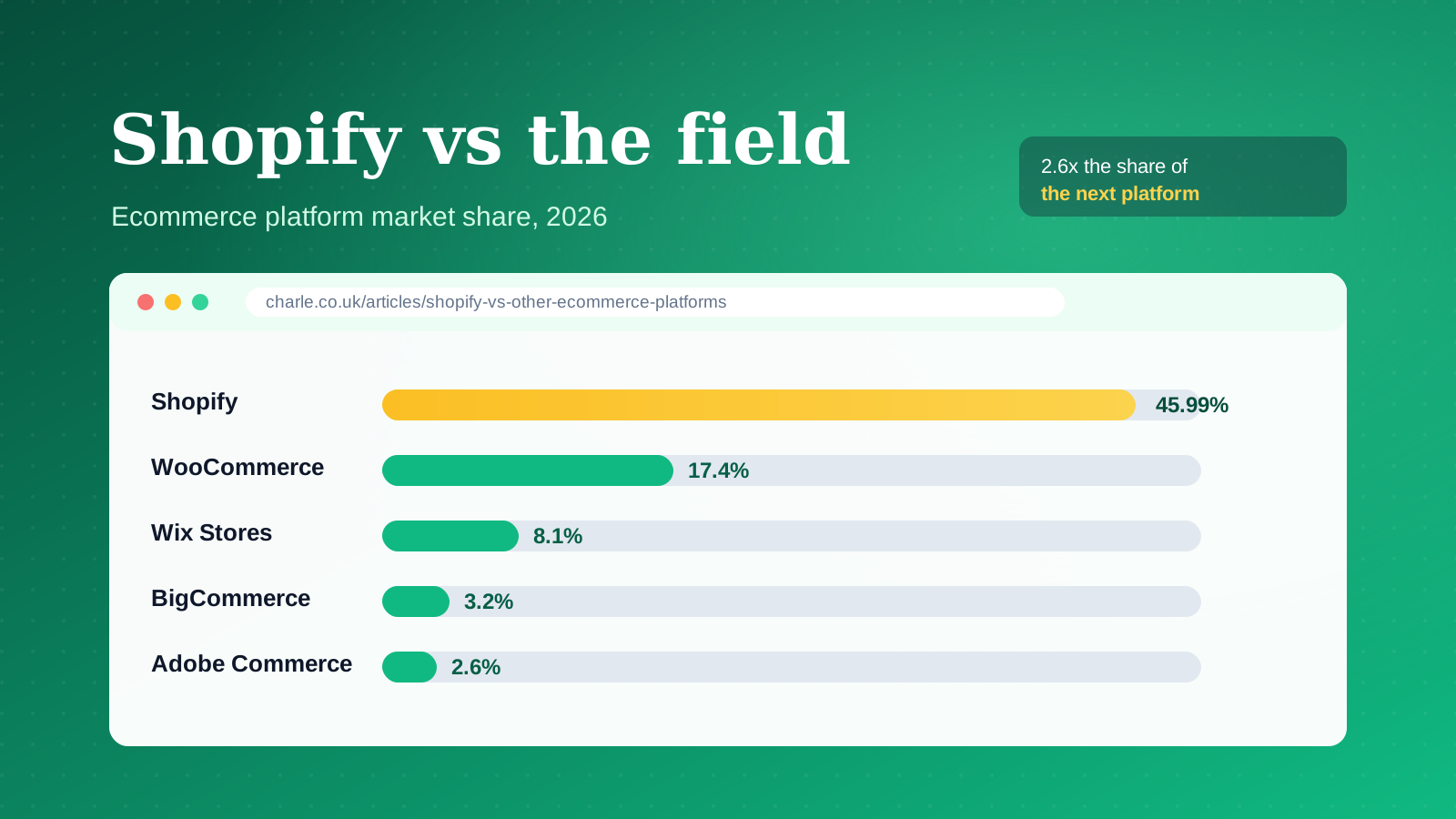
Shopify's competitors fall into three groups. First, the hosted ecommerce platforms that compete head to head: BigCommerce and Adobe Commerce. Second, the website builders that added ecommerce later and now compete for smaller stores: Wix and Squarespace. Third, the open-source and self-hosted options that trade convenience for control: WooCommerce (on WordPress), PrestaShop and OpenCart.
Beyond those, there are marketplaces such as Amazon, Etsy and eBay, and lighter tools like Square Online, Ecwid, Big Cartel and Sellfy that serve specific niches. Each competes with Shopify for a slice of the market rather than the whole thing.
Here is the short version. If organic search and a scalable brand store matter most to you, Shopify is hard to beat. If you already live inside WordPress, need heavy B2B workflows, or run a genuine enterprise catalog, one of the alternatives below may fit better. The rest of this guide explains why.
How We Judge an Ecommerce Platform
Before comparing platforms, it helps to agree on what actually matters. A cheaper monthly fee means little if the platform costs you organic traffic or forces an expensive rebuild in two years. We weigh six things when we advise a brand on where to build.
- Total cost of ownership: the monthly plan plus apps, hosting, payment fees, and developer time, not just the sticker price.
- Search performance: how much control you have over URLs, metadata, site structure and page speed, since organic search is the cheapest traffic you will ever get.
- Ease of use: how quickly a non-technical team can run the store day to day.
- Scalability: whether the platform holds up as order volume, traffic and catalog size grow.
- Ecosystem: the range of apps, themes, plugins and integrations available without custom code, and how much functionality you get before paying for extras.
- Customization: how far you can shape the design and functionality of the store, from simple theme edits for beginners to deep custom development.
- International selling: support for multiple currencies, languages and markets.
Most roundups rank platforms in the abstract. We prefer to match the platform to the brand. A print-on-demand seller and a scaling direct-to-consumer brand have almost nothing in common, so the "best" platform is different for each. Keep your own priorities in mind as you read.
BigCommerce
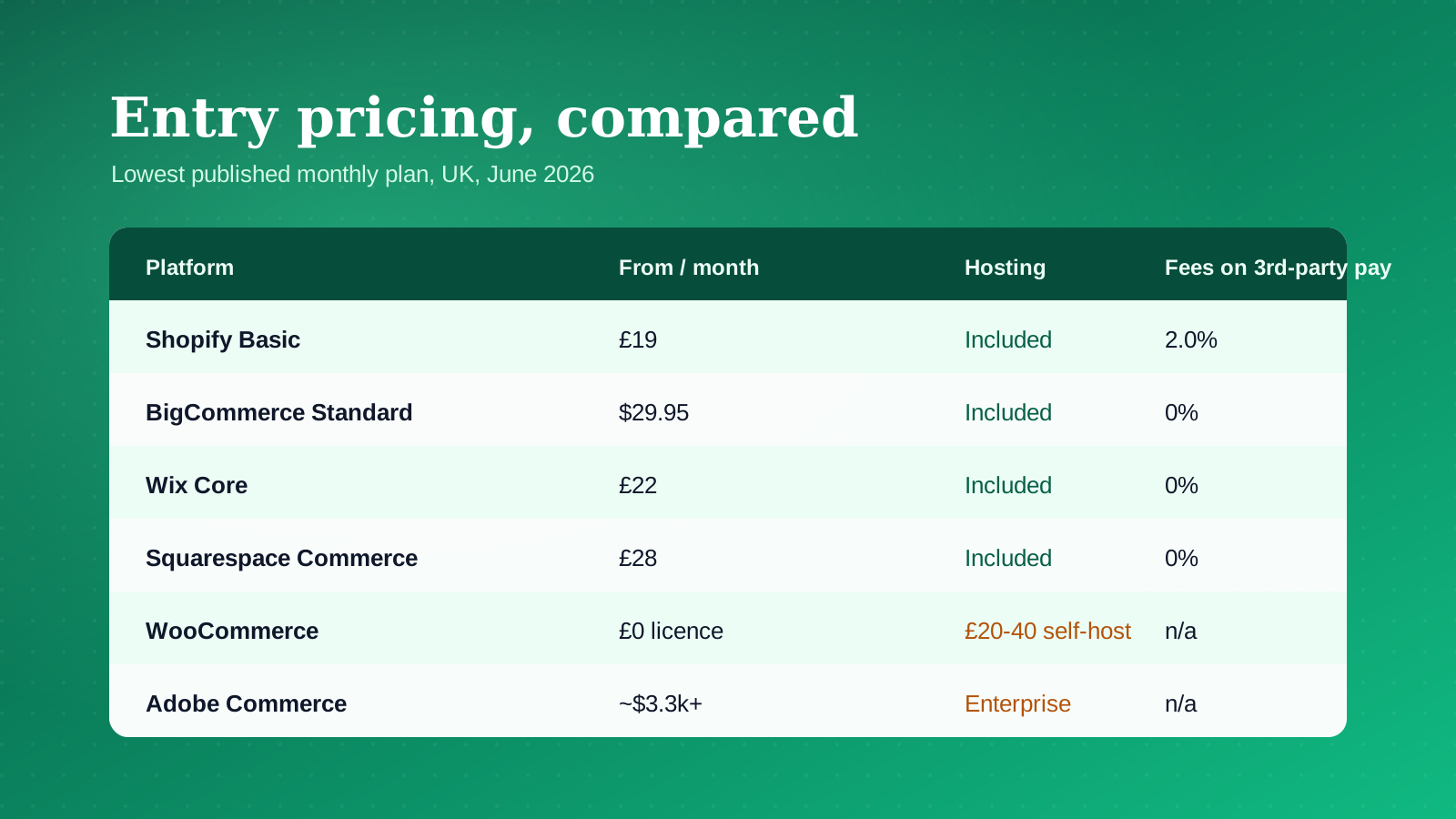
BigCommerce is the closest like-for-like competitor to Shopify. It is a fully hosted platform aimed at growing and mid-market brands, with a similar feature set and pricing that starts at around $29.95 a month on the Standard plan. The two platforms are often shortlisted together.
The strongest argument for BigCommerce is that it bundles in features Shopify pushes into apps. Many selling tools that need a third-party app on Shopify, such as advanced product filtering or certain promotions, are native functionality in BigCommerce. That built-in functionality means fewer integrations to manage and fewer monthly app bills. It also charges no additional platform transaction fees on any plan, whichever payment provider you use, which can matter for higher-volume stores.
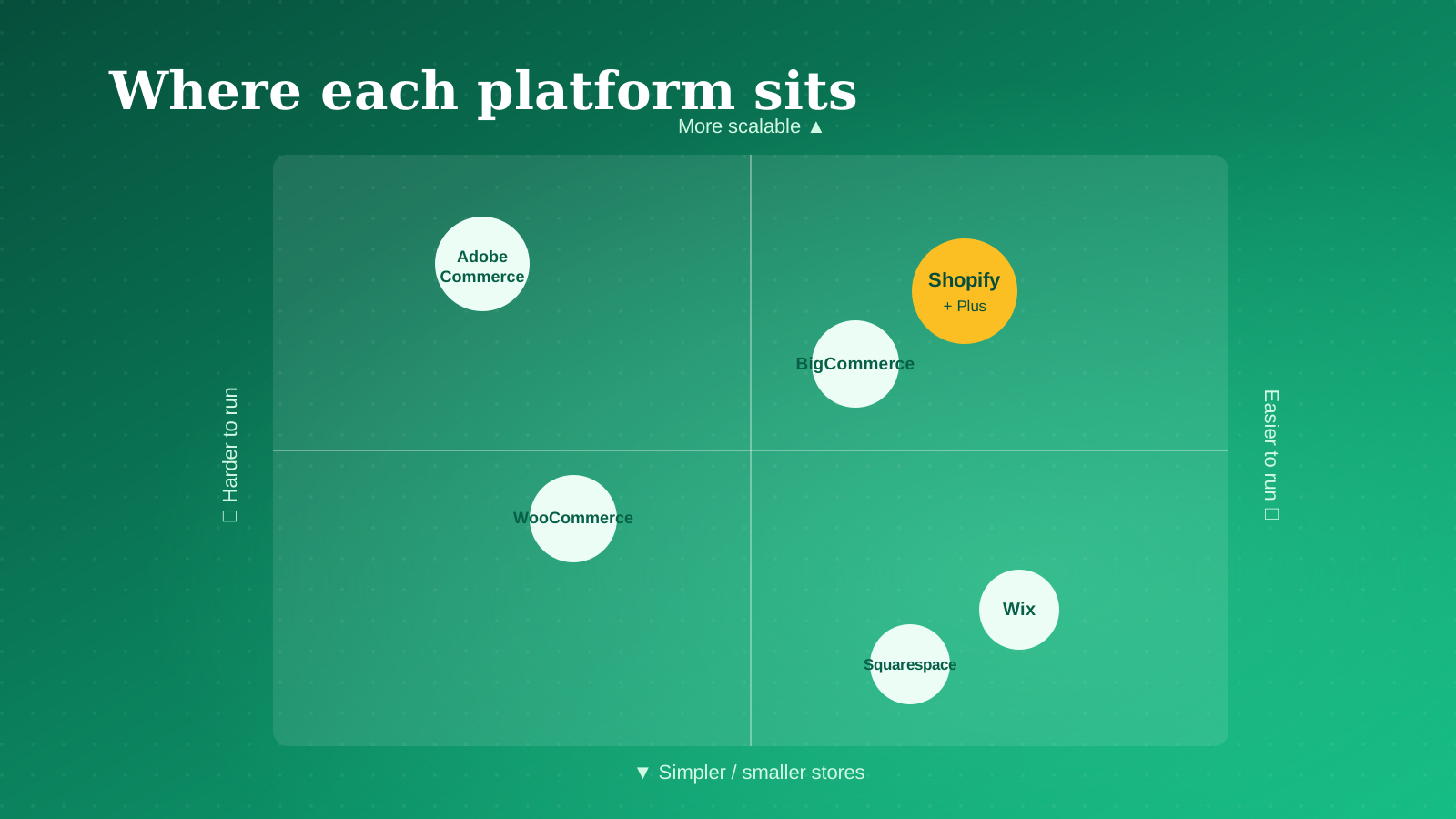
The trade-offs are real, though. BigCommerce has a far smaller app store and theme library than Shopify, so anything niche is more likely to need custom development or a paid integration. Its plans also carry annual sales thresholds and caps on the number of staff users you can add: cross either limit and you are bumped up to the next tier. For most scaling brands we work with, Shopify's larger ecosystem and smoother editing experience win out, but BigCommerce is a credible choice for teams that want more built in and fewer monthly app bills.
WooCommerce (WordPress)
WooCommerce is the most used ecommerce software after Shopify, and it works very differently. It is a free, open-source plugin that turns a WordPress site into a store. If your brand already publishes heavily on WordPress, keeping content and commerce under one roof is a genuine advantage.
WooCommerce gives you near-total control. You can edit any template, customize every URL, and shape your content and site structure exactly how you want, which is why content-led and SEO-focused teams often like it. You control your own domain and hosting, extend functionality through thousands of plugins, and add as many users as you need without hitting a plan cap. The license itself costs nothing, and the depth of customization is the whole appeal.
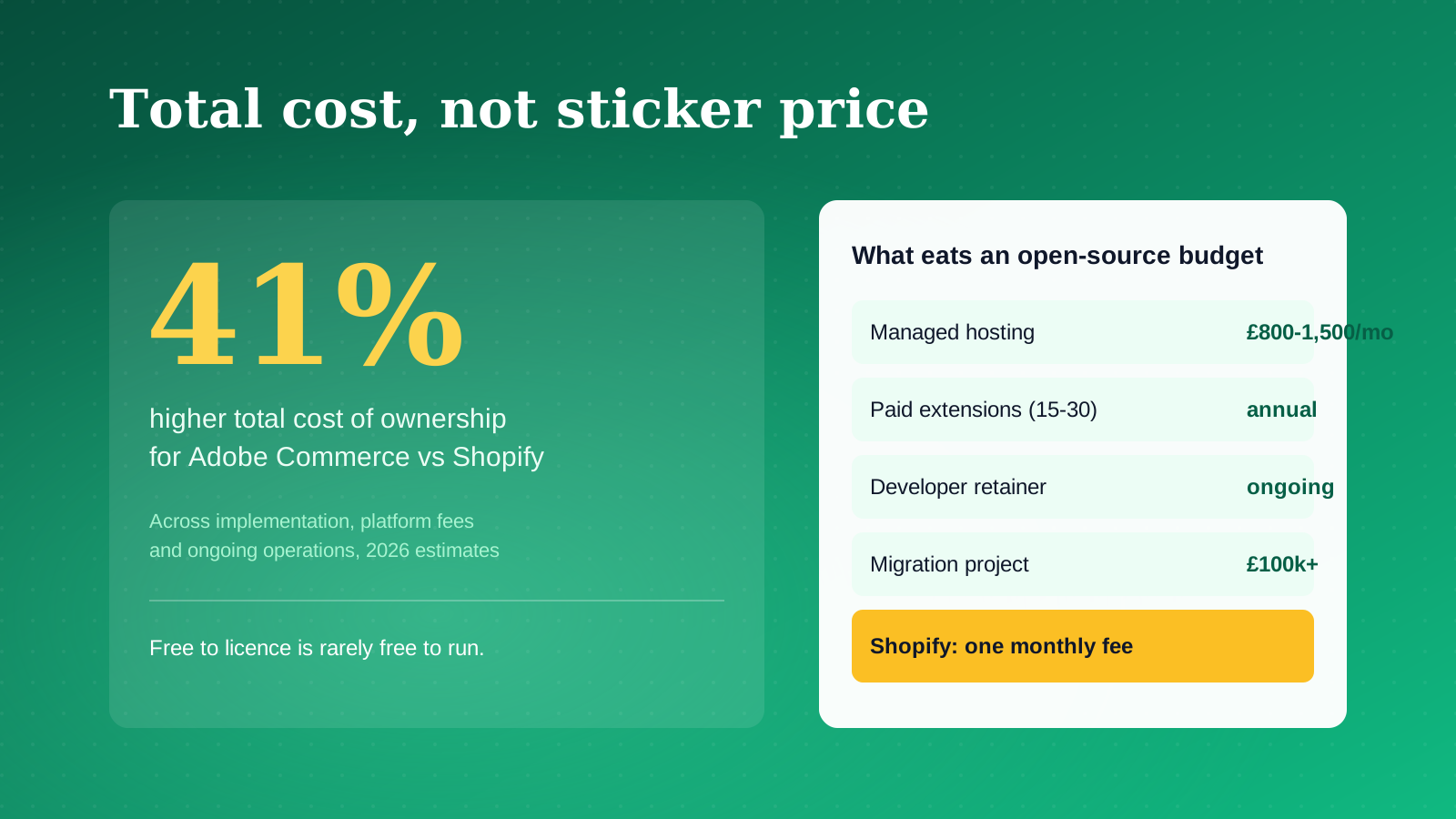
The catch is that free to license is not free to run. You are responsible for hosting, security, updates and performance, and a serious store usually needs managed hosting at roughly $20 to $40 a month at the small end, climbing quickly with traffic. Plugins stack up, and most brands need a developer on hand. WooCommerce suits teams with technical resources or an agency behind them. If you want to focus on selling rather than maintaining infrastructure, a hosted platform like Shopify removes that burden. Our Shopify SEO guide covers how the hosted approach still gives you the search control WooCommerce is prized for.
Wix
Wix began as a general-purpose website builder and added ecommerce later. It is genuinely easy to use, with drag-and-drop editing that gives you more freedom over page layout than Shopify's theme system, and its core commerce plans start at around $29 a month. For beginners, that simplicity is the main draw, and every plan includes a free domain for the first year.
For a small store, a portfolio site with a shop attached, or a business that values design control over selling depth, Wix is a reasonable pick. It bundles marketing, booking and AI functionality that Shopify would route through apps, so a beginner gets a lot of features in one place without hunting for integrations.
Where Wix falls behind is at scale. Its ecommerce features are less developed than Shopify's, particularly for selling in multiple currencies and running a large catalog, and it is not built to handle the order volume a growing brand generates. We would steer any brand with serious growth plans towards a platform built for commerce first. Wix is for the smaller, simpler end of the market.
Squarespace
Squarespace is the platform brands reach for when design comes first. Like Wix, it started as a website builder, and its templates are among the most polished you will find anywhere. The templates are beginner-friendly, and the simplicity of the editor is a genuine selling point for non-technical teams. For creatives, service businesses and stores that lead with visual identity, it is a strong option, with commerce plans from around $36 a month.
Squarespace handles light selling and digital products well, and its blogging tools are more flexible than Shopify's, which appeals to content-driven brands. If you need a stunning site that also sells a modest range of products, it can work out nicely.
The limits show up as you grow. Multi-currency selling is weak, the app ecosystem is small, and the commerce tools are underpowered next to a dedicated platform. Squarespace is a website builder that sells, rather than a store that also has a website. For a brand where ecommerce is the whole business, that distinction matters.
Adobe Commerce (Magento)
Adobe Commerce, formerly Magento, sits at the enterprise end of the market. It is the platform large retailers with complex catalogs, multiple storefronts and demanding B2B requirements have traditionally chosen. Magento Open Source is free to license; Adobe Commerce is a paid enterprise product with pricing that is not published and, by industry estimates, scales from tens of thousands of pounds a year upwards.
Its strength is depth. Adobe Commerce offers more customization and backend control than almost anything else, and the functionality on offer is vast, which is exactly what a global enterprise with a specialist requirement needs. It supports unlimited users, complex product catalogs and features that most brands will never use. If you have the engineering team and budget to match, it can do things a hosted platform cannot.
That power comes at a cost. Analysis in 2026 puts Adobe Commerce's total cost of ownership at around 41% higher than Shopify's on average, once implementation, platform fees and operations are counted. Migrations are measured in months and six-figure budgets. For the vast majority of brands, including many that think they have outgrown Shopify, Shopify Plus delivers most of the capability at a fraction of the operational load. Adobe Commerce earns its keep only at genuine enterprise scale.
Other Competitors Worth Knowing
Several smaller platforms compete with Shopify for particular use cases rather than the whole market. They are worth a mention because the right one can be a better fit than Shopify for a narrow need.
- Square Online: strong for businesses that also sell in person, especially hospitality and retail, thanks to its point-of-sale roots. It can run without a monthly fee, charging per transaction instead.
- Ecwid: not a full platform but a shopping cart you embed into an existing site, which suits businesses that already have a website and domain they do not want to replace, and that value simplicity over a full feature set.
- Big Cartel: aimed at artists and makers with small catalogs, with a free tier for a handful of products.
- PrestaShop: an open-source option popular in Europe, good for multi-currency and multilingual selling, but, like WooCommerce, it needs technical upkeep.
- Marketplaces (Amazon, Etsy, eBay): these sell reach, not a store. They are a channel rather than a home for your brand, and most serious brands use them alongside a Shopify store rather than instead of one.
None of these replaces Shopify for a brand that wants to own its storefront and customer relationship. They solve specific problems, and it is worth knowing which problem each one solves.
Shopify Plus vs Enterprise Platforms
When brands talk about outgrowing Shopify, they usually mean they are comparing Shopify Plus with Adobe Commerce or Salesforce Commerce Cloud. This is where the enterprise conversation actually happens.
Shopify Plus is the enterprise tier, offering higher API limits, checkout customization, multiple storefronts and dedicated support, while keeping the hosted, low-maintenance model that makes Shopify easy to run. Salesforce Commerce Cloud is a premium option that makes most sense for businesses already deep in the Salesforce ecosystem, with strong AI-driven personalisation. Adobe Commerce, as covered above, offers the deepest customization for those who need it.
The pattern we see repeatedly is that brands assume enterprise scale requires an enterprise platform's operational burden. In practice, Shopify Plus handles very high order volumes and complex requirements while sparing the brand the hosting, security and maintenance overhead that Adobe Commerce demands. Unless you have a specific requirement that only a fully customisable platform can meet, Plus usually wins on total cost and speed to launch. Our Shopify Plus agency team helps brands make exactly this call.
When an Alternative Is the Better Choice
We do not recommend Shopify to every brand that asks. There are clear cases where a competitor is the smarter choice, and being honest about them builds more trust than pretending Shopify wins every time.
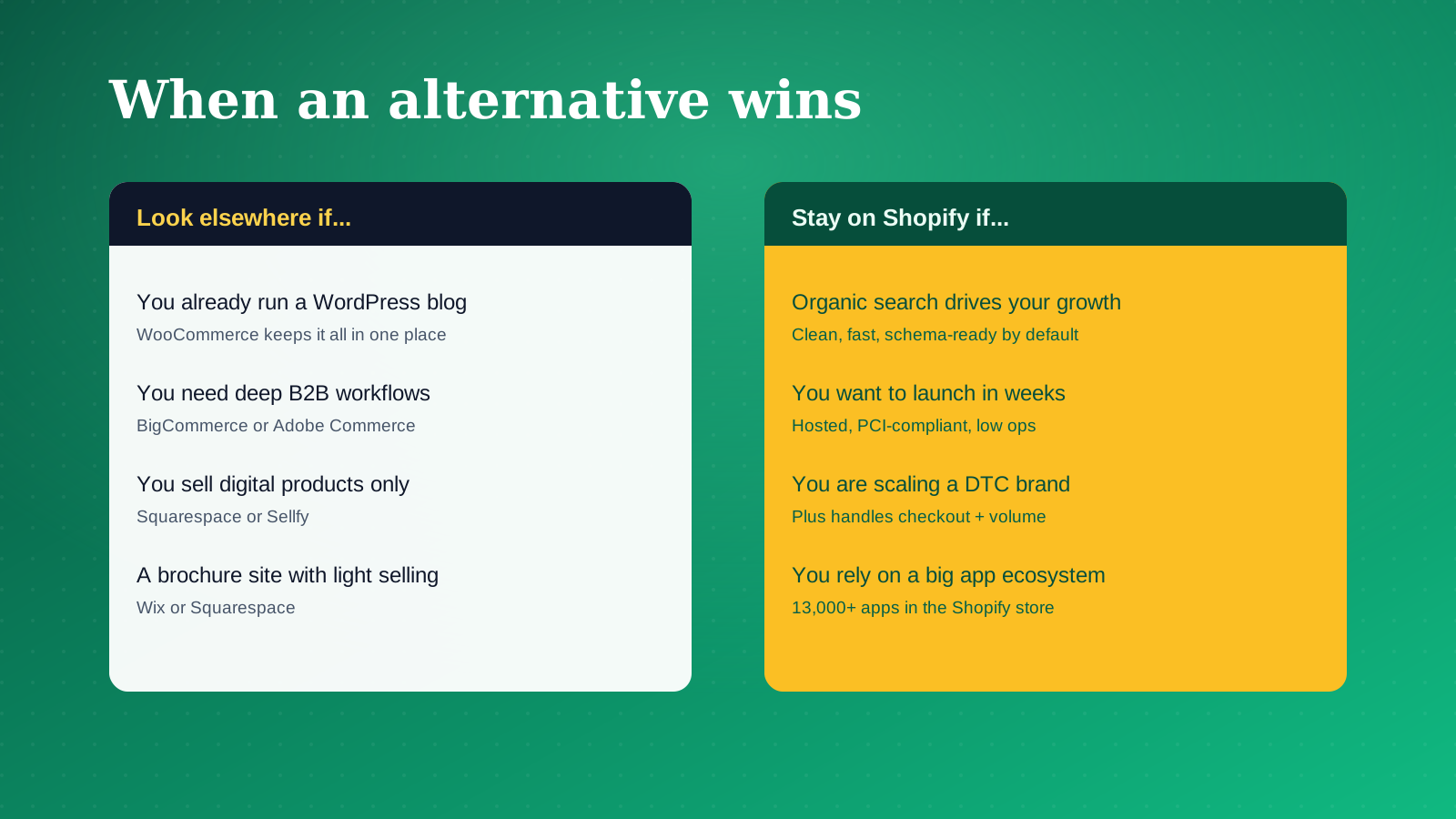
Consider an alternative if you already run a large WordPress site and content is central to your business, in which case WooCommerce keeps everything in one place. Consider BigCommerce or Adobe Commerce if you need deep, native B2B workflows such as customer-specific pricing and quote management. If you sell only digital products, Squarespace or a tool like Sellfy may be simpler and cheaper. And if you are building a brochure site with occasional selling rather than a real store, Wix or Squarespace will serve you well without the depth you would not use.
The decision usually comes down to where your growth will come from and how much technical resource you have. A brand betting on organic search and scaling direct-to-consumer sales is well served by Shopify. A brand with a specialist enterprise requirement and an engineering team may be better off elsewhere. If you are weighing a move, our guide to Shopify pricing helps you compare the true monthly cost against the alternatives.
Why Most Brands Still Choose Shopify
For all the choice on offer, Shopify keeps winning for a reason. It gives most brands the best balance of ease, scalability and search performance without the operational weight that open-source and enterprise platforms carry.
The hosted model means you are not managing servers, security patches or PCI compliance. The app ecosystem is the largest in ecommerce, so most features you need are met without custom code or a paid integration. And the platform produces clean, fast, schema-ready pages out of the box, which is why search-first brands do well on it. In our experience building and optimising Shopify stores, that combination of features, simplicity and search performance is what lets a small team punch above its weight.
Shopify is not perfect. Transaction fees on third-party gateways, app dependency and limited checkout customization on lower plans are real drawbacks, and we are candid about them. But for the majority of ambitious brands, the alternatives solve one problem while creating others. The right question is not "what can beat Shopify" but "what does my specific brand need," and for most, the answer still points back to Shopify. If you want a second opinion on where to build, our ecommerce SEO agency team is happy to help. Get in touch to talk it through.