 Nic Dunn, CEO, Charle Agency
What Klaviyo Flows Actually Are
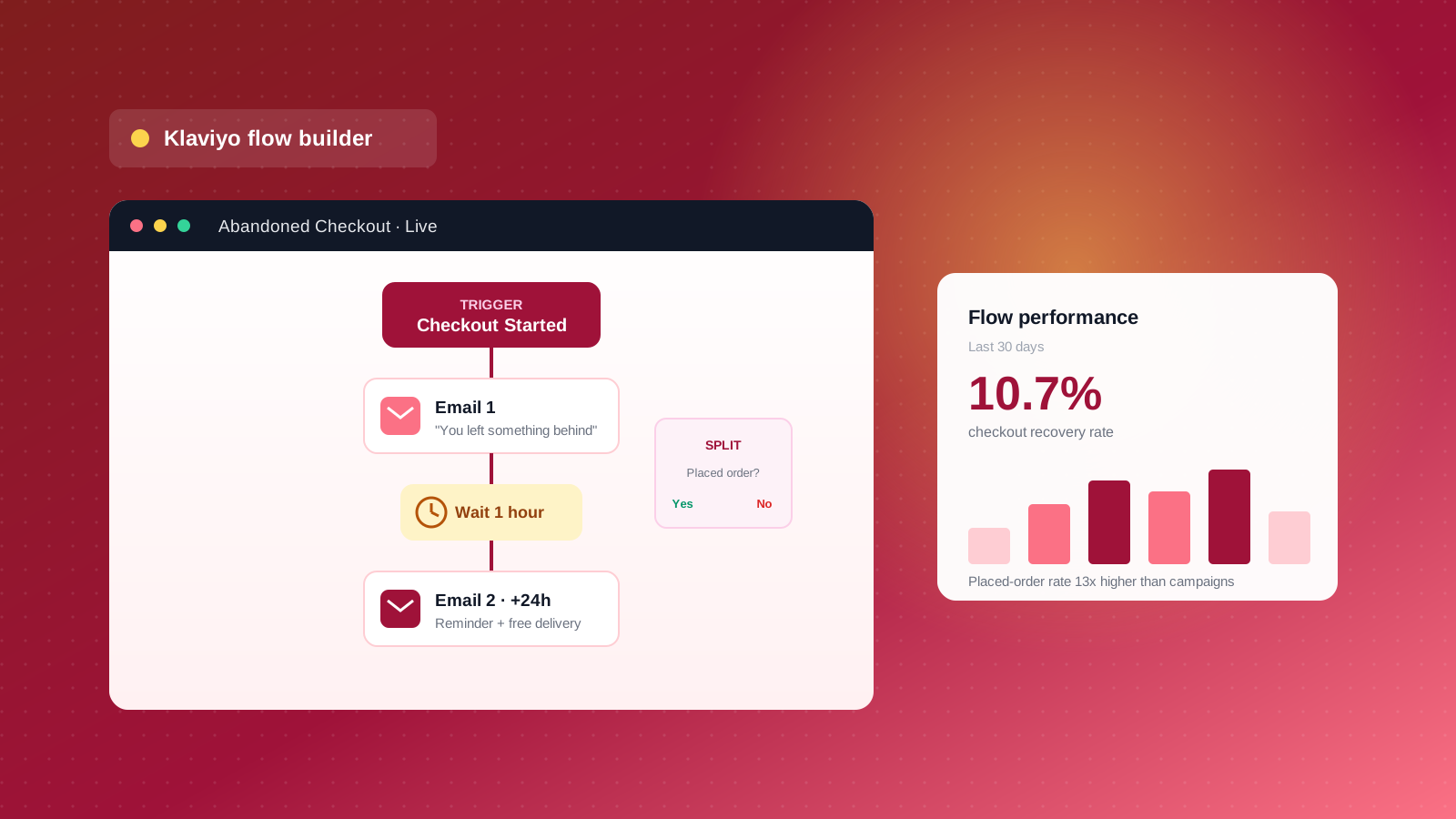
A Klaviyo flow is an automated sequence of emails, and often SMS, that sends itself when a shopper meets a trigger. Someone starts a checkout and does not finish, a new subscriber joins your list, a product they wanted comes back in stock: each of these events can kick off a flow. The messages then send on their own schedule, personalized to that individual, for as long as they stay in the sequence.
This is the key distinction between flows and campaigns. A campaign is a one-off broadcast you build and send to a segment at a set time, such as a Friday product launch or a holiday weekend sale. A flow is always on. You build it once, connect it to a trigger, and it works for every customer who qualifies from that point forward. Campaigns create moments; flows create a system.
For Shopify brands, that always-on quality is what makes flows so valuable. Your store is generating trigger events every hour of every day. Flows turn those events into revenue while you sleep, which is exactly why they belong at the center of any serious retention strategy.
Why Flows Matter: The Revenue Maths
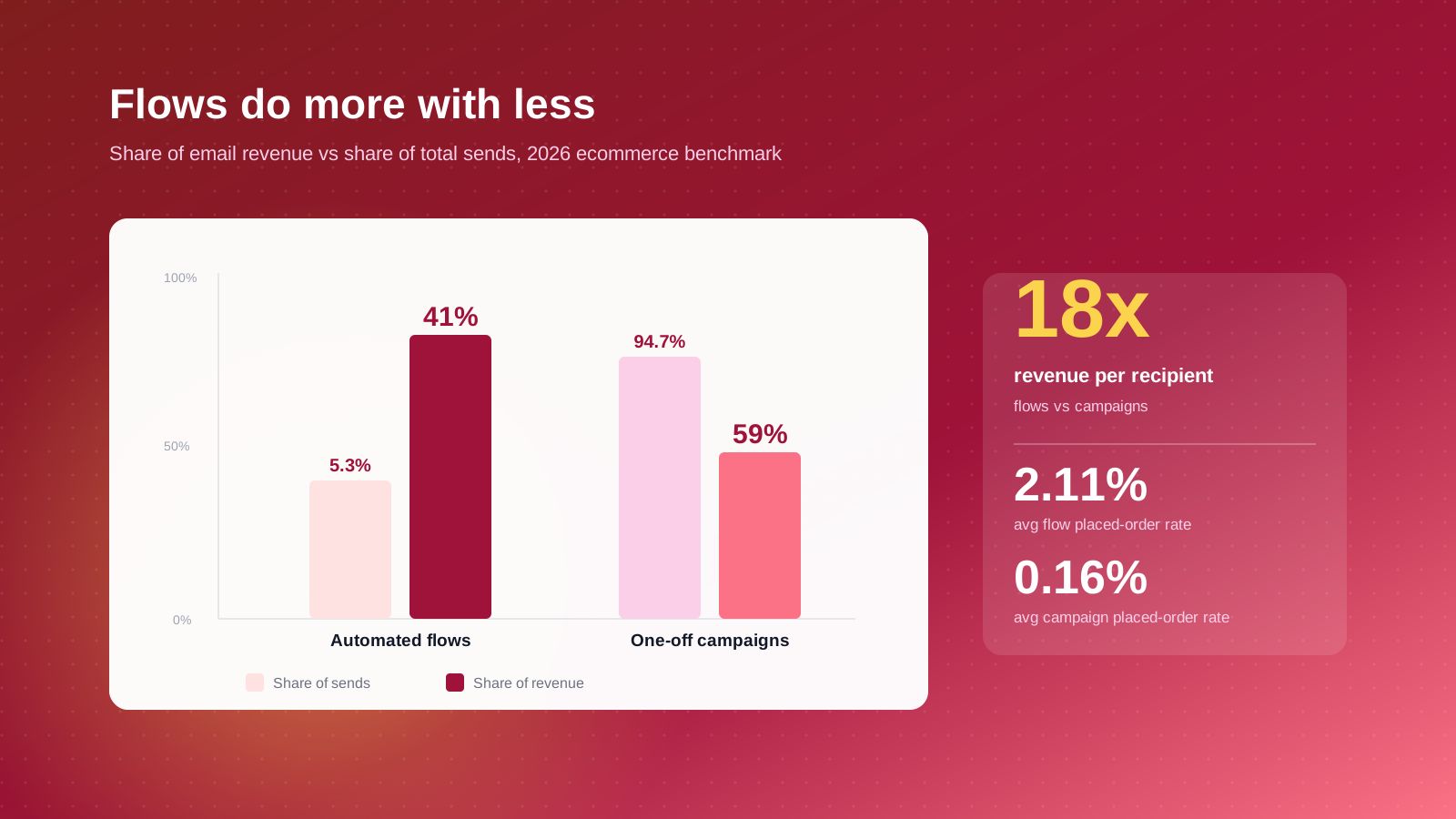
If you only look at one number to understand why flows deserve your attention, make it this one. In 2026, automated flows generated close to 41% of all email revenue from just 5.3% of total email sends. A small slice of your sending volume does most of the earning.
The reason is intent. Flows reach people at the exact moment they are thinking about you, so they convert far harder than a scheduled campaign. Across all industries, the average flow places an order on 2.11% of sends, and the top 10% of programs reach 4.3%. Campaigns average 0.16%. That works out to revenue per recipient roughly 18 times higher for flows than for one-off sends.
What good looks like also shifts with brand size, so judge yourself against your stage rather than a single target. Under five million dollars in revenue, 25 to 35% of email revenue coming from flows is healthy. Between five and twenty million, aim for 40 to 50%. Above twenty million, mature programs sit at 50 to 60%, with the very best clearing 58 to 65%. If your flows are earning far less than your bracket suggests, you have money sitting on the table.
How Many Flows Should a Shopify Brand Run?
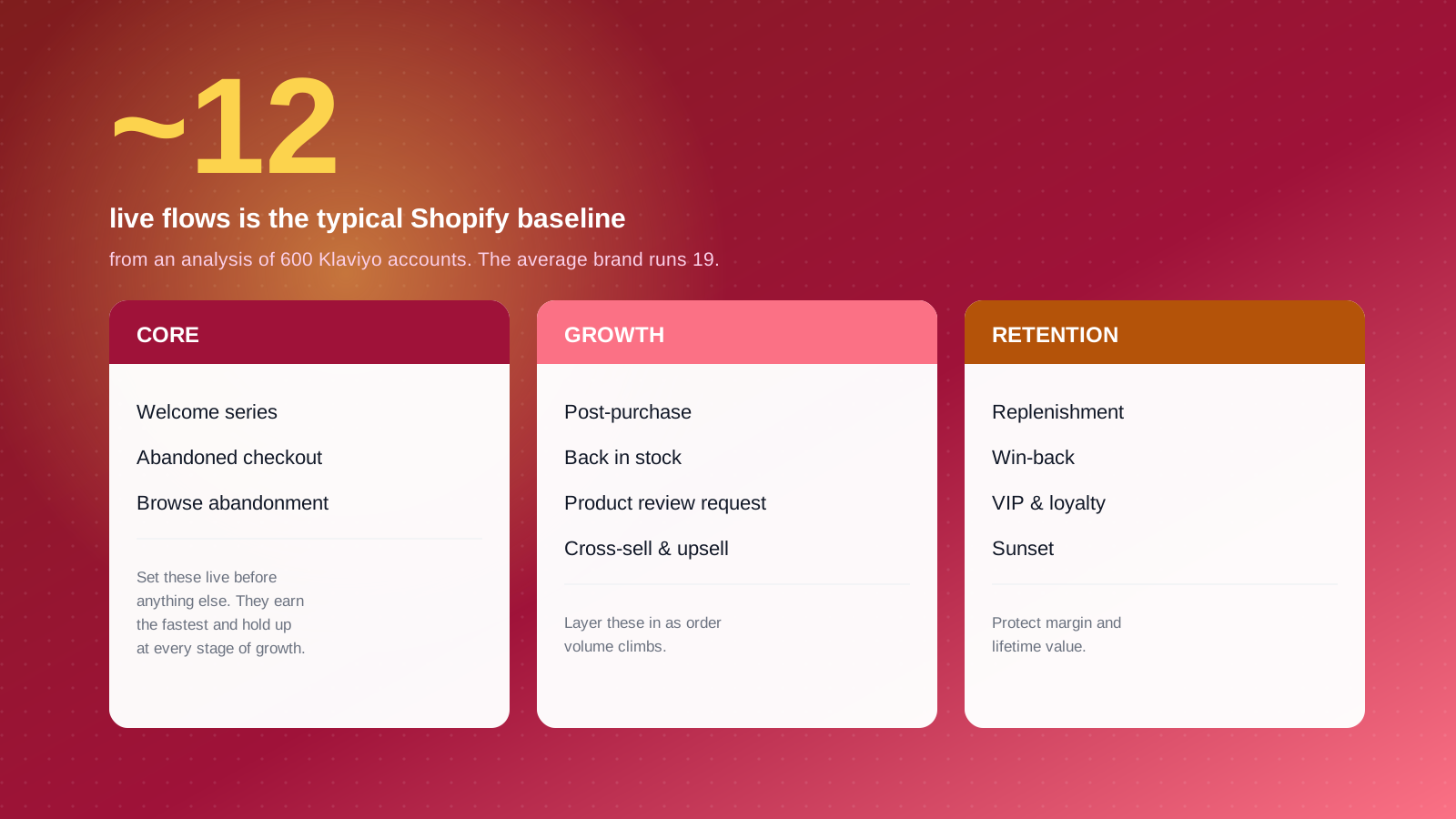
More flows is not automatically better. One useful benchmark comes from an analysis of 600 Klaviyo accounts by the team at Littledata, which found that most brands run a compact core of around 12 live flows, while the average sits at 19. The higher average is pulled up by larger brands with the data and the team to support complexity.
The lesson is to start narrow and go deep. A store running five well-built, well-segmented flows will almost always beat one running fifteen thin, generic ones. Every flow you add is another sequence to write, test, and maintain, so each one needs to earn its place in the business.
It also helps to think in terms of the types of flows a store needs rather than a fixed number. There are core flows that win the first sale, growth flows that raise average order value, and retention flows that protect lifetime value. Klaviyo publishes best practices and a library of pre-built templates for each type, and its reporting tools make it easy to see which ones are pulling their weight. Map your flows to those jobs and the right count for your business becomes obvious.
Flows are also only as good as the data that triggers them. If your Shopify events and customer properties are inconsistent, you end up building either generic flows you cannot trust or overly complex ones patched together with logic. Clean data first, then build. If your customer records need work, our guide to customer segmentation for ecommerce is a good place to start.
The Core Flows to Build First
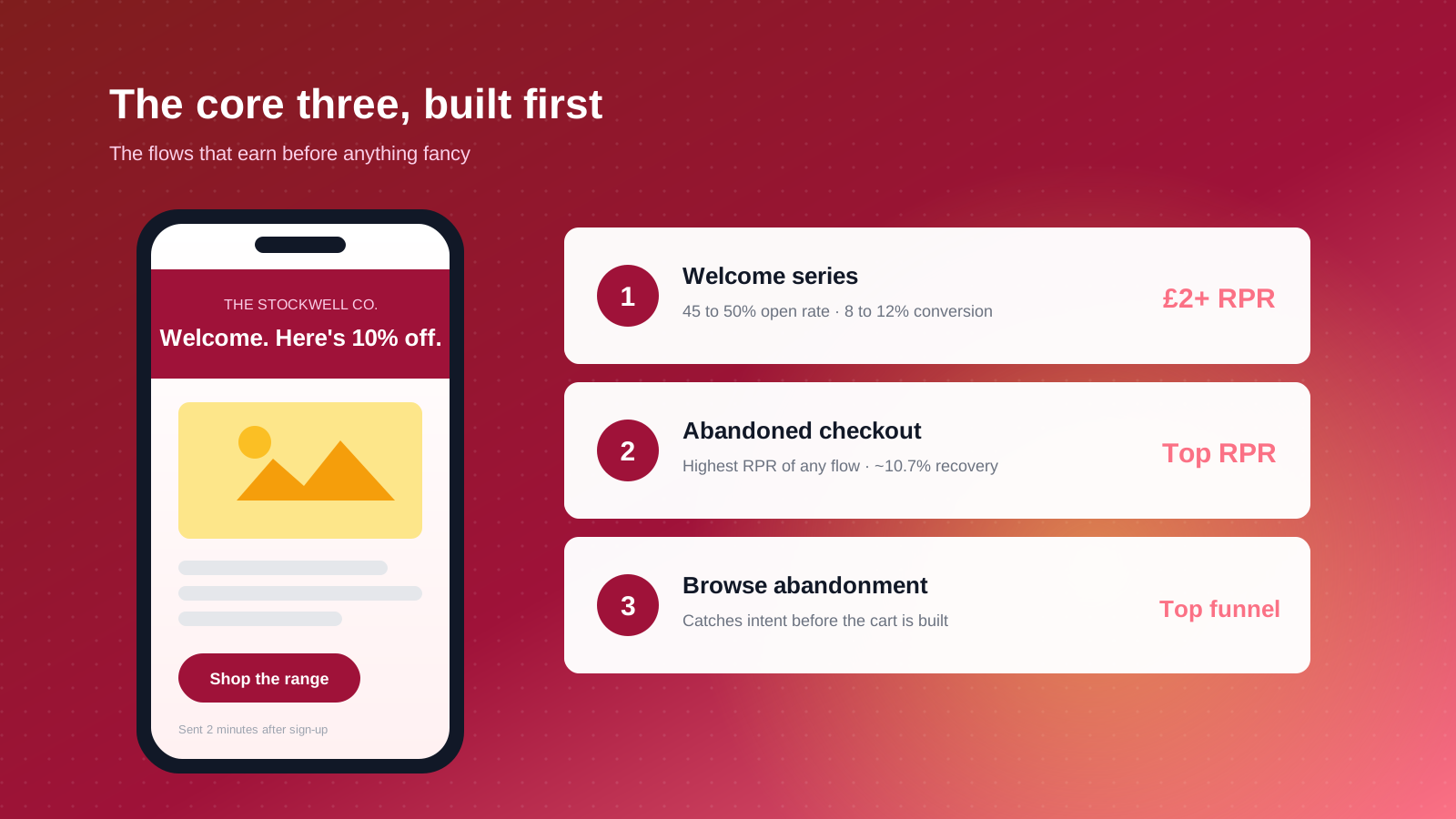
Three flows do the heavy lifting for almost every Shopify store. If you have none live today, build these before anything else.
The welcome series greets new subscribers and sets the tone for the relationship. Welcome emails post the highest open rates of any email type, commonly 45 to 50%, and convert at 8 to 12%, with the best programs reaching 12 to 18%. The first message alone typically earns 40 to 50% of the whole series revenue, so lead with your strongest offer and your clearest brand story rather than saving them for later.
The abandoned checkout flow recovers shoppers who reached the checkout but did not complete. It carries the highest revenue per recipient of any flow type, and a well-built version recovers around 10.7% of abandoned checkouts. Because Klaviyo receives the checkout event directly from Shopify, you can trigger it within an hour and personalize it with the exact items left behind. For a deeper look at plugging this leak, see our guide on reducing cart abandonment.
The browse abandonment flow catches intent even earlier, when someone views a product but never adds it to the cart. It reaches shoppers higher in the funnel and, because it fires on viewed-product events synced from your store, it lets you follow up on genuine interest before the moment passes.
Get these three live and segmented, and you have covered the moments where shoppers are most ready to buy. Everything after this is about extending the relationship rather than capturing the first sale.
The Flows That Grow Lifetime Value
Once the core is earning, the next tier of flows shifts the focus from winning the first order to increasing how much each customer is worth over time. These are where a good program becomes a great one.
A post-purchase flow follows up after an order to confirm the purchase, set expectations on delivery, and start building loyalty. It is also the natural home for a first cross-sell, suggesting a complementary product once the customer has had time to enjoy the first. A product review request fits neatly here too, sent a set number of days after delivery to gather the social proof that helps future shoppers convert.
A back in stock flow turns disappointment into demand. When a sold-out product returns, everyone who registered interest is notified automatically, often the fastest revenue any flow generates because the intent is already proven. For subscription-friendly or consumable products, a replenishment flow reminds customers to reorder just before they are likely to run out, timed to the typical lifespan of the product.
A birthday and anniversary flow adds a personal touch, sending an offer on a customer's birthday or the anniversary of their first order using a date property held on their profile. It is a simple flow to build and a reliable driver of repeat purchases and engagement from people who already like you.
To protect the relationship at both ends, add a win-back flow for customers who have gone quiet and a sunset flow that stops emailing people who never engage, which keeps your list healthy and your deliverability strong. A VIP flow rewards your best customers with early access or perks, deepening loyalty among the buyers who drive most of your sales. Together, these flows are the backbone of a retention program; our guide to customer retention strategies for ecommerce covers how they fit the wider picture.
Start From Klaviyo's Flow Library
You rarely need to build a flow from a blank canvas. Klaviyo ships a flow library of pre-built templates covering every flow named above, from the welcome series to winback and back in stock. Each one arrives with the trigger, filters, timing, and email components already assembled, so setup is mostly a matter of adapting a proven structure to your brand.
When you add a flow from the library, follow the on-screen instructions to connect it to the right trigger, then work through the emails. Give the flow a clear name so your team can find it later, swap in your own copy and images, adjust the buttons and calls to action, and set the options that control who qualifies. Klaviyo's education resources and Academy courses walk through each template if you want ideas on how far to take it.
The library is also a fast way to spot gaps. Scan the list of flow ideas Klaviyo suggests for an ecommerce store, compare it against what you already run, and you will quickly see which flows are missing. Starting from a template does not mean settling for generic. It means skipping the wiring and spending your time on the messaging and segmentation that actually move the numbers.
How the Shopify Integration Powers Your Flows
Flows are only as smart as the data feeding them, and this is where the Shopify integration earns its keep. Once connected, Klaviyo syncs store data almost in real time, with most changes reflected within a minute. Orders, checkouts, product views, and customer properties all flow across, so your automations can react to what is happening in your store right now rather than an hour ago.
That real-time sync feeds the events that make flows specific. Checkout Started drives your abandoned checkout flow. Viewed Product drives browse abandonment. Placed Order drives post-purchase and review requests. Because these events arrive with full context, including the exact products and their value, you can personalize messages and split audiences on what people actually did.
The integration also powers channels beyond email. Klaviyo runs email and SMS from one platform, so a flow can send an email first and follow up by text where it will land better. Back in stock alerts are a good example: SMS back in stock is supported specifically for Shopify and other inventory-aware catalogs, letting you notify keen shoppers by text the moment a product returns. Running both channels from a single set of flows is a large part of why Klaviyo remains the default choice for Shopify Plus brands. If you are weighing up the investment, our breakdown of Klaviyo pricing sets out what it costs as your list grows.
Klaviyo Flow Triggers at a Glance
Every flow starts with a trigger, the event that decides who enters and when. Most triggers on a Shopify store are metrics that sync from your store in real time, though a flow can also be triggered when someone joins a list or matches a segment. Getting the trigger right is half the battle, because it determines whether the flow reaches the right person at the right moment.
Here are the flow triggers that power the core email flows on a typical Shopify store, and the flow each one belongs to:
- Checkout Started triggers the abandoned checkout flow, the highest revenue-per-recipient flow of them all.
- Added to Cart can power an abandoned cart flow for stores that want to catch shoppers earlier than checkout.
- Viewed Product triggers the browse abandonment flow, reaching shoppers who showed interest but never added to cart.
- Placed Order triggers the post-purchase flow, the order confirmation follow-up, and the product review request.
- Fulfilled Order is useful for timing review requests to land a few days after delivery.
- Subscribed to List triggers the welcome series for new subscribers.
- Back in Stock triggers the back in stock flow when a sold-out product returns.
- Price Drop can trigger a price drop reminder to shoppers watching an item.
- A date property such as a birthday or the anniversary of a first order triggers the birthday and anniversary flow.
- Predicted next order date or a fixed delay triggers the replenishment flow for consumable products.
- Segment membership, for example entering a lapsed-customer segment, triggers the winback flow, while leaving an engaged segment can feed the sunset flow.
Layering trigger filters and profile filters on top of these lets you fine-tune exactly who qualifies. The same handful of triggers, combined thoughtfully, cover almost every email flow a growing store needs.

How to Set Up a Flow in Klaviyo
Building a flow in Klaviyo follows the same shape every time, whichever automation you are creating. Understanding the moving parts makes it far easier to build something that works rather than something that simply sends.
Start with the trigger. This is the event that adds someone to the flow, such as a Shopify metric like Checkout Started or a list subscription. Klaviyo also ships with a large library of pre-built flows, so in most cases you can begin from a proven template and adapt it rather than starting from a blank canvas.
Next come trigger and profile filters. These decide who actually qualifies and who is held back. You might exclude anyone who placed an order in the last thirty days, or only include subscribers who have opted in to marketing. Good filters are what stop a flow from emailing the wrong people and quietly eroding trust.
Then you add steps. Each email or SMS is a step, and between them you place time delays that control pacing, such as waiting one hour before the first abandoned checkout email. You can also add conditional splits, which send people down different paths based on their behavior, for example skipping the discount email for anyone who has already bought. This is how a single flow can serve very different customers well.
Finally, set the actions live. In Klaviyo, each email or SMS step is called an action, and actions default to draft or manual, so a common and costly mistake is building a flow, admiring it, and never switching the actions to live. Nothing sends until you do. You can set actions live individually or in bulk, then move on to watching how the flow performs. For a wider view of how flows sit within your whole stack, see our guide to ecommerce marketing automation.
Segment and Personalize Your Flows
The difference between a good flow and a great one is usually segmentation. A single flow can serve very different people well once you add conditional splits, which branch the sequence based on what someone has done. A high spender and a first-time browser should not receive the same message, and branches let you treat them differently inside one flow.
Klaviyo gives you several ways to personalize. You can split by the product category or collection a shopper browsed, so a customer looking at running shoes hears about running gear rather than a generic offer. You can segment by customer behavior, such as how recently they bought or how often, and group your best customers together for VIP treatment. Because the data syncs from Shopify in real time, these splits reflect where each person actually sits in the customer journey.
Personalization is not only about the offer. Use it to control frequency, so engaged subscribers hear from you more often and quieter ones less, and to suppress people who have just bought so they are not chased for a cart they already converted. Well-built segments keep every message relevant, which protects both your results and your sender reputation.

Write Flow Emails That Convert
A flow only works if the emails inside it earn the click. The best flow structure in the world will underperform with weak copy, so treat the writing as seriously as the setup. Start with the subject line, because it decides whether the email gets opened at all, then make sure the first line delivers on the promise it made.
Match your messaging to the moment. Abandonment emails and reminders can carry a light sense of urgency, a nudge that the cart is waiting or stock is limited, without tipping into pressure. An order confirmation or post-purchase email should feel warm and reassuring, covering the details a customer wants such as what happens next and when their order ships. The tone that suits one flow rarely suits another.
Keep the copy tight and lead with the benefit. Use one clear call to action per email and design the buttons so they stand out on mobile, where most opens happen. Small details matter too, from preview text to alt text on images. And remember that your email list is an asset worth protecting, so keep the writing genuinely useful rather than leaning on discounts every time.

Timing, Delays and Sequencing
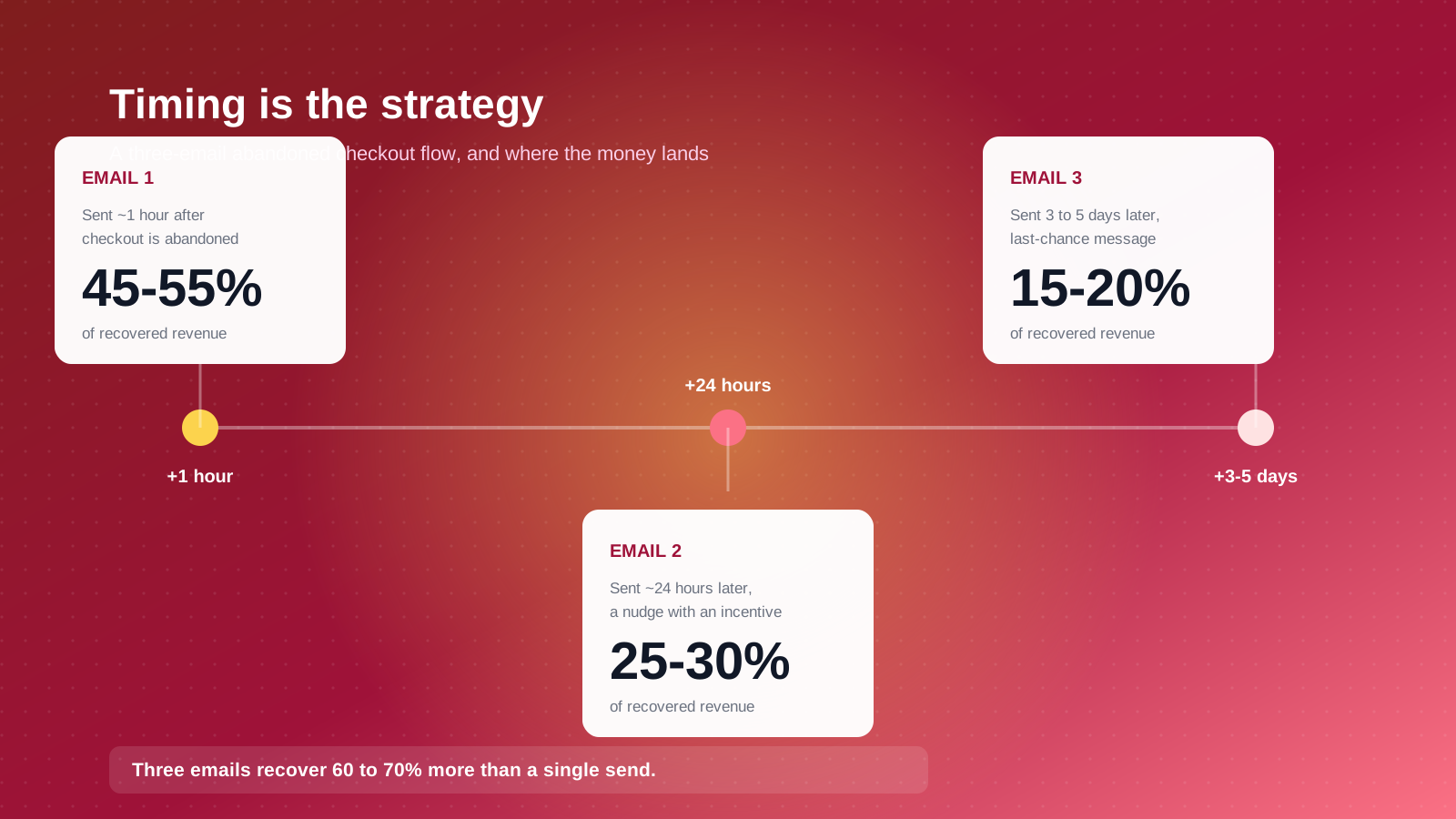
The gap between messages is not a technical detail, it is the strategy. Get the timing right and a flow feels helpful; get it wrong and it feels like nagging. The abandoned checkout flow is the clearest example of why sequencing matters.
A strong version uses three emails. The first sends around an hour after the checkout is abandoned, while the intent is still warm, and it typically captures 45 to 55% of the flow's recovered revenue. The second follows roughly 24 hours later with a gentle nudge, often adding an incentive such as free delivery, and picks up another 25 to 30%. The third sends three to five days later as a last-chance message and recovers the remaining 15 to 20%. A three-email series recovers 60 to 70% more than a single email, which is why the extra steps are worth building.
The same principle applies to the welcome series. Send the first email within minutes of sign-up while your brand is fresh in mind, then space the follow-ups over the following days to tell your story without overwhelming a brand new subscriber. For consumable products, replenishment timing should track the real lifespan of the item, reminding customers just before they run out rather than on a fixed calendar.
There is no single perfect cadence for every store. The right delays depend on your products, your price point, and how your customers behave, which is exactly why the measurement step matters so much.
Measure, Test and Improve
A flow is never finished. The best programs treat every automation as something to refine, because small improvements compound across every customer who passes through.
Klaviyo's flow analytics show open rates, click rates, placed-order rates, conversions, and revenue per recipient for each message, so you can see precisely which step is pulling its weight and which is dragging on flow performance. Compare these metrics against the benchmarks above to spot the gap. A welcome flow converting at 3% when the norm is 8 to 12% is telling you the offer or the timing needs work. Reading the performance data against best practices, rather than in isolation, is what turns raw numbers into decisions.
Test one thing at a time. Klaviyo's built-in A/B testing lets you trial different subject lines, send timings, or incentives within a flow and let the data decide. Try a benefit-led subject against a curiosity-led one, or a one-hour delay against a thirty-minute one, and keep the winner. Small changes to how you split recipients or time a message often lift engagement more than a full rebuild, and because flows run continuously, even a small gain keeps paying out long after the test ends.
Audit your flows on a regular schedule, at least quarterly. Check that every step is still live, that filters are excluding the right people, that links and products are current, and that seasonal references have not gone stale. Flows quietly break when products are discontinued or offers expire, so a routine review protects the revenue you have already earned. If you would like expert help building or auditing your Klaviyo program, our Shopify Plus agency team can help. Get in touch to talk it through.
Deliverability and List Health
A flow can be perfectly built and still fail if the emails never reach the inbox. Deliverability is the quiet factor behind flow performance, and it rests on one thing above all: list health. Mailbox providers watch how people respond to your emails, and strong engagement is what keeps you landing in the primary inbox rather than the promotions tab or spam.
The single biggest lever is sending to people who want to hear from you. This is why the sunset flow matters so much. By quietly removing subscribers who have not opened or clicked in months, you protect your sender reputation and lift the metrics that providers reward. A smaller, engaged email list almost always outperforms a large, indifferent one, both on deliverability and on revenue.
Watch a few numbers as your program grows. Rising bounce rates or spam complaints are early warnings that something needs attention, while healthy open and click rates signal that your list and your content are in good shape. Authenticate your sending domain, warm up any new sending identity gradually, and keep your flows genuinely useful. Deliverability is not a one-off setup, it is the ongoing result of treating your subscribers well, and it protects every flow you have built.
Common Mistakes to Avoid With Klaviyo Flows
Most flow problems come down to a handful of avoidable mistakes. The most common is the simplest: building a flow and leaving the actions in draft. It is an easy error to make and a costly one, because the flow looks finished in the builder while nothing actually sends. Always confirm every action is live before you move on.
The next is shipping a flow without proper tests. Send yourself through the sequence, check how each email renders across the main inboxes and browsers, and confirm the splits route people the way you intended. It is also worth watching the replies. Customer feedback that lands in your inbox is some of the clearest guidance you will get on what is working and what is confusing.
Two more are easy to miss. Leaning on discounts in every flow trains customers to wait for a code and quietly erodes your margins, so use incentives with intent rather than by default. And a flow built for today can struggle as you scale, so revisit your setup as volume grows and segments get larger. Treat these flows as a system you refine, not a project you finish, and the results compound. If you would rather hand the whole program to a specialist, our Klaviyo pricing guide is a useful next read.