 Nic Dunn, CEO, Charle Agency
What a Fulfillment House Actually Does
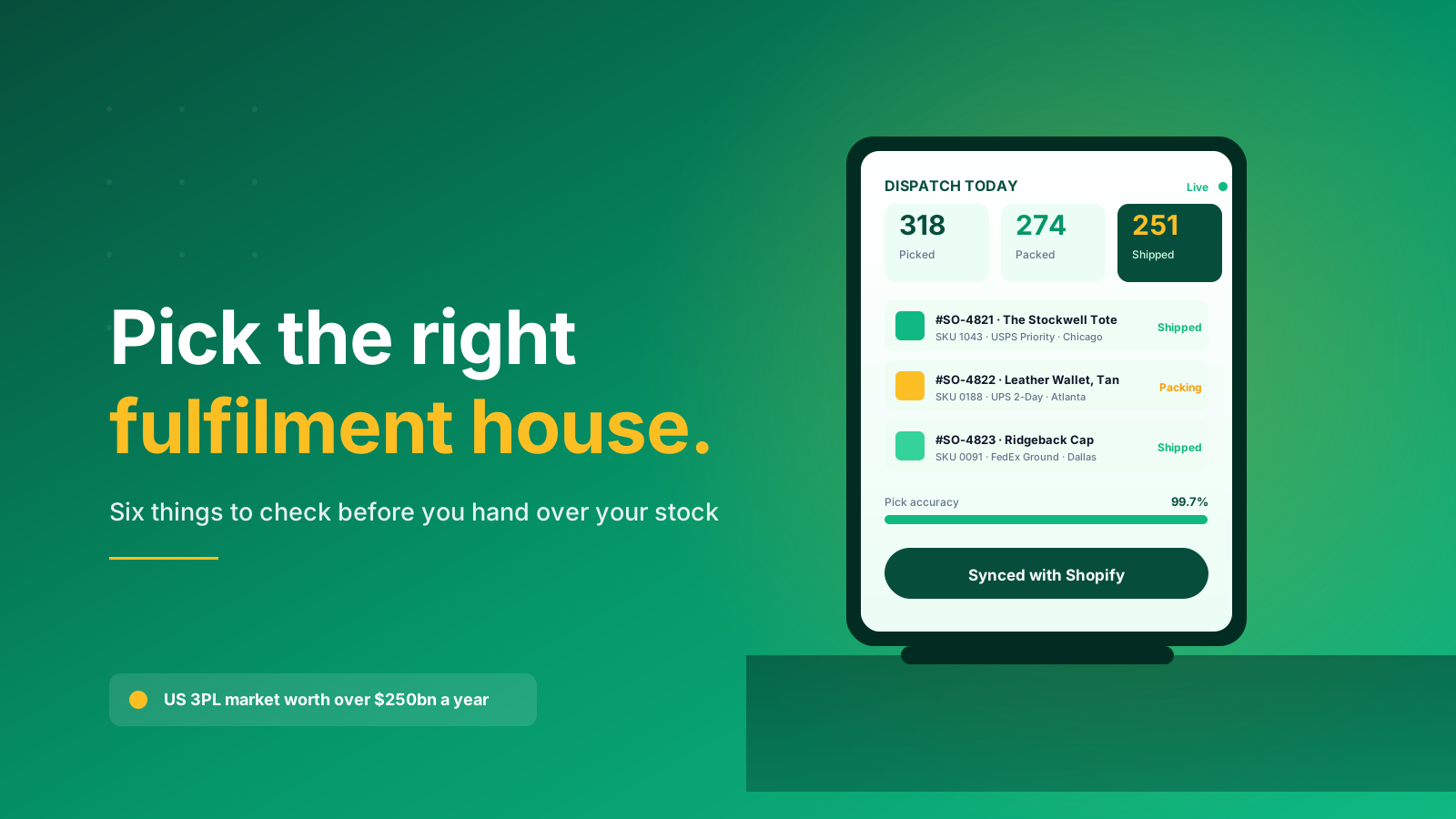
A fulfillment house is a third-party company that handles warehousing and distribution for your business. It stores your products, then picks, packs and ships orders on your behalf. It takes stock in from your supplier, holds inventory on its own premises, and dispatches each parcel when an order comes through your store. Many fulfillment companies also handle post-order tasks such as returns processing, replacements and, in some cases, customer service. In short, it runs the physical side of your supply chain so you can focus on marketing, product and growth.
The terminology trips people up. A fulfillment house and a fulfillment center describe roughly the same thing, a packing warehouse, but "fulfillment center" usually refers to an in-house operation while "fulfillment house" tends to mean a company that offers warehousing and packing for others. You will also see the term third-party logistics, or 3PL, used for exactly this service. They all describe the same type of service.
There are also different types of fulfillment house to be aware of. Some focus on business-to-consumer parcels, some on business-to-business and bulk distribution, and some specialize by product type or by the number of SKUs they manage. The benefits of choosing the right type early are lower costs, cleaner inventory management and fewer problems as you scale.
When Outsourcing Fulfillment Makes Sense, and When It Does Not
Before you shortlist a single provider, work out whether a fulfillment house is right for your business at all. Outsourcing is not automatically cheaper, and for some brands it is the wrong move.
Fulfillment houses quote based on how many orders you send each month and how many items sit in an average order. If you ship a high volume of low-value items, the per-order and per-item charges can eat straight through your margin. The same is true if you run on very thin margins to begin with. In those cases, keeping fulfillment in-house or renegotiating your product mix often makes more sense than paying a third party to lose you money on every parcel.
Outsourcing tends to pay off when your order volume is steady and growing, when fulfillment is stealing time you should be spending on the business, or when your own storage and dispatch cannot keep up with demand around peak periods. If you are spending evenings packing boxes instead of planning campaigns, that is usually the signal. The decision is rarely only about cost. It is about what your time is worth and whether a specialist can dispatch more reliably than you can.
One more consideration for Shopify brands: your fulfillment partner becomes part of your customer experience. A late or badly packed order reflects on your brand, not theirs. That is why the six factors below weigh service and technology as heavily as price.
1. The Real Cost, Not the Headline Rate
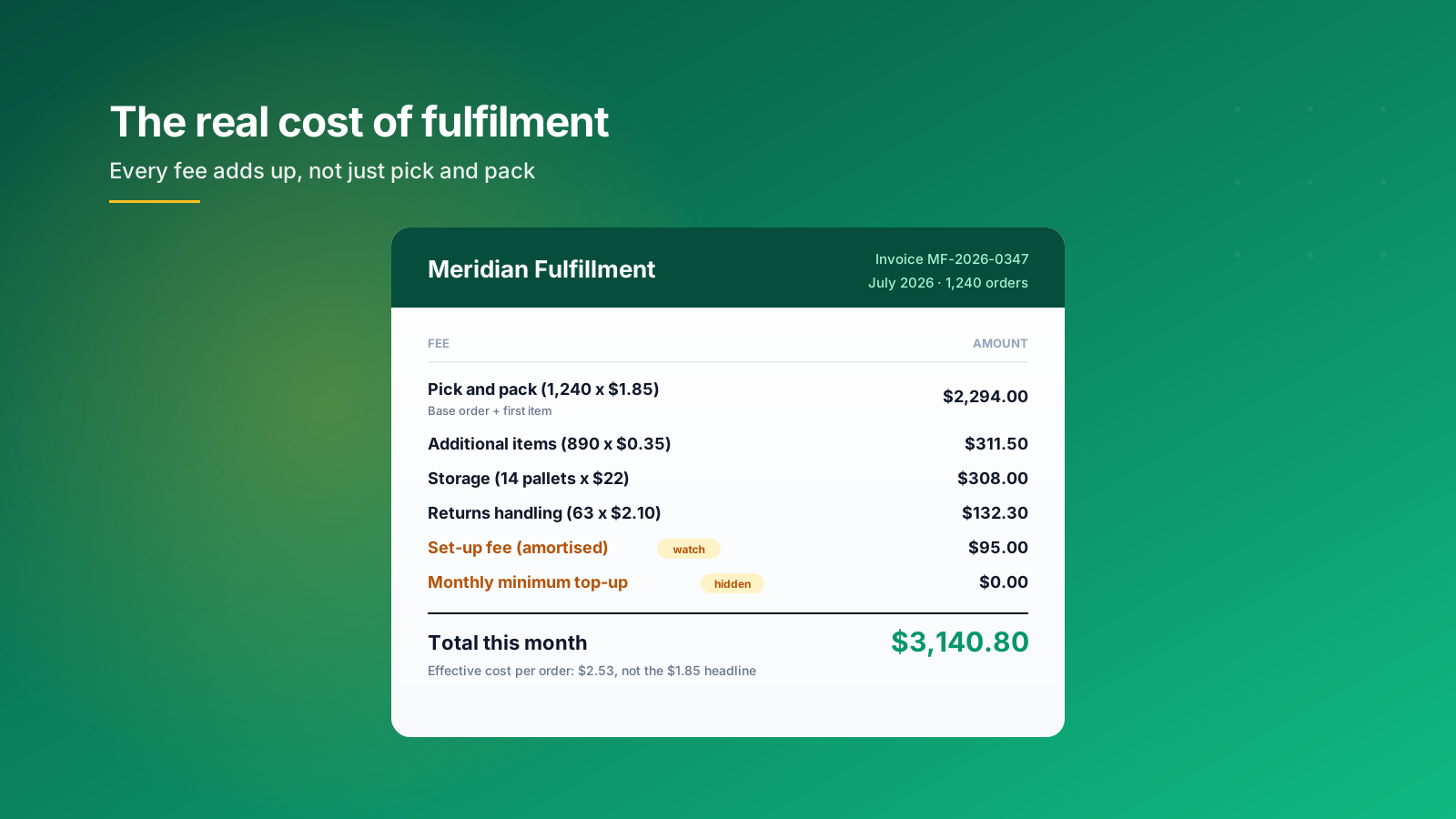
The single biggest mistake brands make is comparing providers on the pick-and-pack rate alone. Outsourced fulfillment comes with a stack of fees, some obvious and some buried in the contract, and the cheapest headline rate is often the most expensive provider once everything is added up.
Here are the charges to map out before you compare quotes:
- Set-up fees: Most fulfillment houses charge to onboard your business and configure their systems for your products. This is fair, because the work is real, but check the number is reasonable and not padded.
- Order processing and pick-and-pack fees: Usually a base cost per order plus a charge for each additional item packed. This is where high-volume, low-value senders get caught out.
- Storage fees: Charged by pallet, shelf or cubic space your stock occupies. Bulky products cost more, so do not warehouse more than you need.
- Returns fees: If the provider processes returns and refunds, you pay per return. A generous returns policy can quietly build a large bill.
- Minimum fees: Many providers set a monthly minimum to make your account profitable for them. Smaller brands can end up paying for orders they never sent.
Ask every shortlisted provider for a full fee schedule and model it against your actual order data, not a rounded estimate. A good partner will also pass on shipping savings. Fulfillment houses buy packaging and carrier services at wholesale volumes, and some share those discounts with you while others keep the margin. That difference alone can outweigh a slightly higher pick-and-pack rate, so factor it in before you decide.
2. Shopify Integration and Technology
This is the factor generic fulfillment guides skim over, and it is the one that causes the most pain for Shopify brands. Your fulfillment house has to talk to your store cleanly and in real time. If it does not, you inherit overselling, stock discrepancies and manual order exports that defeat the point of outsourcing in the first place.
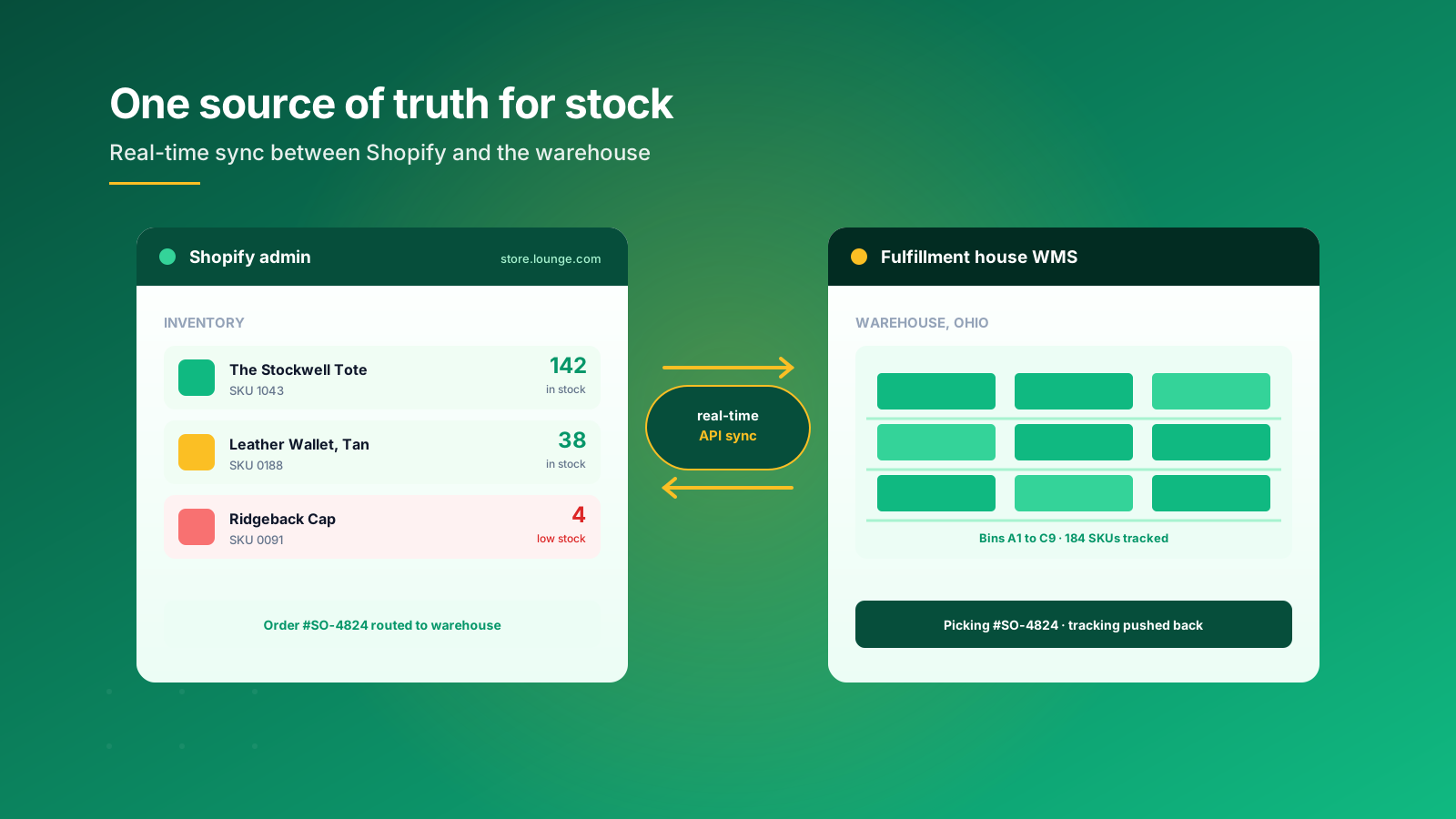
Shopify's own Fulfillment Network is available in the US through its partnership with Flexport and a network of 3PLs, managed inside your Shopify admin. Many brands still choose an independent 3PL for more control over packaging and service, so weigh both. Either way, when you assess a provider's technology, look for a native Shopify app or a direct API integration rather than a spreadsheet workaround. The features that matter are real-time inventory management and stock sync, automated order routing the moment a customer checks out, and order tracking pushed straight back into Shopify so status and notification emails stay accurate. The better providers run a warehouse management system, or WMS, that connects to Shopify through a proper integration rather than a nightly file transfer, so automation does the heavy lifting instead of your team.
Ask how quickly stock levels update between the warehouse and your storefront, and what happens during a flash sale when hundreds of orders land at once. Ask whether the provider supports branded packaging, custom inserts and any subscription or bundle logic your store uses, because not every 3PL system handles these well. Across the Shopify Plus stores we have built, the brands that scale smoothly are the ones whose fulfillment partner behaves like an extension of their tech stack, not a disconnected warehouse you email at the end of the day.
Good visibility is part of this too. The better providers give you a live dashboard showing inventory, order status and dispatch performance, so you can see how efficiently the operation is running and are never guessing whether an order went out. That kind of tracking and reporting is what turns a warehouse into a genuine logistics partner. If a provider cannot show you that during the sales process, assume you will be in the dark once you sign.
3. Location, Delivery Speed and Carrier Network
Where a fulfillment house sits on the map affects two things: how fast your customers receive orders, and how easily you can visit the site. Both matter more than they first appear.
A warehouse close to major transport links and carrier hubs can be the difference between next-day and two-day delivery. With customer expectations set by the largest retailers, delivery speed is now a genuine competitive factor rather than a nice-to-have. Ask which carriers the provider works with, whether they offer next-day and weekend options, and how they handle shipping across the country and abroad if you sell internationally. A provider with a strong carrier network and negotiated rates gives you faster, cheaper delivery than you could arrange alone. Distribution across more than one region can also cut both transit times and shipping costs.
Proximity helps in a second way. Being able to visit the warehouse lets you inspect the operation, meet the team and discuss changes to your requirements face to face. If you cannot get there easily, at least ask for recent photos and a video walk-through. A provider that welcomes a site visit is usually one that has nothing to hide.
If your growth plans include selling overseas, raise cross-border logistics early. International shipping brings customs, duties and product-compliance rules that your fulfillment strategy needs to account for rather than treat as an afterthought.
4. Sales Tax Nexus and Compliance
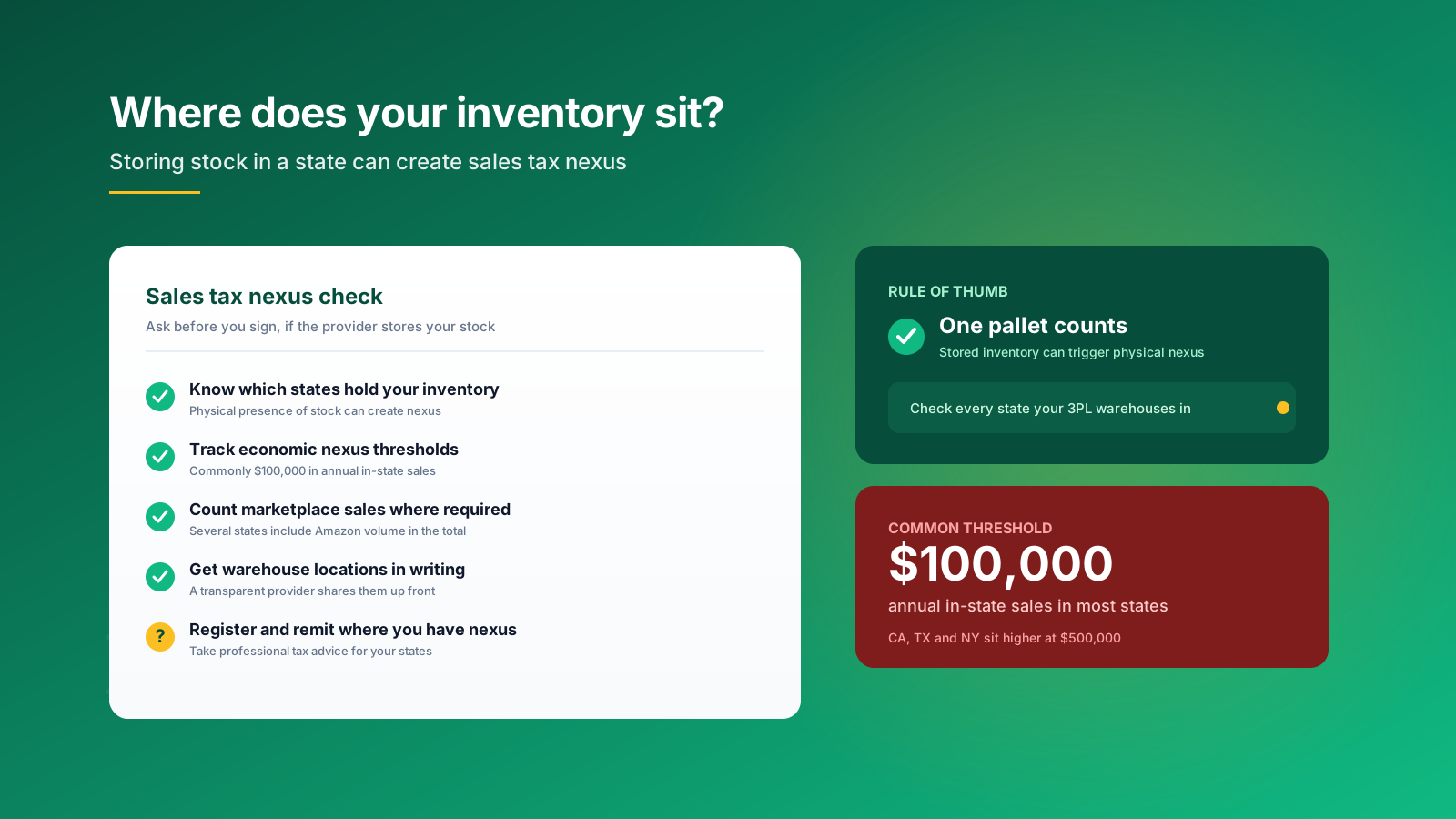
This is the factor almost every fulfillment guide ignores, and for US brands it matters more than most realize. Where your inventory is stored can change where you owe sales tax. Storing goods in a state, even through a third-party warehouse, can create physical nexus in that state, which means you may need to register, collect and remit sales tax there.
That makes your provider's warehouse footprint a tax question, not just a logistics one. If a fulfillment house spreads your stock across several states to speed up delivery, each of those states can create a new obligation. On top of physical nexus, most states apply an economic nexus threshold, commonly $100,000 in annual in-state sales, with California, Texas and New York set higher at $500,000. In many states, marketplace sales such as your Amazon volume count toward that threshold as well.
What does this mean when you are choosing a provider? Ask directly which states they will warehouse your inventory in, and get it in writing, because you cannot manage nexus you cannot see. A transparent provider shares its warehouse locations up front. Then map those locations against where you already have nexus, register where you need to, and keep clean records. Sales tax rules vary by state and change often, so take proper professional advice for the states you operate in rather than guessing.
5. Facilities, Security and Staff
You are handing a large part of your business to another company's building and people, so the quality of both should weigh heavily on your decision. It is easy to be impressed by a slick website and forget to ask what actually happens behind it.
Start with the basics of the warehouse itself. Is it clean, organized and appropriate for your products? Climate-controlled space matters for anything sensitive, and dock-high loading matters for volume. Then look at security. A serious fulfillment house commits to tight security to protect your stock from both external theft and internal loss, so ask what measures are in place and how stock is tracked and reconciled.
Staff quality is just as important and easy to overlook. Ask how the team is trained, whether you get a dedicated account manager, and how they handle mistakes when they happen, because they will. Good account management is what keeps the operation running smoothly through peaks. The best fulfillment companies assign an account manager who learns your business and stays with you, rather than routing you through a general support queue. That relationship is often what separates a partner you keep for years from one you leave within months.
6. Reviews, References and Service Quality
A fulfillment house delivering a genuinely good service will have customers willing to say so. Reviews and references are your window into what the day-to-day relationship is actually like, beyond the sales pitch.
Look for reviews and testimonials on the provider's own site, but do not stop there, since a company will always showcase its best feedback. Search for independent reviews, and ask the provider directly for references from brands similar to yours in size and product type. A short conversation with an existing customer will tell you more about responsiveness, accuracy and how the provider handles peak periods than any brochure.
When you speak to references, ask specific questions. How accurate is their pick-and-pack? How quickly do issues get resolved? What happens when volumes spike? How transparent is the billing? The answers reveal whether the provider treats smaller clients as valued customers or as afterthoughts. Reliability and clear communication are the traits that matter most once the contract is signed, and they are exactly what past customers can confirm.
Running a Fulfillment House Selection Process
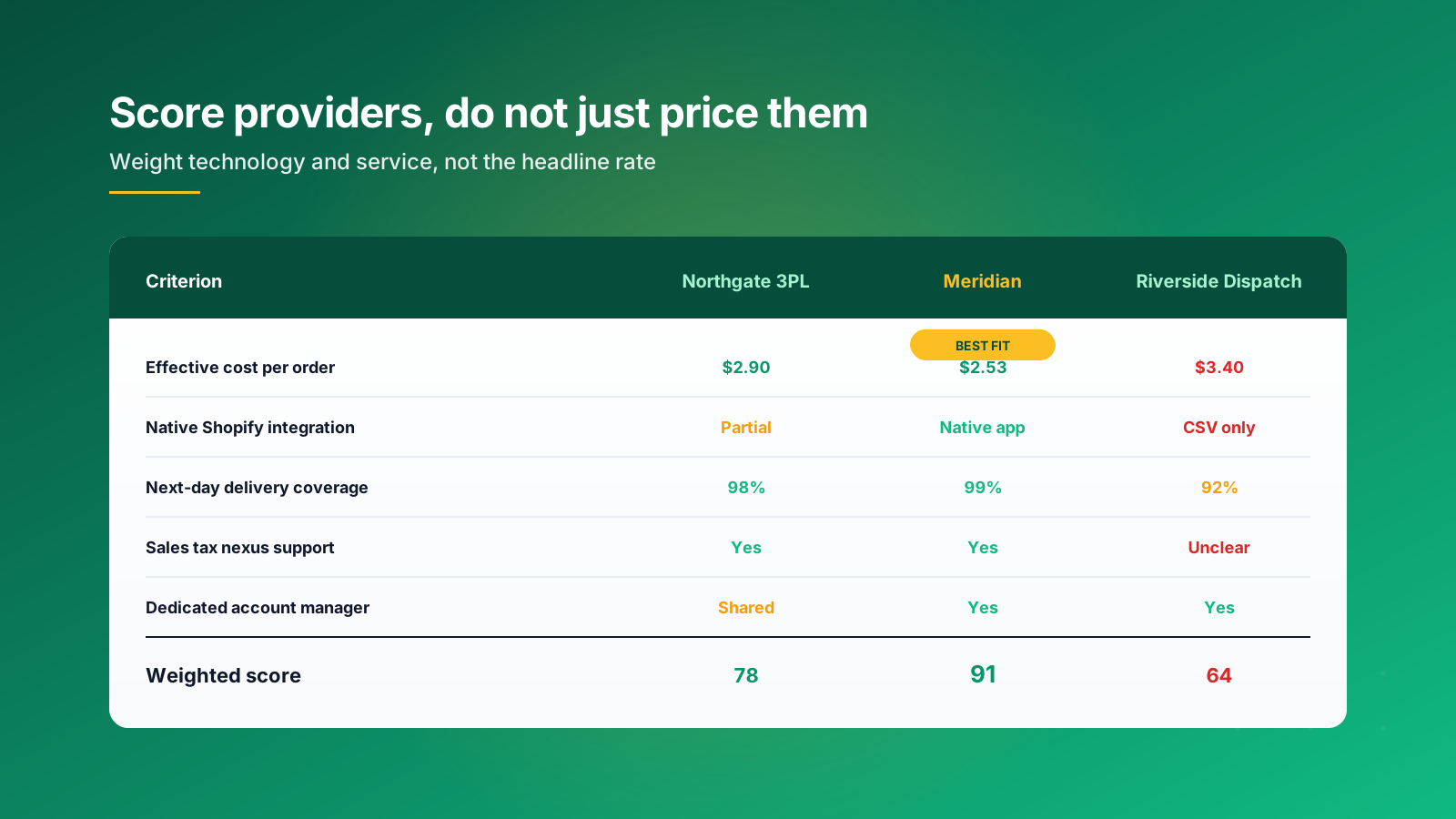
Pulling the six factors together, a sensible selection process looks like this. First, confirm that outsourcing suits your order volume, item value and margins. Then build a shortlist of three or four providers and send each the same brief: your monthly order volume, average items per order, product dimensions, storage needs and sales channels.
Ask every provider for a full fee schedule, a demonstration of their Shopify integration, a written list of the states they will warehouse in, and two references. Model each quote against your real order data, visit the sites you can reach, and speak to the references before you decide. Weight your scoring towards technology and service, not just price, because the cheapest provider on paper is rarely the cheapest once poor integration, weak inventory management and slow service start costing you sales. A partner that improves your efficiency and delivery speed usually earns back a higher rate several times over.
Fulfillment is one of the few decisions that touches cost, customer experience and compliance all at once. Taking the time to assess it properly protects your margin and your brand. If you would like help connecting a fulfillment partner cleanly to your Shopify store, or planning the warehousing and operations side of a scaling ecommerce business, our Shopify Plus agency team can help. Get in touch to talk it through.