 Nic Dunn, CEO, Charle Agency
Quick Answer: The 15 Best Shopify Apps to Increase Sales in 2026
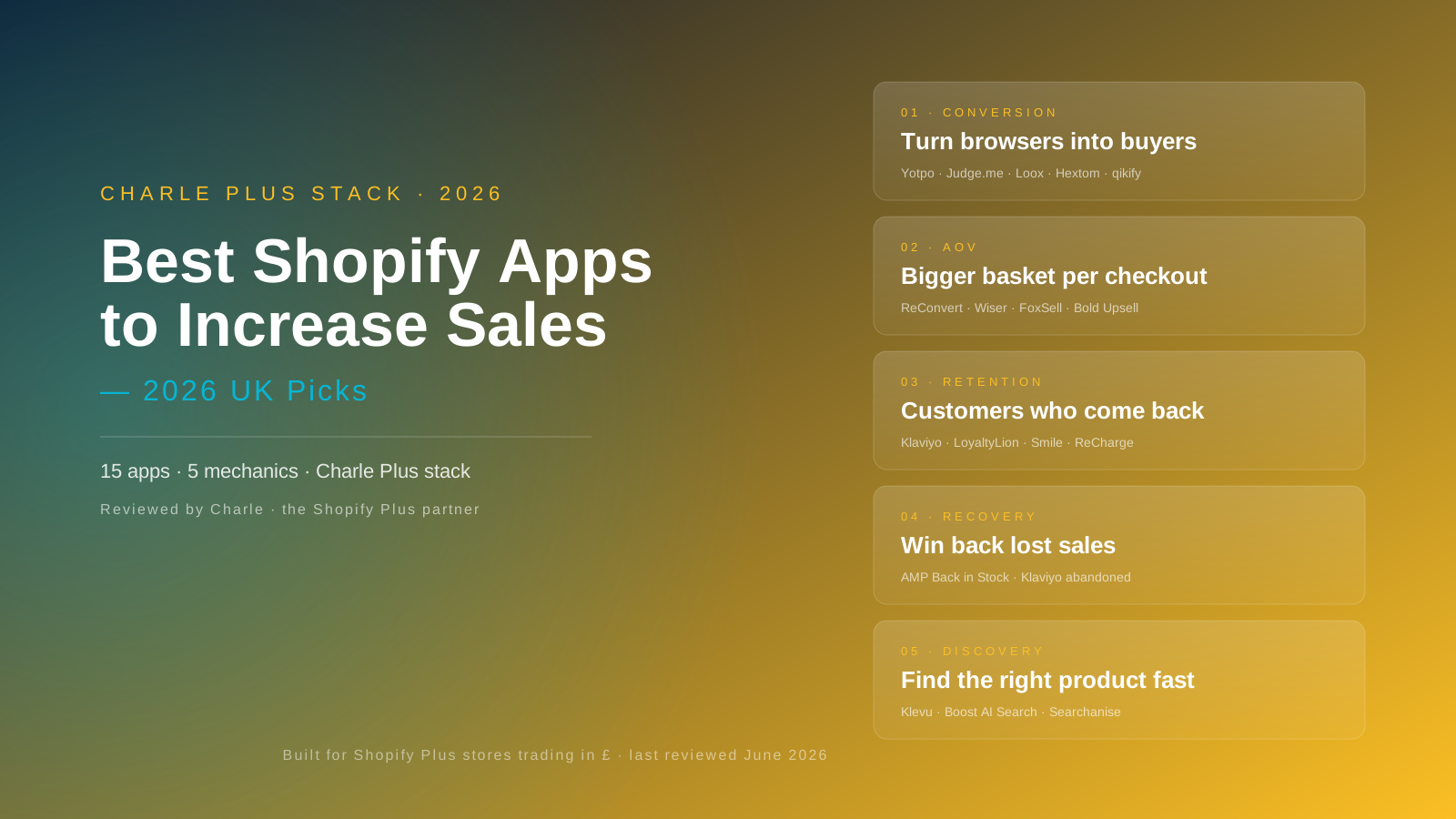
If you have ninety seconds and need the shortlist, here is the lineup, in the order of the article. Pricing and full detail follows below; jump to any app by clicking through the comparison table.
- Yotpo Reviews & UGC: the enterprise standard for product reviews and user-generated content.
- Judge.me: the free reviews alternative with unlimited reviews on its free plan.
- Loox: visual reviews with photos and videos, designed for brands with strong product imagery.
- Hextom Free Shipping Bar: progressive cart-value bar that lifts AOV through free shipping thresholds.
- qikify Popup & Social Proof: email capture popups, exit intent and recent-purchase notifications in one app.
- ReConvert: post-purchase upsell on the thank-you page, the highest-ROI single app on this list.
- Wiser: AI-powered upsell and cross-sell with frequently bought together carousels.
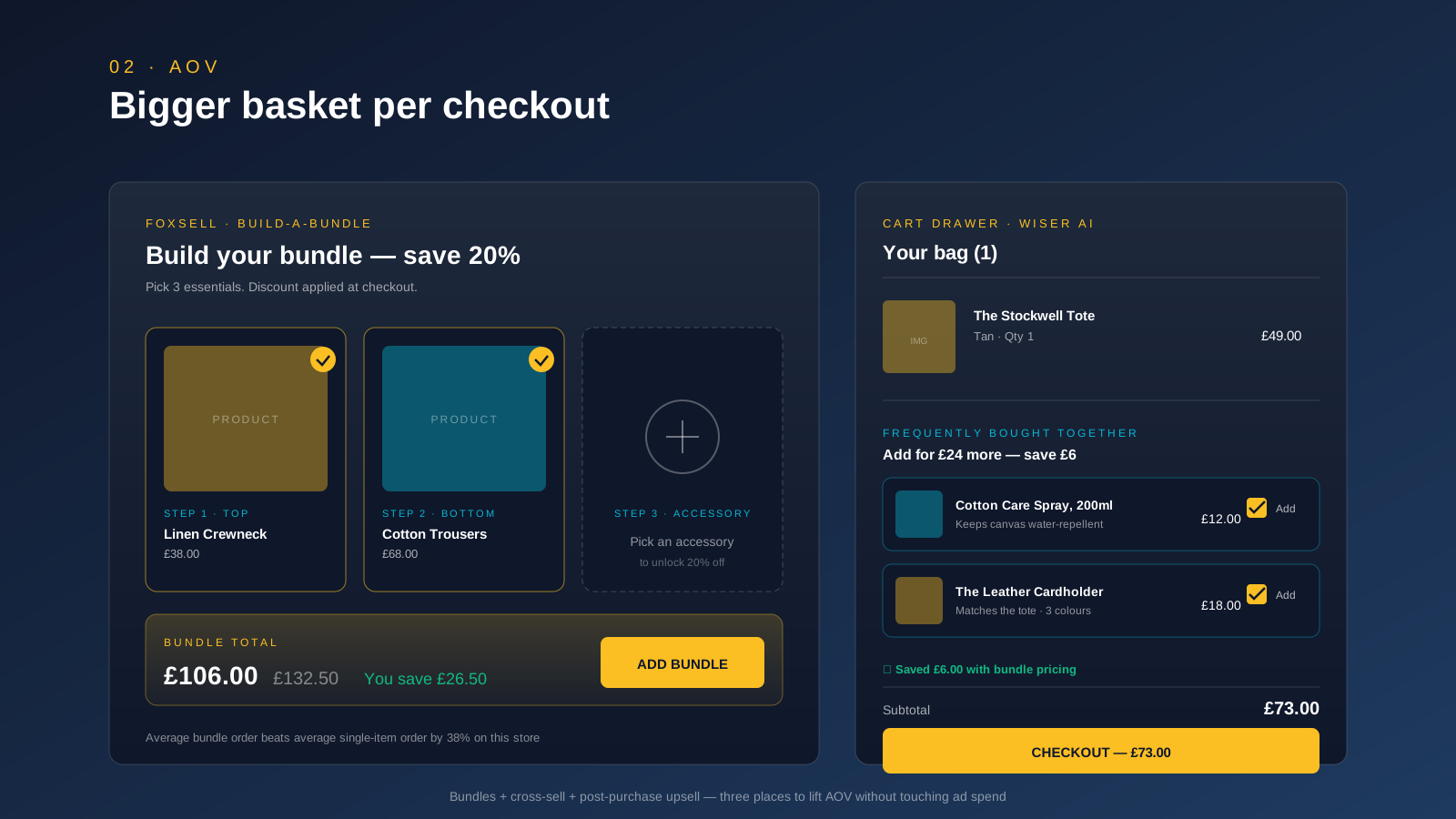
- FoxSell Bundles: build-your-own bundles, mix and match, volume discounts.
- Bold Upsell: the battle-tested in-cart and pre-checkout upsell app.
- Klaviyo: the email and SMS marketing standard for Shopify, especially on Plus.
- LoyaltyLion: loyalty program builder for mid-market and Plus brands.
- Smile.io: entry-level loyalty program, free up to 200 monthly orders.
- ReCharge: subscriptions and recurring revenue for product categories where it fits.
- AMP Back in Stock: email, SMS and push notifications for restock alerts.
- Klevu: AI-powered search and merchandising for catalogs over 500 SKUs.
The Five Mechanics That Actually Drive Shopify Sales
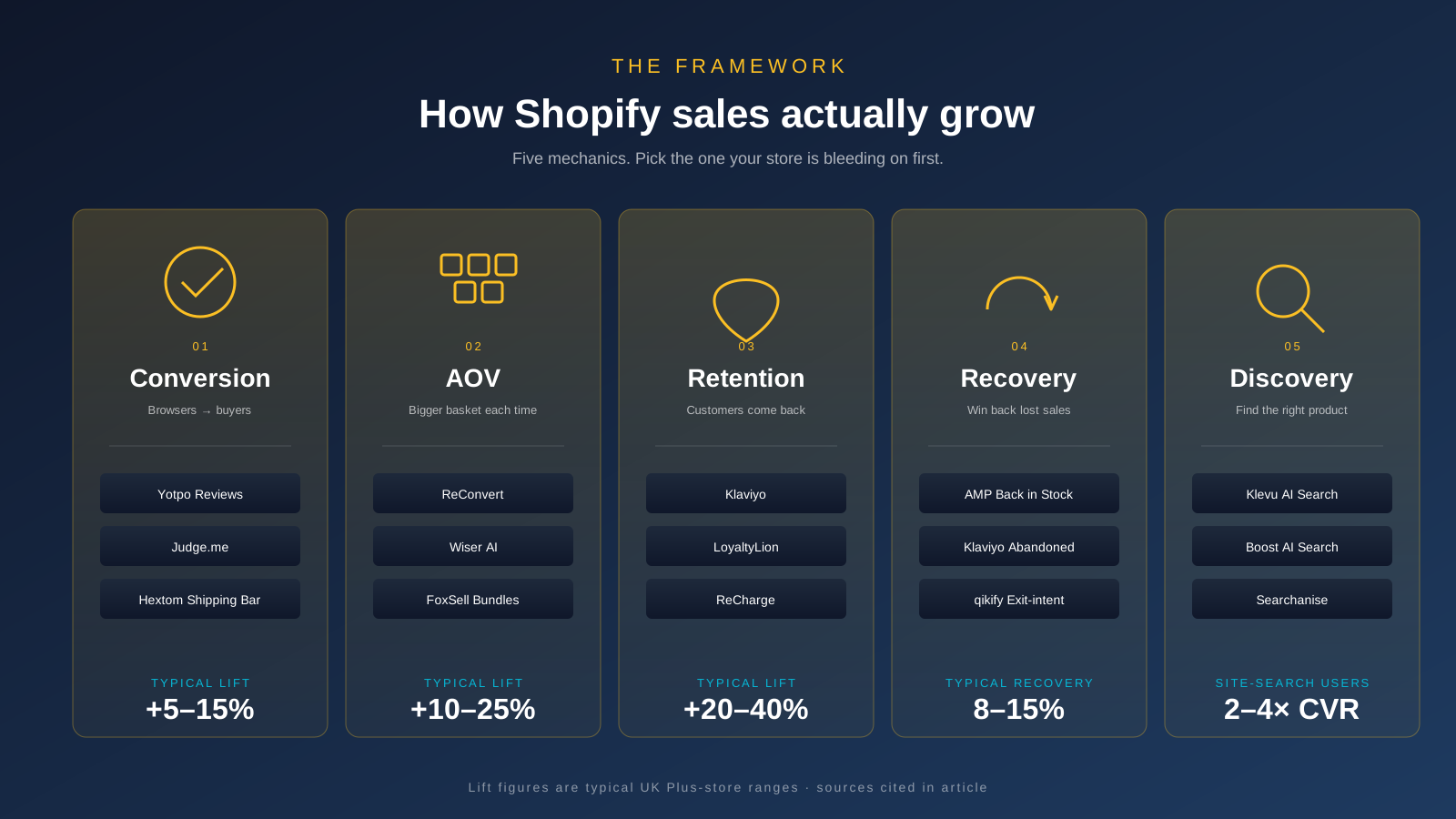
Most "best Shopify apps" lists drop fifteen apps into one long roster and call it done. That structure hides the more useful question, which is: what specifically are you trying to fix? Shopify sales grow through five distinct mechanics, and the right app depends on which mechanic is your bottleneck.
- Conversion: turn more visitors into buyers. Reviews, social proof, free shipping bars, popups.
- AOV (average order value): get each buyer to spend more. Upsell, cross-sell, bundles, frequently bought together.
- Retention: drive repeat purchases. Email and SMS marketing, loyalty programs, subscriptions.
- Recovery: recapture lost or stalled sales. Back-in-stock notifications, abandoned cart flows (covered inside email apps).
- Discovery: help shoppers find what they want before they bounce. AI search, faceted filters, wishlist.
The 15 apps in this guide map cleanly to those five categories. We sequence them in that order because most stores get better return from fixing conversion first (more buyers from existing traffic), then AOV (more revenue per buyer), then retention (more lifetime value), than they do from chasing more traffic. If you have already done the first three, recovery and discovery start to compound.
How We Picked These 15 Apps
Every app on this list had to clear five filters before it made the cut.
- We have deployed it on a Plus client store, or watched a close peer agency do so, in the last 18 months. No theoretical picks.
- Shopify App Store rating of 4.5 stars or higher, with a meaningful review count (1,000+ for most categories; lower bar for newer specialist apps).
- Genuine free trial or free tier, so merchants can validate without commitment.
- Built for Shopify badge where possible, or demonstrably low page-weight impact where not.
- Active development: shipping new features at least every quarter, not coasting on old functionality.
We are not on commission from any app vendor in this article. Where an app is the obvious leader in its category, we say so; where there is a credible alternative, we name it.
Comparison Table: All 15 Shopify Sales Apps at a Glance
Quick scan view. Pricing is the entry plan or starting tier; most apps have higher tiers as you scale. Free trial column refers to the paid plans where applicable; free-tier apps are noted as "Free plan".
| App | Category | Starting price | Free trial / tier | Best for |
|---|---|---|---|---|
| Yotpo Reviews | Conversion | Free, then $15/mo | Free tier | Enterprise reviews |
| Judge.me | Conversion | Free, then $15/mo | Free tier | Free unlimited reviews |
| Loox | Conversion | $9.99/mo | 14-day trial | Visual reviews |
| Hextom Free Shipping Bar | Conversion | Free, then $9.99/mo | Free tier | AOV via shipping threshold |
| qikify Popup | Conversion | Free, then $6.99/mo | Free tier | Email capture + social proof |
| ReConvert | AOV | Free, then $4.99/mo | 30-day trial | Post-purchase upsell |
| Wiser | AOV | Free, then $9/mo | Free tier | AI upsell + cross-sell |
| FoxSell Bundles | AOV | Free, then $49/mo | Free tier | Build-your-own bundles |
| Bold Upsell | AOV | $24.99/mo | 14-day trial | In-cart upsell |
| Klaviyo | Retention | Free, then $15/mo | Free up to 250 contacts | Email + SMS marketing |
| LoyaltyLion | Retention | $199/mo | Free plan to 800 orders | Mid-market loyalty |
| Smile.io | Retention | Free, then $49/mo | Free to 200 orders/mo | Entry-level loyalty |
| ReCharge | Retention | $99/mo | 30-day trial | Subscriptions |
| AMP Back in Stock | Recovery | Free, then $19/mo | Free up to 10 alerts | Restock notifications |
| Klevu | Discovery | $99/mo | 14-day trial | AI search (500+ SKUs) |
Conversion Apps (1-5): Turn More Visitors into Buyers
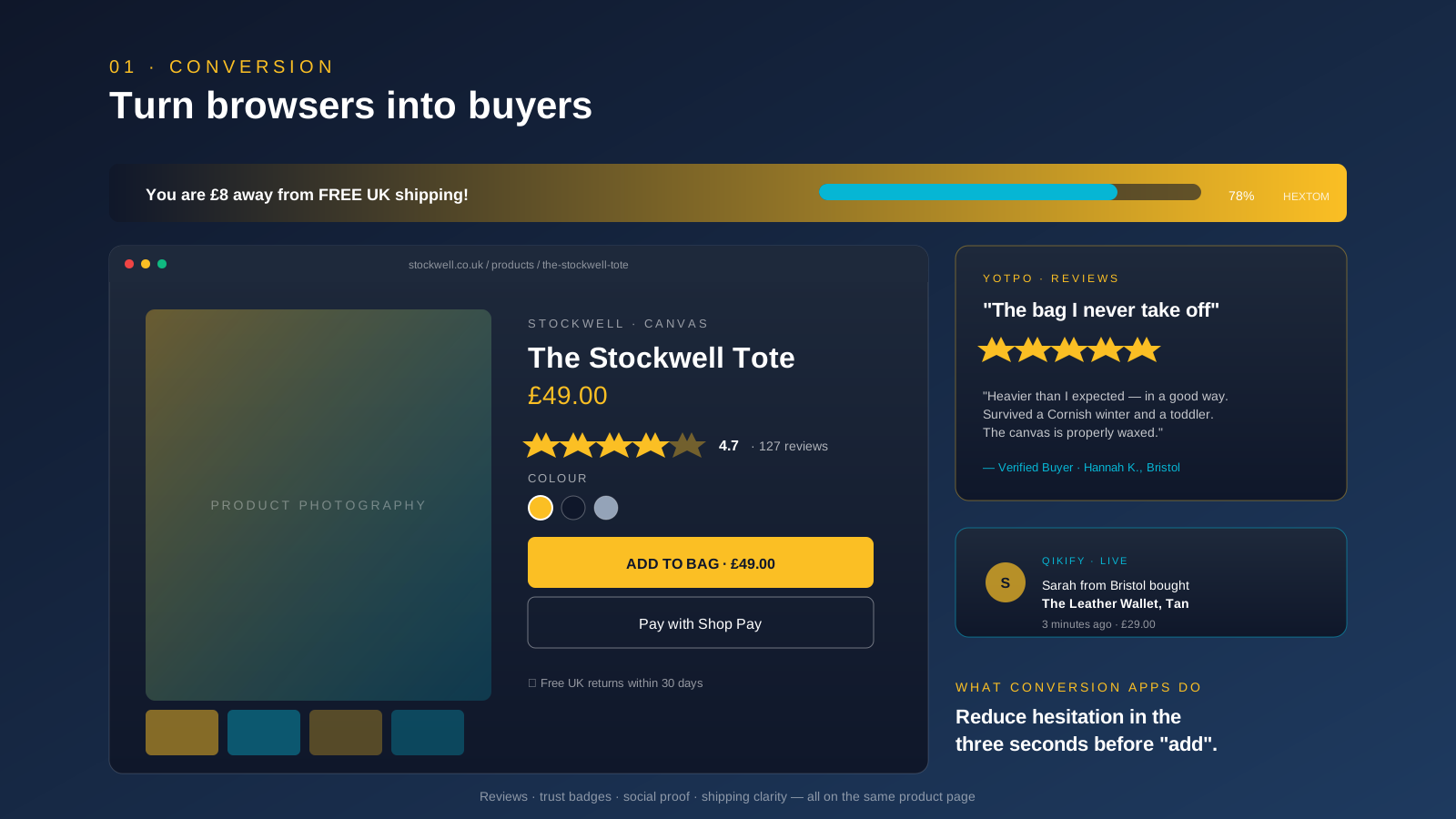
Conversion is the highest-leverage mechanic for most Shopify stores. If you can move conversion rate from 1.8% to 2.4%, you generate a third more revenue from the same traffic, without spending a penny more on ads. The first five apps in this guide target the three things that move conversion most reliably: social proof (reviews), urgency or threshold incentives (free shipping bar), and email capture or recent-purchase signals (popups).
1. Yotpo Reviews & UGC ↗
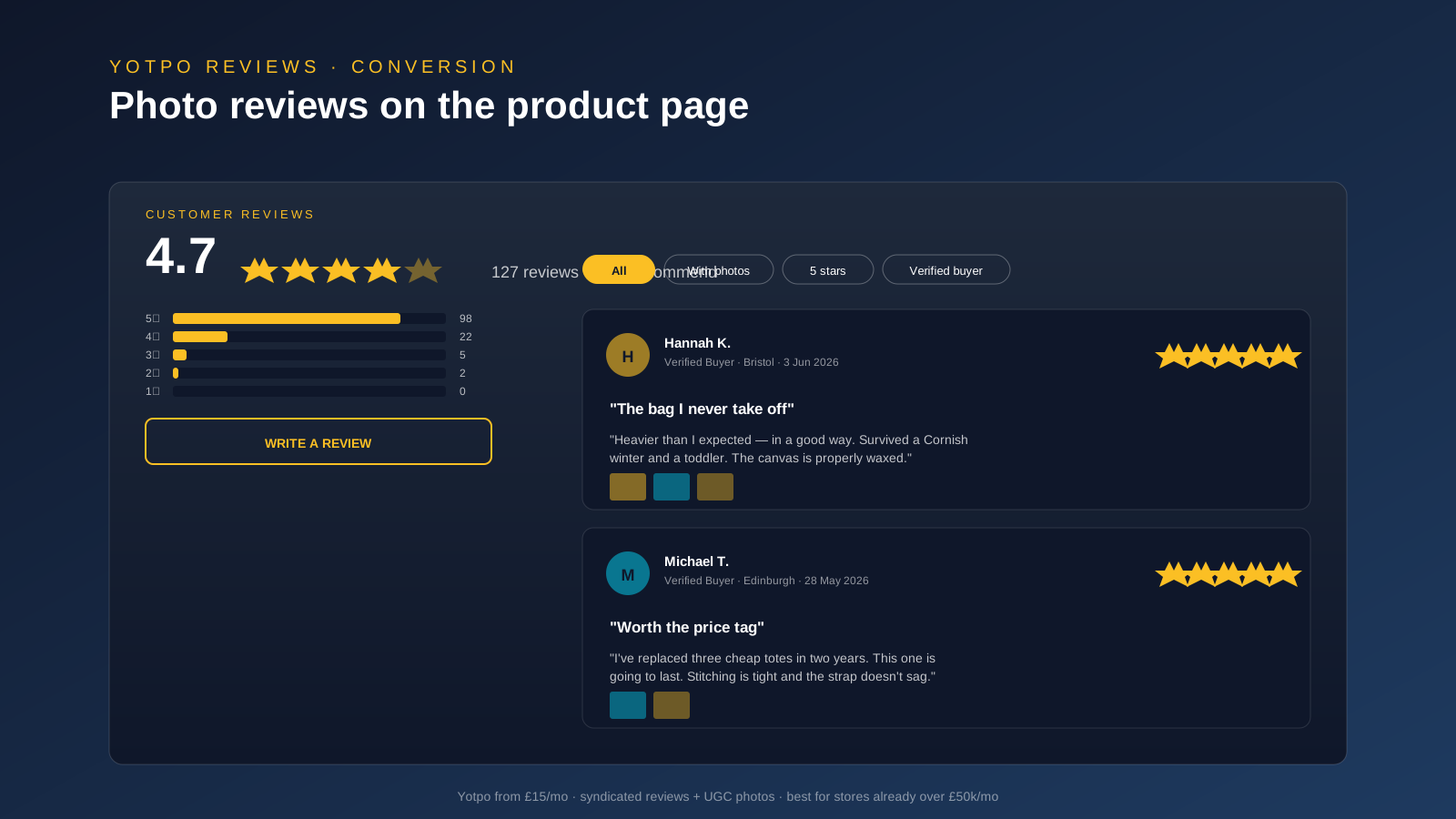
Yotpo Reviews is the enterprise standard for Shopify product reviews. It collects reviews via email and SMS request flows, displays star ratings on product pages and collections, supports photo and video reviews, syndicates ratings to Google Shopping and Bing, and pushes UGC across the storefront and email campaigns. Yotpo's main strength on Plus is the personalization layer and the integration with the rest of its retention stack, Loyalty, SMS and Subscriptions all share the same customer profile, which removes the data fragmentation that comes with running four separate vendors.
Pricing
Free plan for up to 50 monthly orders. Starter at $15/month adds photo and video reviews. Pro at $119/month adds shoppable galleries and deeper customization. Enterprise plans for high-volume stores are quoted directly.
Best for
Shopify Plus brands and growing mid-market stores that want a single platform for reviews, loyalty and email. The free tier is plenty to validate.
2. Judge.me ↗
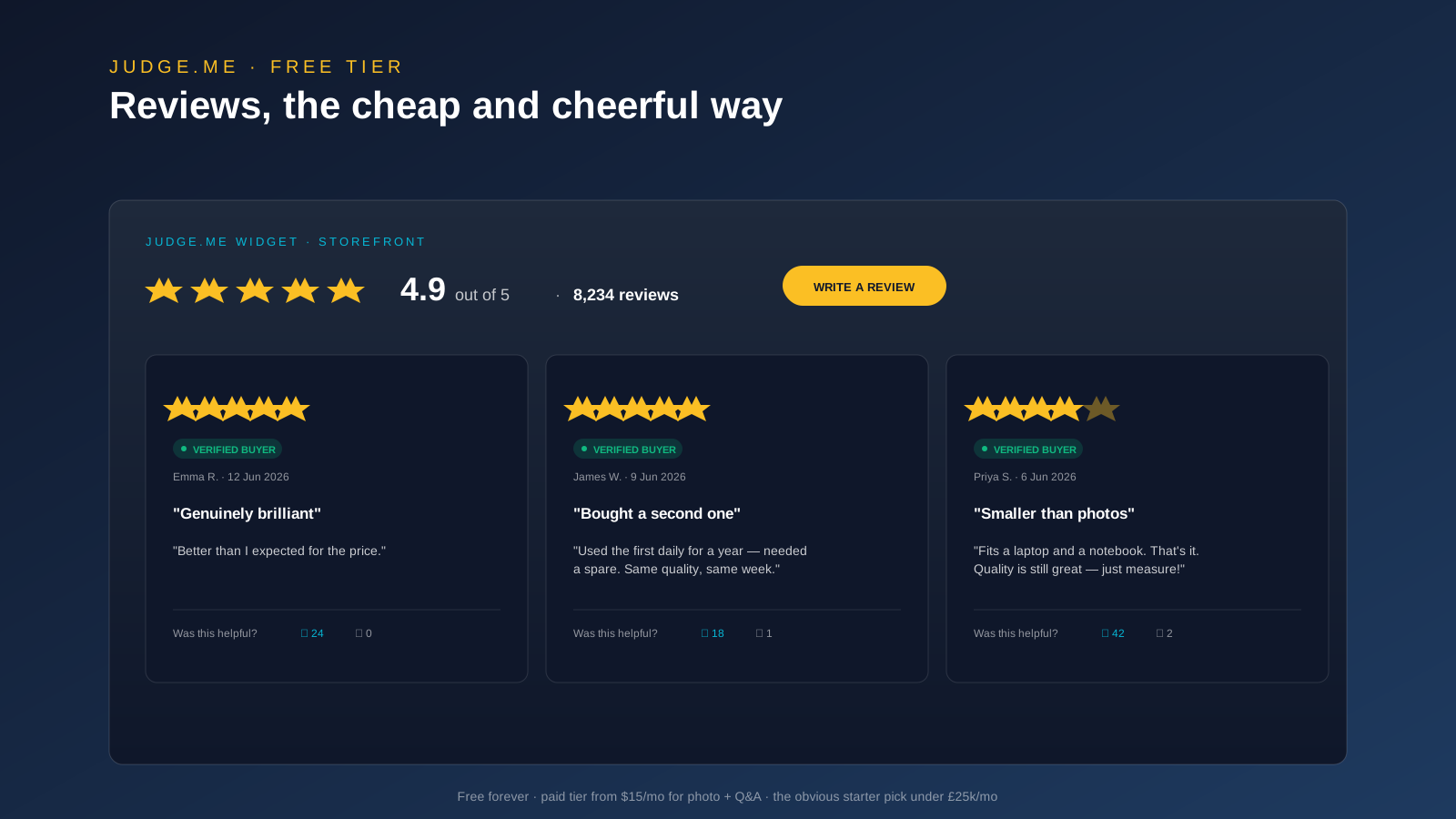
Judge.me is the most-installed reviews app on Shopify, with over 39,000 reviews itself on the App Store and a near-perfect 5.0 rating. The reason it dominates the entry tier: unlimited reviews on the forever-free plan, including photo and video reviews. You can import existing reviews from Etsy, Amazon, Loox and Yotpo if you are migrating in. Pro features include in-email review forms (so customers can review without clicking through), Q&A widgets and AliExpress import for dropshippers.
Pricing
Free plan covers unlimited reviews, photo and video reviews, and most display widgets. Awesome plan at $15/month enables Google Search integration, Q&A and advanced customization.
Best for
Stores under $1m revenue that want a fully featured reviews app without the recurring cost. The Awesome upgrade pays for itself once you start seeing reviews snippets on Google search results.
3. Loox ↗
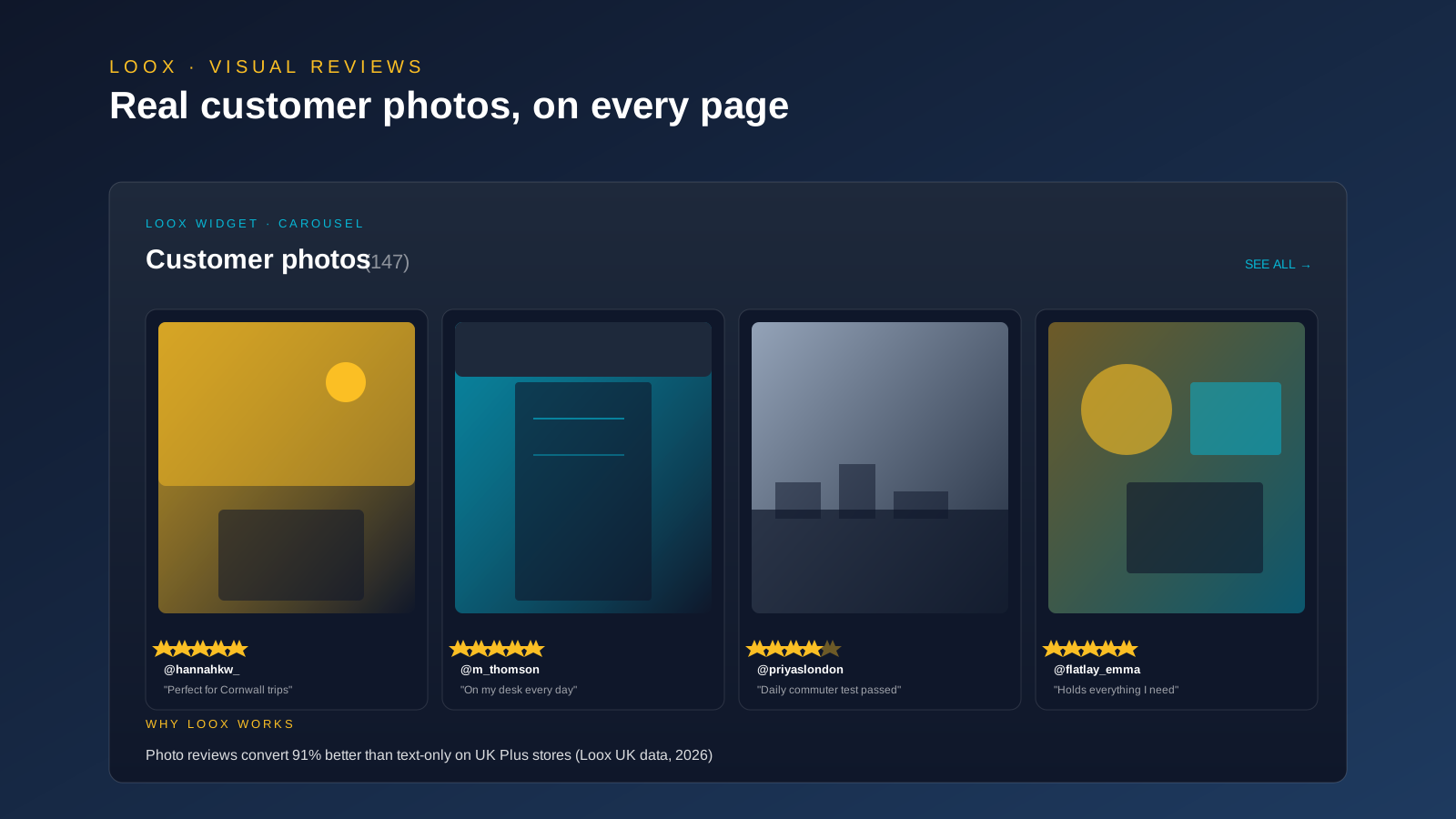
Loox is the visual-reviews specialist. Where Judge.me and Yotpo treat photo reviews as a bonus, Loox builds the entire product around them. Photo and video reviews are the default; the widgets are designed to showcase imagery rather than text; and the review request emails are sequenced specifically to maximise photo submission rate (typically 3 to 5x higher than text-first apps). For apparel, beauty, home and any category where shoppers want to see real customer use, Loox out-converts text-only review apps materially.
Pricing
Beginner at $9.99/month covers up to 100 review request emails. Growth at $34.99/month for higher volumes. 14-day free trial on all plans.
Best for
Brands with strong product photography or product categories where shoppers want visual proof (apparel, beauty, home, food and drink).
4. Hextom Free Shipping Bar ↗
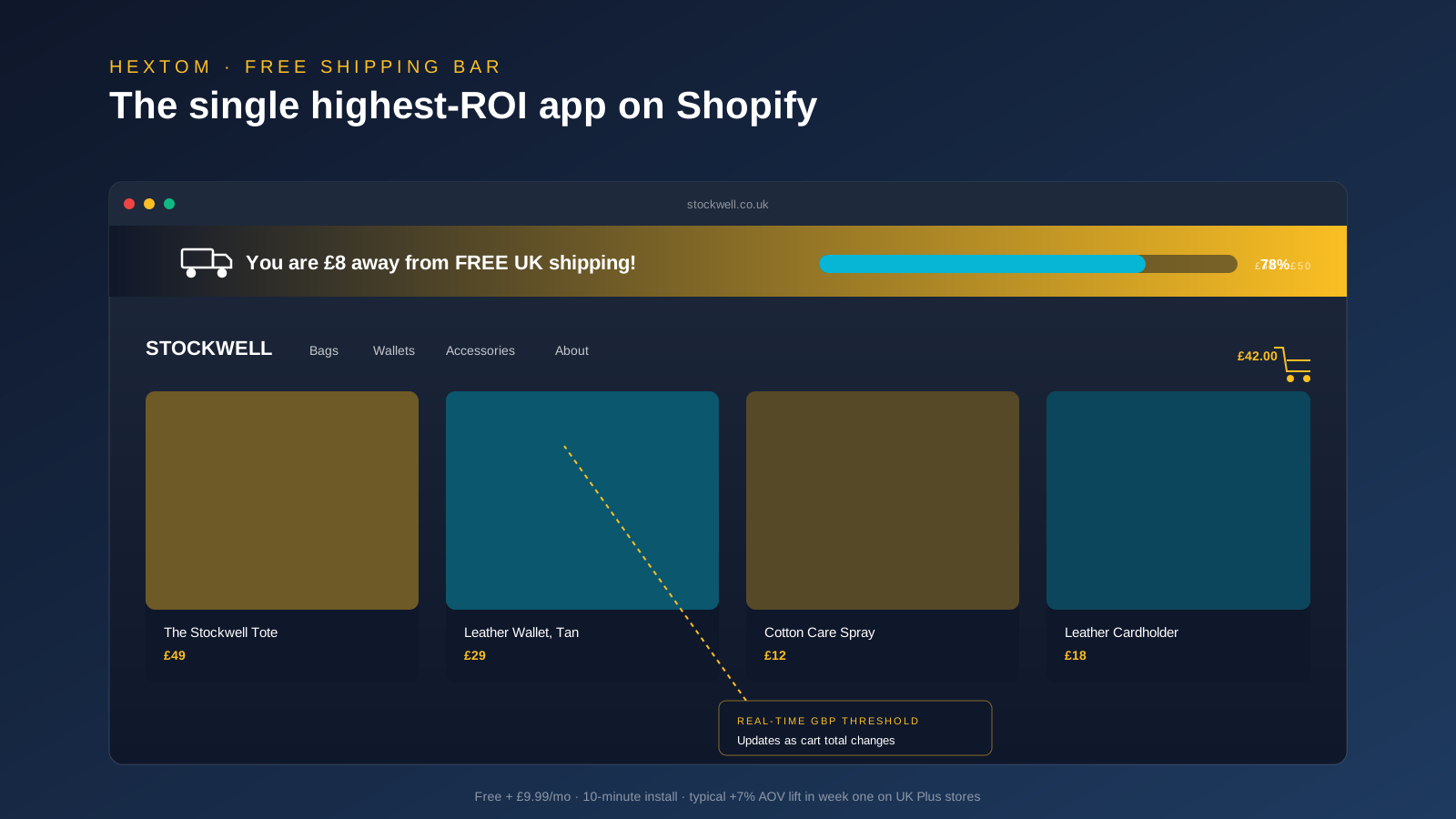
The most boring app on this list and one of the most effective. Hextom Free Shipping Bar displays a dynamic, progressive bar at the top of every page that updates as the customer adds items to cart. "You are $10 away from free shipping" with a progress bar is one of the most consistently AOV-positive nudges in ecommerce, and the simplest tool to boost average cart value without any code. The free plan supports a single bar with basic targeting. The Pro plan adds unlimited bars, geo-targeting and scheduled campaigns for things like Black Friday cut-offs.
Pricing
Free plan with a single shipping bar. Pro at $9.99/month for unlimited bars, geo-targeting and advanced rules.
Best for
Every Shopify store that ships physical product. There is genuinely no good reason not to run this. The free plan is enough for most.
5. qikify Popup & Social Proof ↗
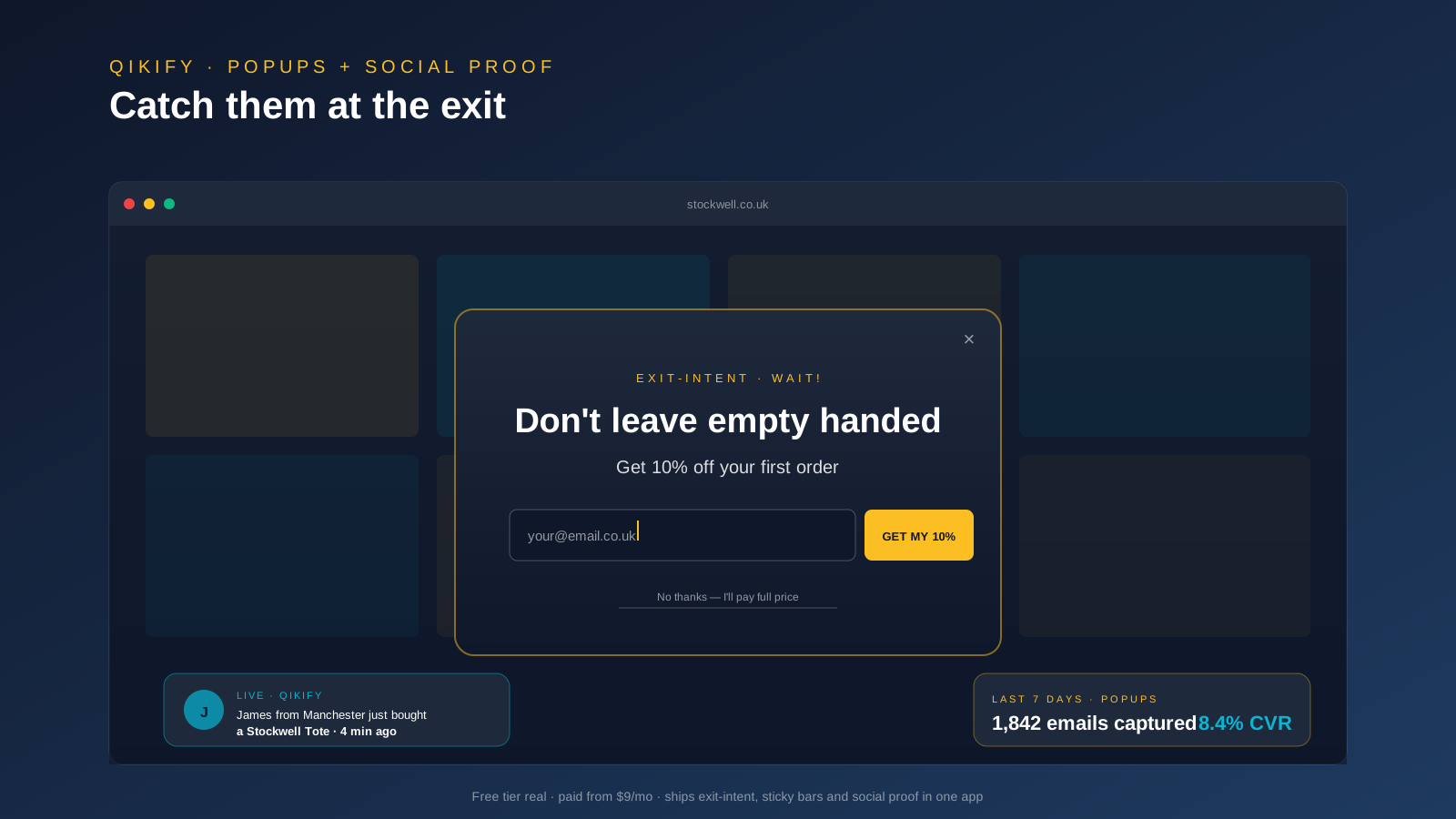
qikify bundles three conversion-rate automation tools into one app: email capture popups (exit intent, time-on-page, scroll), recent-purchase social proof notifications ("Sarah from London just bought the Stockwell Tote"), and promotional bars. Running all three from one app is much lighter on the storefront than three separate vendors. The free plan covers most use cases; paid plans add A/B testing, advanced segmentation and removal of the qikify branding.
Pricing
Free plan with basic popups and notifications. Premium at $6.99/month removes branding and adds A/B testing and richer triggers.
Best for
Stores building their email list or running their first social proof tests. The free tier is enough to validate; upgrade once you see meaningful capture rates.
AOV Apps (6-9): Increase Average Order Value
Once your conversion mechanics are in place, the next lever is the size of each order. Average order value (AOV) compounds with conversion: lifting both 10% gives you a 21% revenue uplift, not 20%. The four apps in this section cover post-purchase upsell (highest-ROI single tactic), AI-driven cross-sell, build-your-own bundles, and in-cart upsell.
6. ReConvert ↗
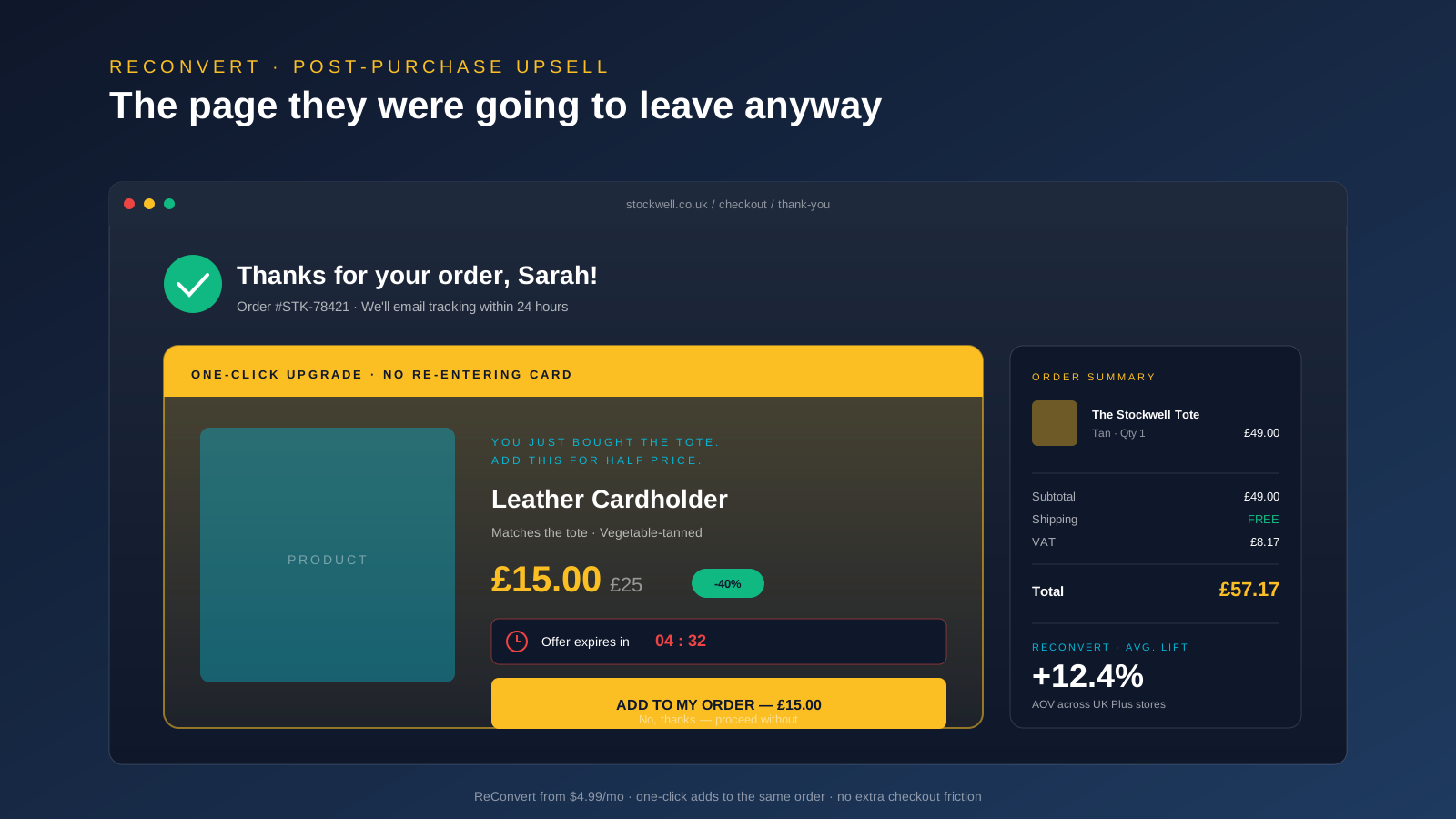
ReConvert turns the thank-you page from a dead end into the highest-converting upsell surface on your store. After a customer has paid (so they have already proven intent and entered payment details), ReConvert offers a one-click add-on or upgrade, often with a discount or time-limited offer. The setup is genuinely a single morning of work, and the AOV lift across the stores we have deployed it on sits consistently at 8 to 15%. For most Shopify stores, this is the highest-ROI app on the list.
Pricing
Free plan covers up to 50 orders/month. Upgrade plan at $4.99/month enables unlimited orders and A/B testing.
Best for
Every Shopify store that processes more than 10 orders a week. Install before you start any other AOV work.
7. Wiser ↗
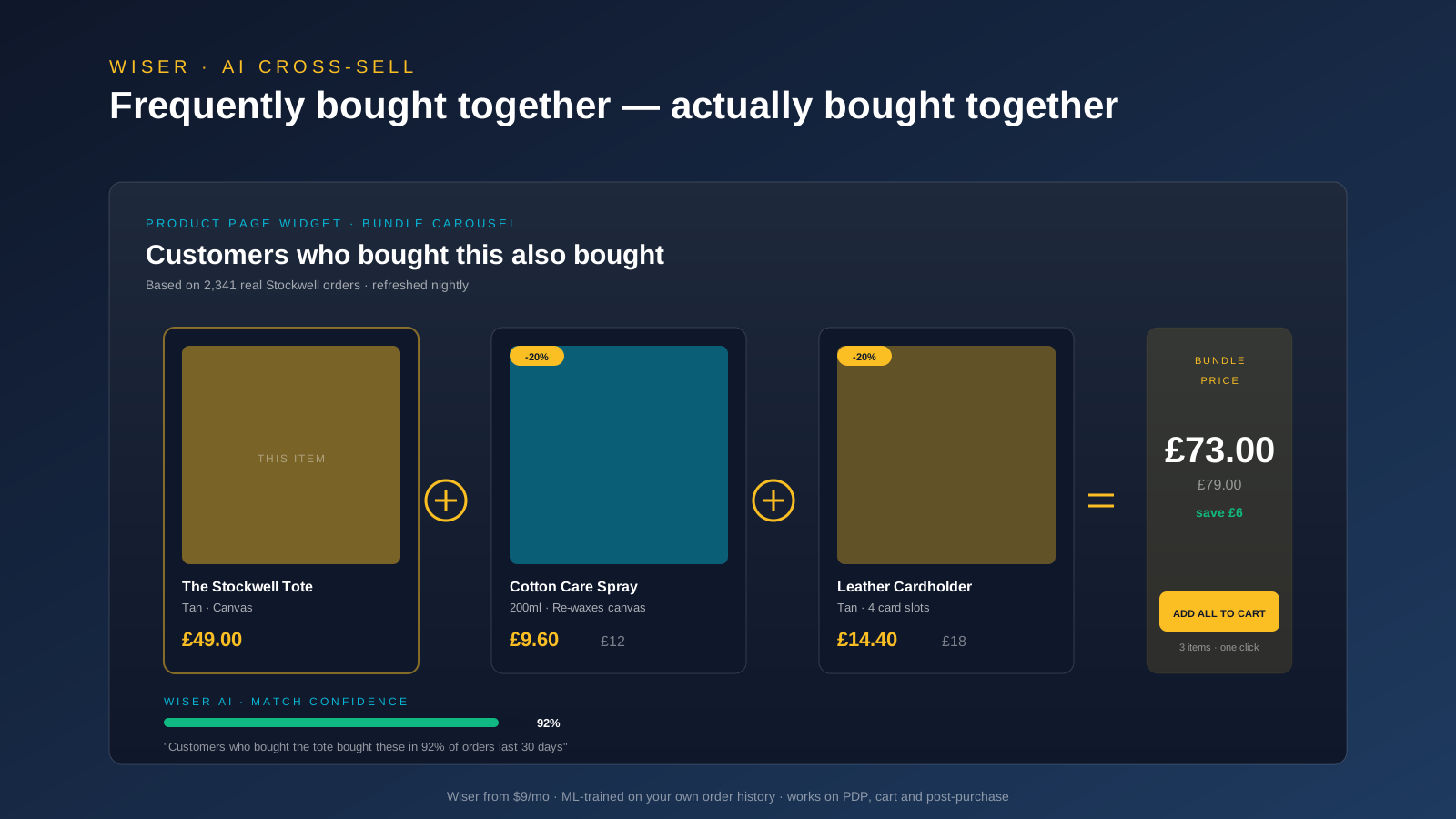
Wiser is one of the AI-powered upsell and cross-sell tools trusted by brands like Decathlon and Paramount. It surfaces personalized product recommendations across product pages, cart drawer, popups, checkout and thank-you pages, with rules-based logic for stores that want manual control on top of the AI. Frequently bought together carousels, post-purchase upsell funnels, bundle discounts and InteliSearch (intent-based search) are all included. Light page-weight footprint compared to its older competitors.
Pricing
Free plan available. Paid plans from $9/month, scaling with store traffic and feature depth.
Best for
Mid-market and Plus stores with catalogs of 100+ SKUs and enough traffic for the AI model to learn from. Below that catalog size, manual rules-based cross-sells perform just as well.
8. FoxSell Bundles ↗
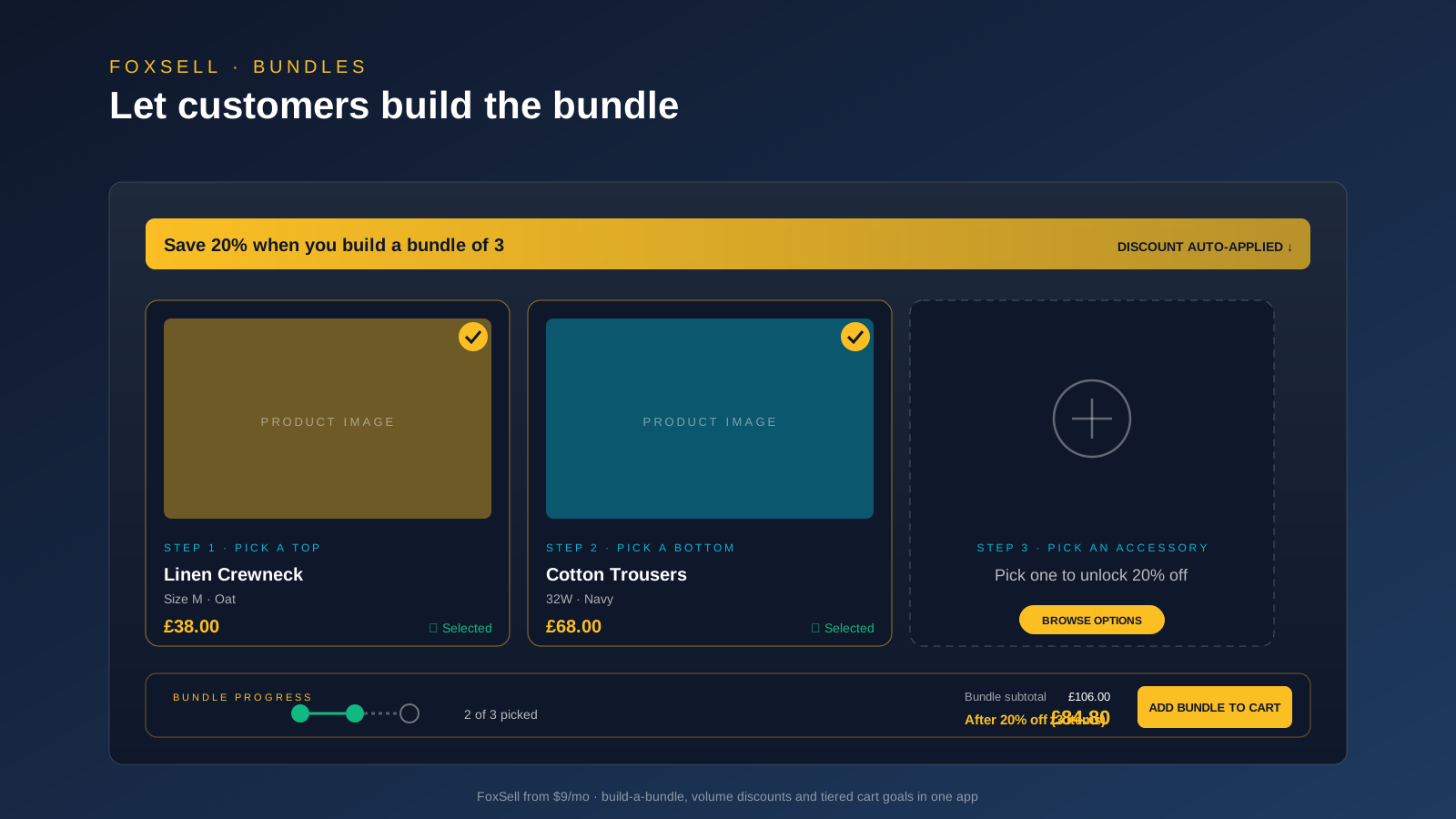
Bundles deserve their own category because the AOV mechanic is different. Cross-sell adds a complementary item; bundles let the shopper compose their own multi-product purchase, often with a volume discount applied. FoxSell handles fixed bundles, mix-and-match, volume bundles, build-a-box with infinite variants, add-ons and free gifts. The summary explainer when creating a bundle is genuinely useful for first-timers, and the free tier supports bundle sales up to $1,000/month before any upgrade is needed.
Pricing
Free plan up to $1,000 monthly bundle sales. Paid plans from $49/month with no sales caps.
Best for
Stores that sell complementary items (skincare ranges, food and drink sets, gift hampers) where customers want to build their own combination. Note: Shopify now has native Bundles too, use FoxSell for the more complex use cases.
9. Bold Upsell ↗
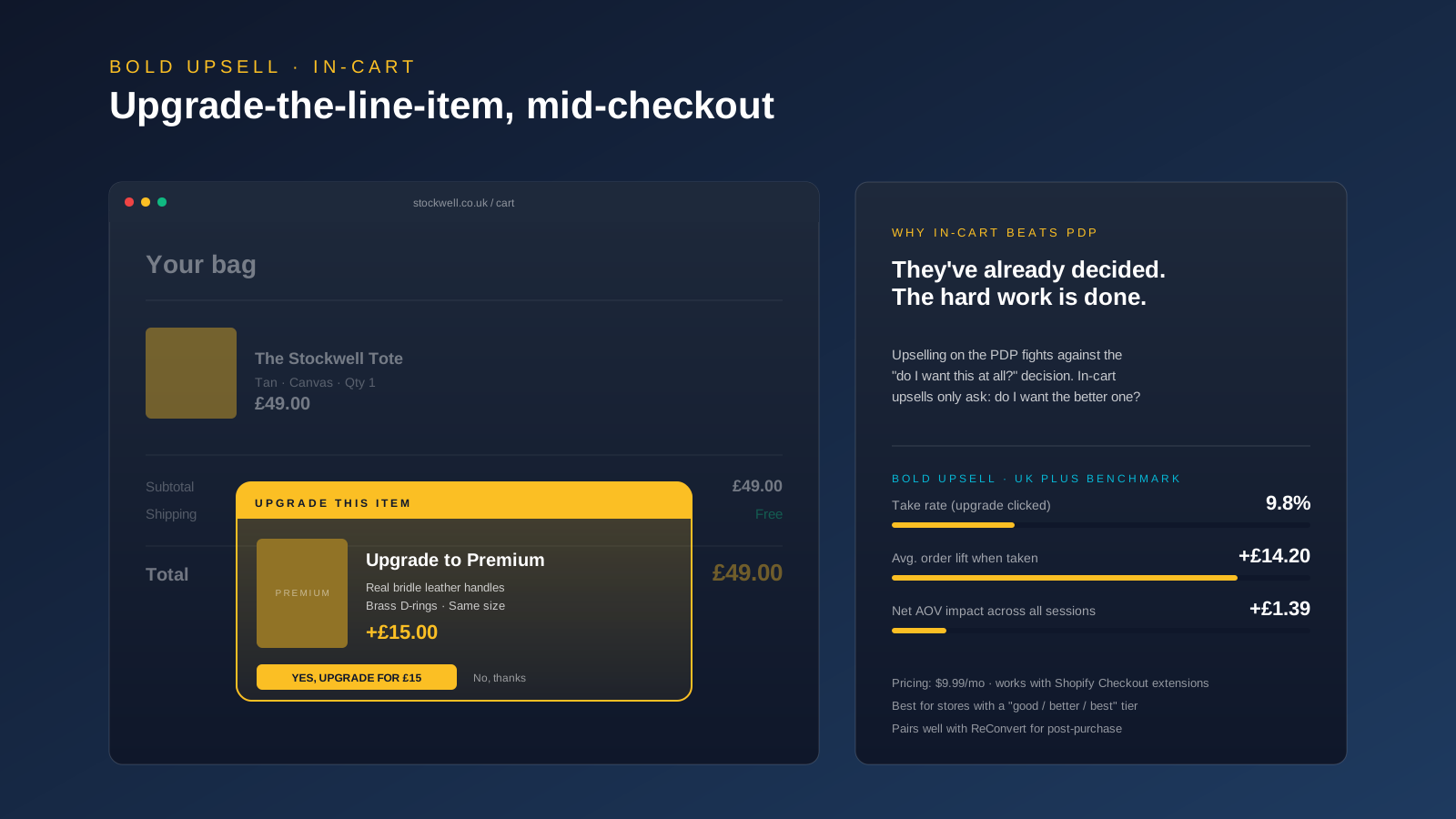
Bold Upsell is the older, battle-tested in-cart and pre-checkout upsell app. Where ReConvert focuses on post-purchase, Bold focuses on the moment between "added to cart" and "started checkout", historically the highest-friction point in any checkout flow. Bold Upsell offers tiered upsell funnels, true cross-sell logic (not just "you also might like"), and analytics for which offers actually convert. The downside vs Wiser or ReConvert is that the UI feels a generation older; the upside is that it has been running on tens of thousands of stores for nearly a decade with very few horror stories.
Pricing
Starter at $24.99/month for up to 200 orders. Higher tiers scale with order volume. 14-day free trial.
Best for
Stores that have already tried ReConvert (post-purchase) and want to add pre-checkout upsells alongside it. Not a replacement for ReConvert.
Retention Apps (10-13): Drive Repeat Purchases
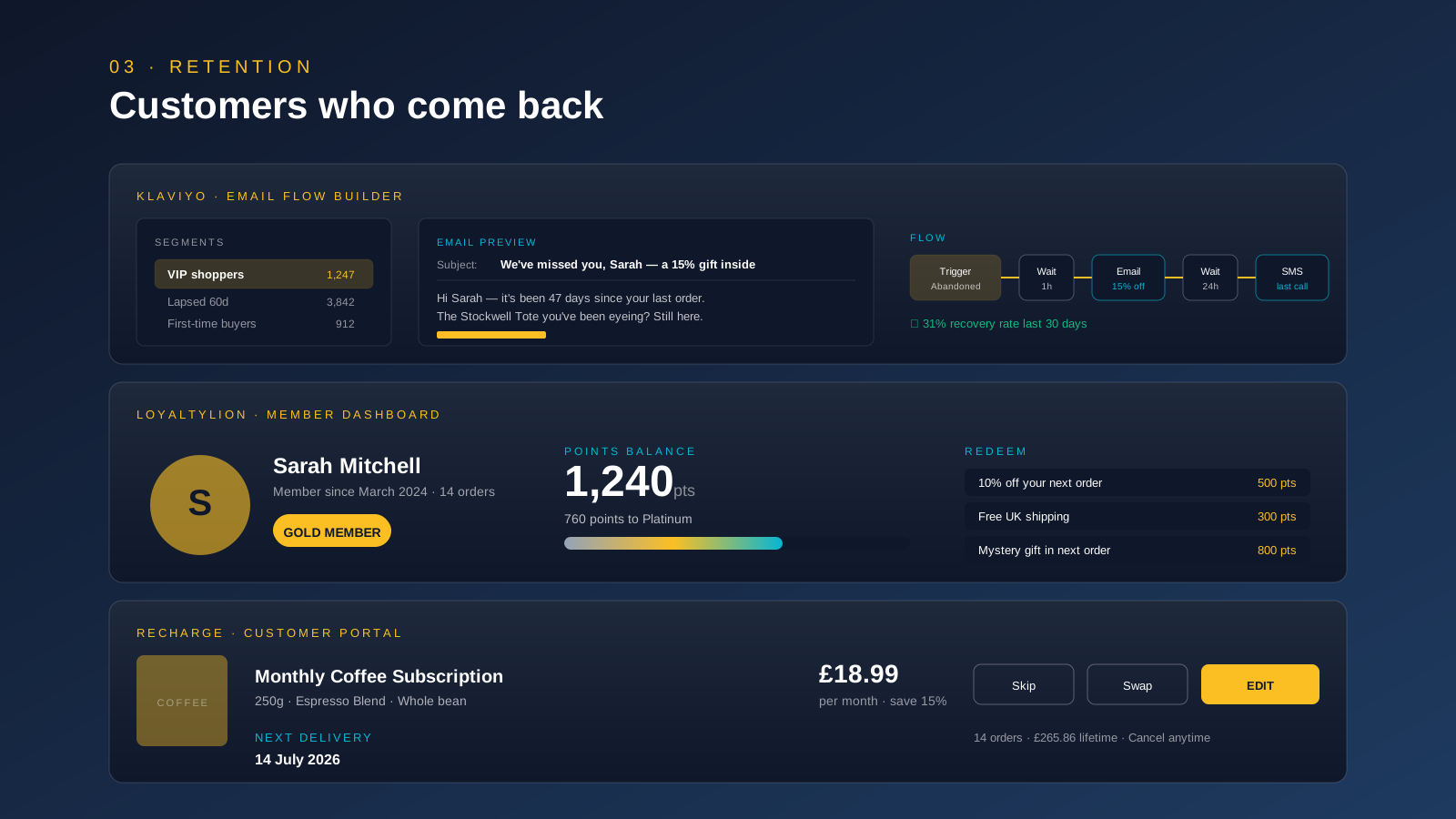
Retention is where the long-term economics of a Shopify store live. New-customer acquisition cost on paid media has roughly tripled in the last five years; retention is the only sustainable answer for most categories. The four apps in this section cover the three retention mechanics that pay back fastest: email and SMS marketing (Klaviyo), loyalty programs (LoyaltyLion at mid-market, Smile.io at entry), and subscriptions (ReCharge).
10. Klaviyo ↗
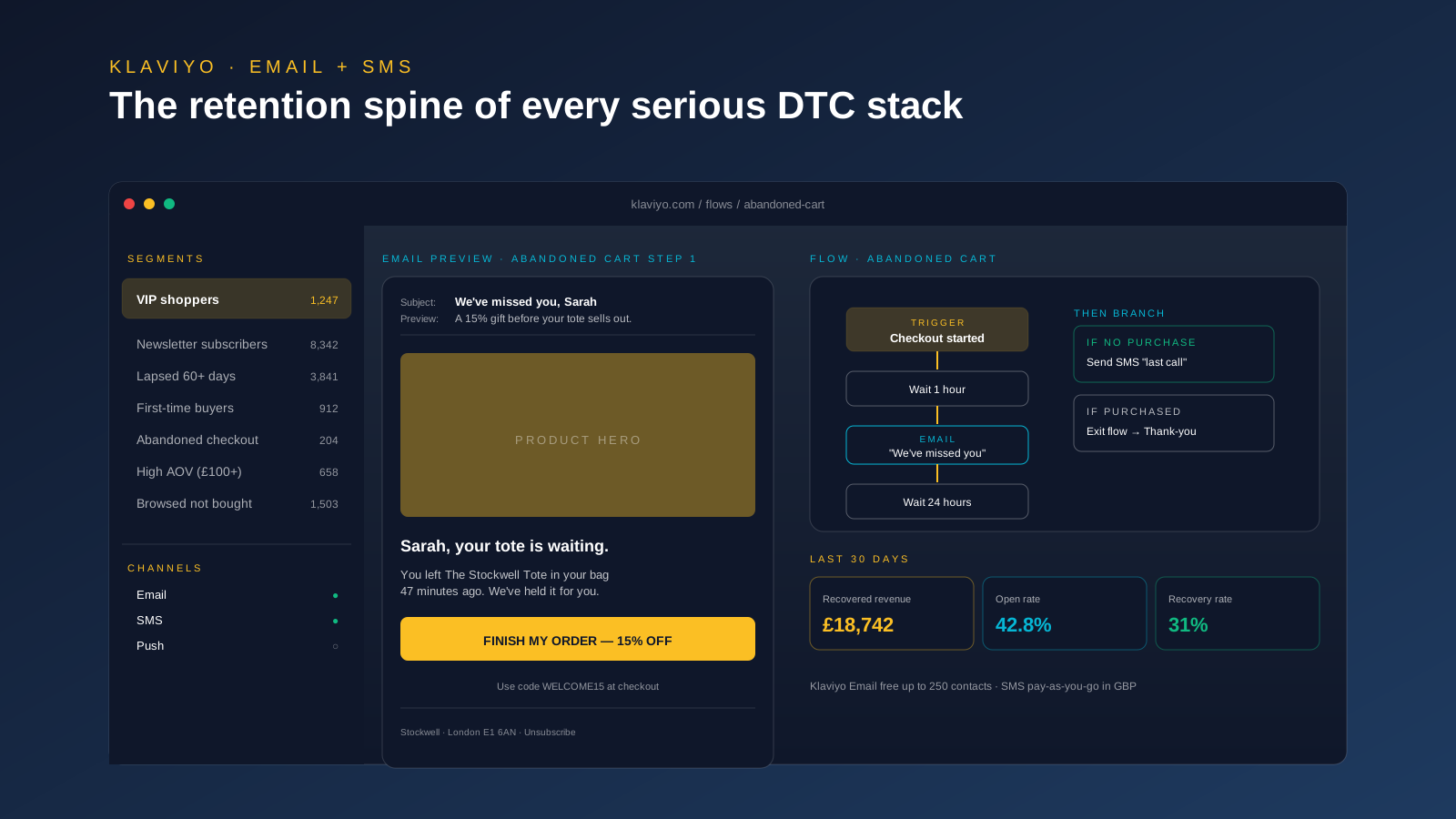
Klaviyo is the email marketing and SMS standard on Shopify Plus, and the email marketing platform that most agencies recommend by default. It plugs straight into Shopify's customer data, lets you build sophisticated segments (RFM, lifecycle stage, product affinity), and offers pre-built flow templates for abandoned cart, browse abandonment, post-purchase, win-back and loyalty milestones. The abandoned cart flow alone typically recovers 8 to 12% of abandoned carts in revenue within the first month of being live, usually more than the entire monthly cost of the app at any tier. Newer competitors (Omnisend, Yotpo Email & SMS, Brevo) are credible alternatives but Klaviyo's Shopify-native data layer still wins on segmentation depth.
Pricing
Free up to 250 email contacts. Email plan from $15/month, scaling with contact list size. SMS plan from $5/month separately. Costs climb steeply over 5,000 contacts; budget accordingly.
Best for
Any Shopify store doing more than $13k/month revenue. Install Klaviyo before you spend on any other retention tool.
11. LoyaltyLion ↗
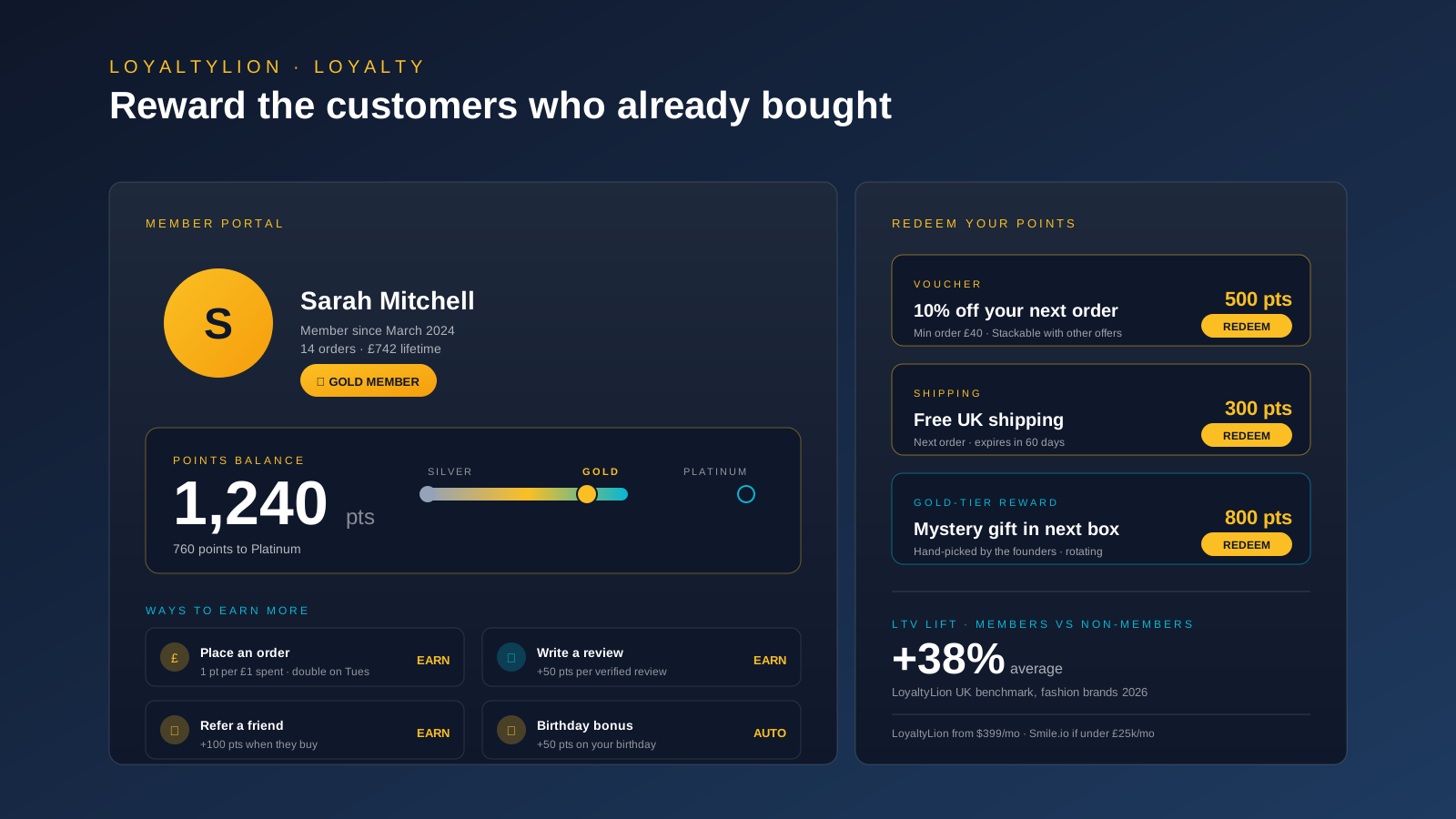
LoyaltyLion is the mid-market and Plus loyalty platform that powers programs for brands like Annmarie Skin Care, 100% Pure and a long roster of US DTC. The platform handles tiered programs (Silver/Gold/Platinum), points earning rules across actions (purchase, referral, review, birthday, social follow), redemption mechanics (discount codes, free shipping, free gifts) and the on-site widgets to display all of it. The Shopify Plus integration is genuinely deep, Klaviyo and LoyaltyLion together cover most stores' retention surface end-to-end.
Pricing
Free plan up to 800 monthly orders. Small Business plan at $199/month. Classic at $399/month for the analytics layer and tier customization. Enterprise pricing for Plus brands quoted directly.
Best for
Shopify Plus brands and mid-market stores between $1m and $50m revenue. Below that, Smile.io is the better fit.
12. Smile.io ↗
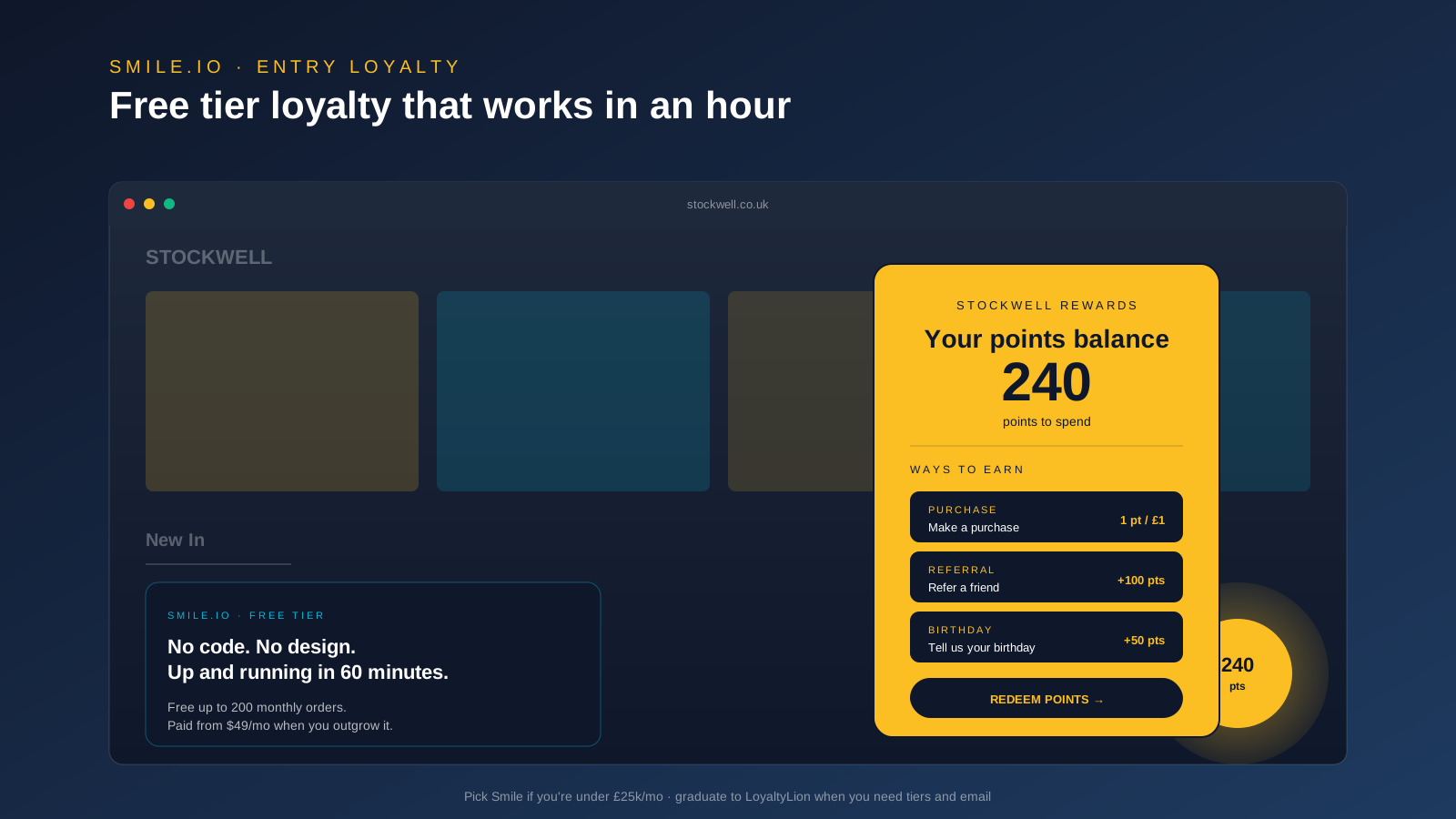
Smile.io is the entry-level loyalty program that probably powers a quarter of all small and mid-sized Shopify loyalty programs. The setup is genuinely 30 minutes, the widget design is clean, and the free plan covers stores up to 200 monthly orders. Tier-based programs, referral rewards and points-on-actions are all included. The reason mid-market eventually outgrows Smile.io is depth, the analytics, segmentation and customization in LoyaltyLion are materially better at scale, but for stores below $1m revenue, Smile.io is the right answer.
Pricing
Free up to 200 monthly orders. Starter from $49/month for up to 500 orders. Growth from $199/month above that.
Best for
Smaller Shopify and Shopify Advanced stores running their first loyalty program. Easy to start, easy to migrate off when you outgrow it.
13. ReCharge ↗
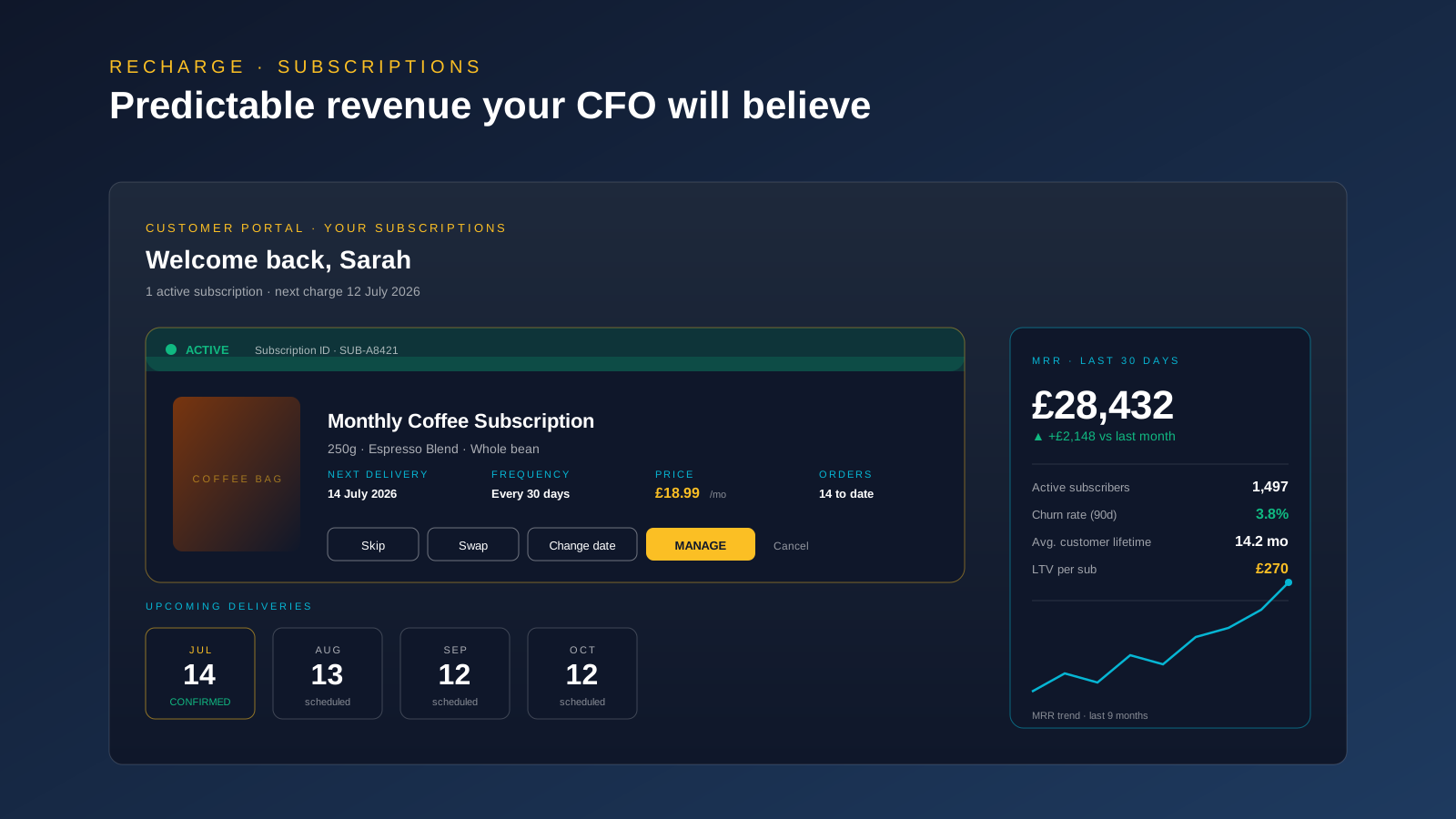
ReCharge is the subscription standard on Shopify. If your category supports recurring purchase, coffee, supplements, pet food, beauty refills, personal care, household consumables, subscriptions are usually the single highest-impact retention mechanic available. ReCharge handles the customer-facing subscription management portal, flexible billing rules (delay, swap, skip, gift), retention save flows when subscribers try to cancel, and the analytics to actually understand churn cohorts. The newer Shopify Subscriptions native app is fine for simple use cases; ReCharge wins where the subscription logic gets complex.
Pricing
Standard plan at $99/month plus 1% of subscription revenue. Pro plan at $499/month for higher volumes and lower transaction percentages. Enterprise plans quoted directly.
Best for
Stores in categories where customers genuinely buy on a recurring basis. Forced subscriptions on the wrong category fail expensively, so be honest about whether yours fits.
Recovery Apps (14): Recapture Lost Sales
Recovery is the smallest category but disproportionately worthwhile. Most stores leave 5-10% of attempted revenue on the table because items are out of stock when shoppers want them, or sessions get abandoned mid-checkout and never recovered. Email abandoned cart flows are typically handled inside Klaviyo, so this section is really about the back-in-stock mechanic.
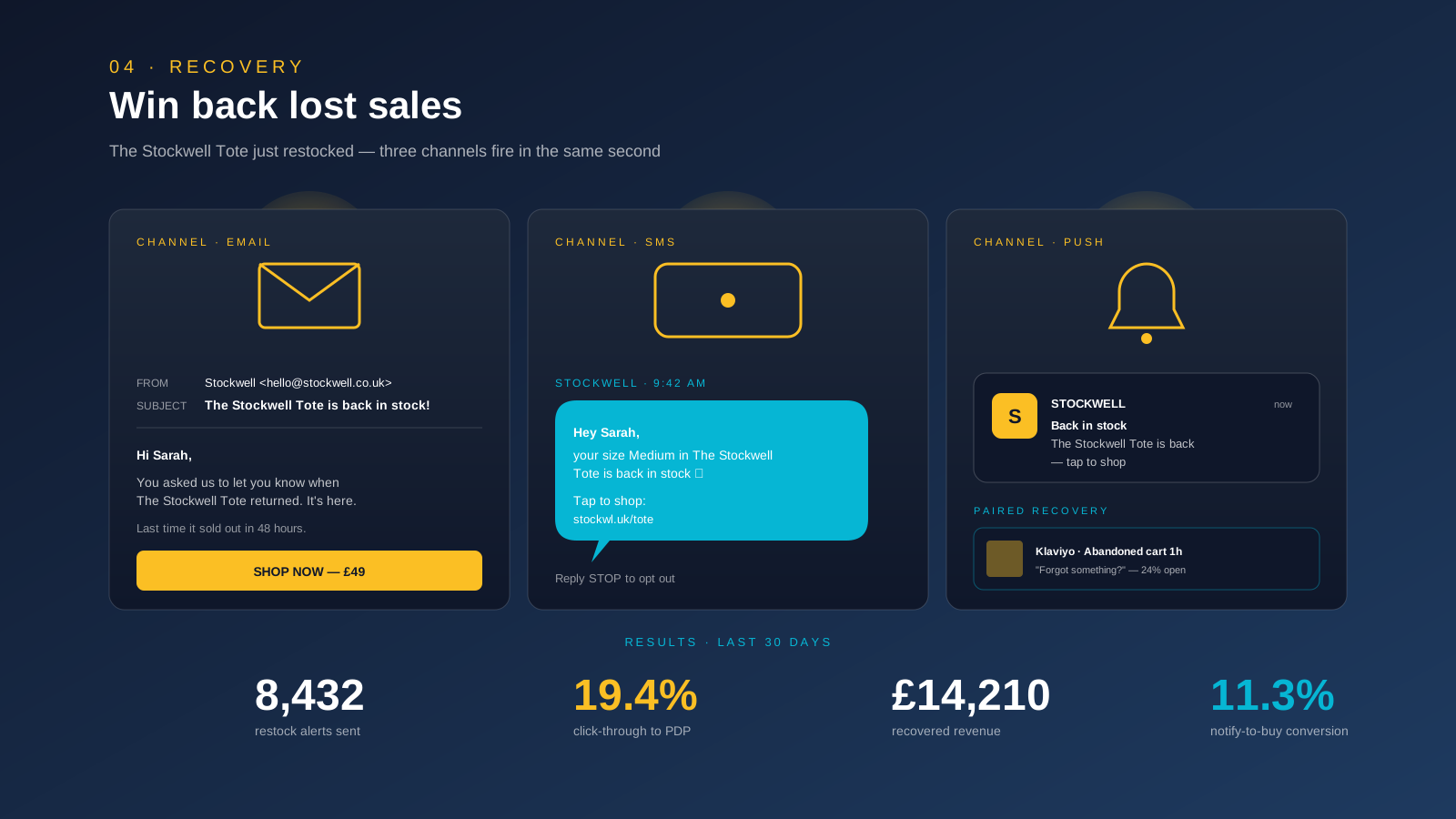
14. AMP Back in Stock ↗
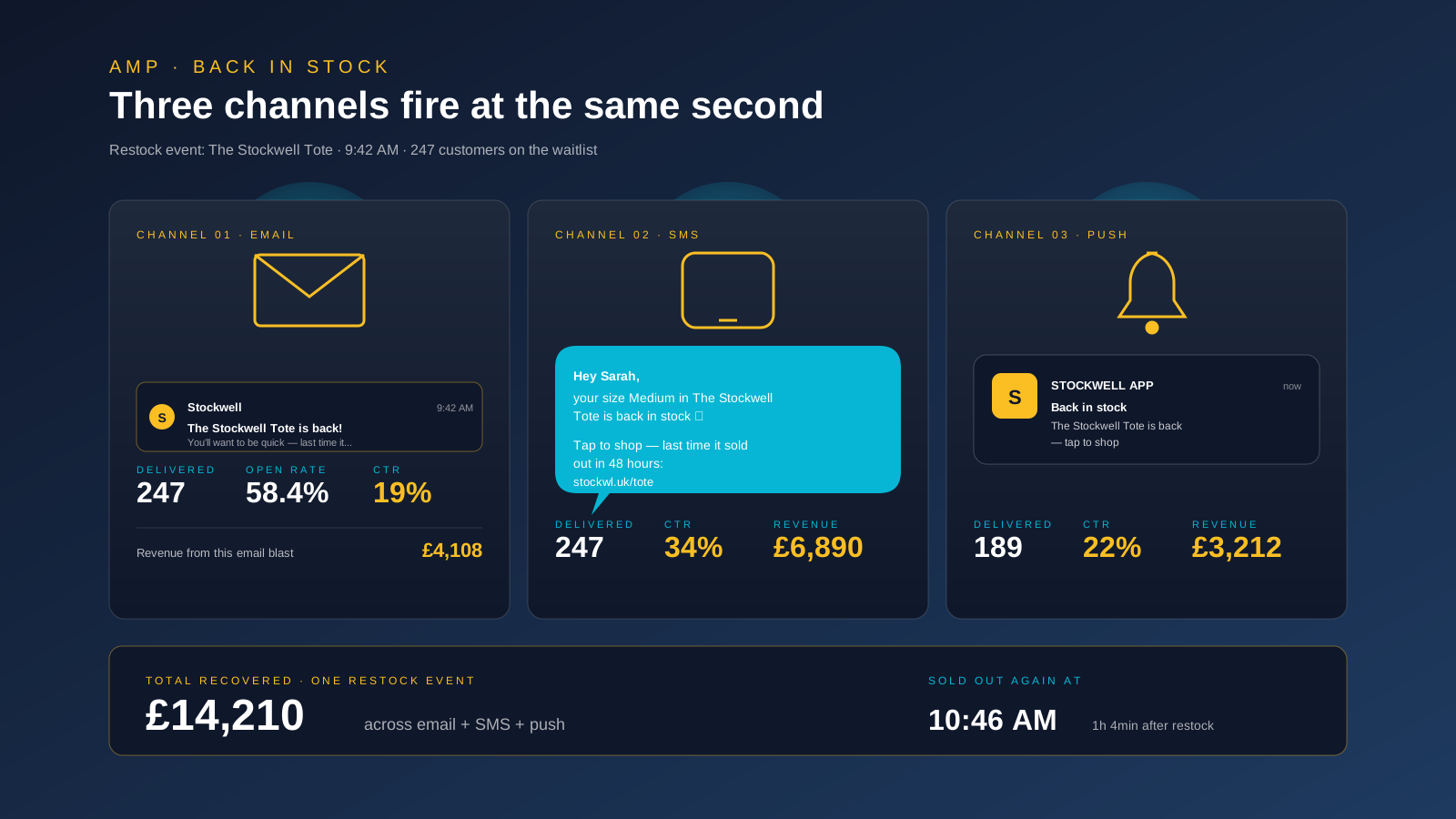
AMP Back in Stock catches the customer who landed on a sold-out product page and would have bounced. Instead, they enter their email or phone, and when the variant is restocked, AMP sends email, SMS and push notifications automatically. The recovery rate is usually 15 to 25% of the captured list, depending on the product category and the gap between notification and stock-out-again risk. Setup is straightforward; the integration with most inventory and order management systems is mature.
Pricing
Free plan up to 10 monthly alerts. Lite at $19/month for 50 alerts. Startup at $29/month for 100. Small Business at $49/month for 500 monthly notifications.
Best for
Any store that runs out of stock on any SKU regularly. If you never sell out, you do not need this. If you sell out often, this app pays back within a week.
Discovery Apps (15): Help Shoppers Find What They Want
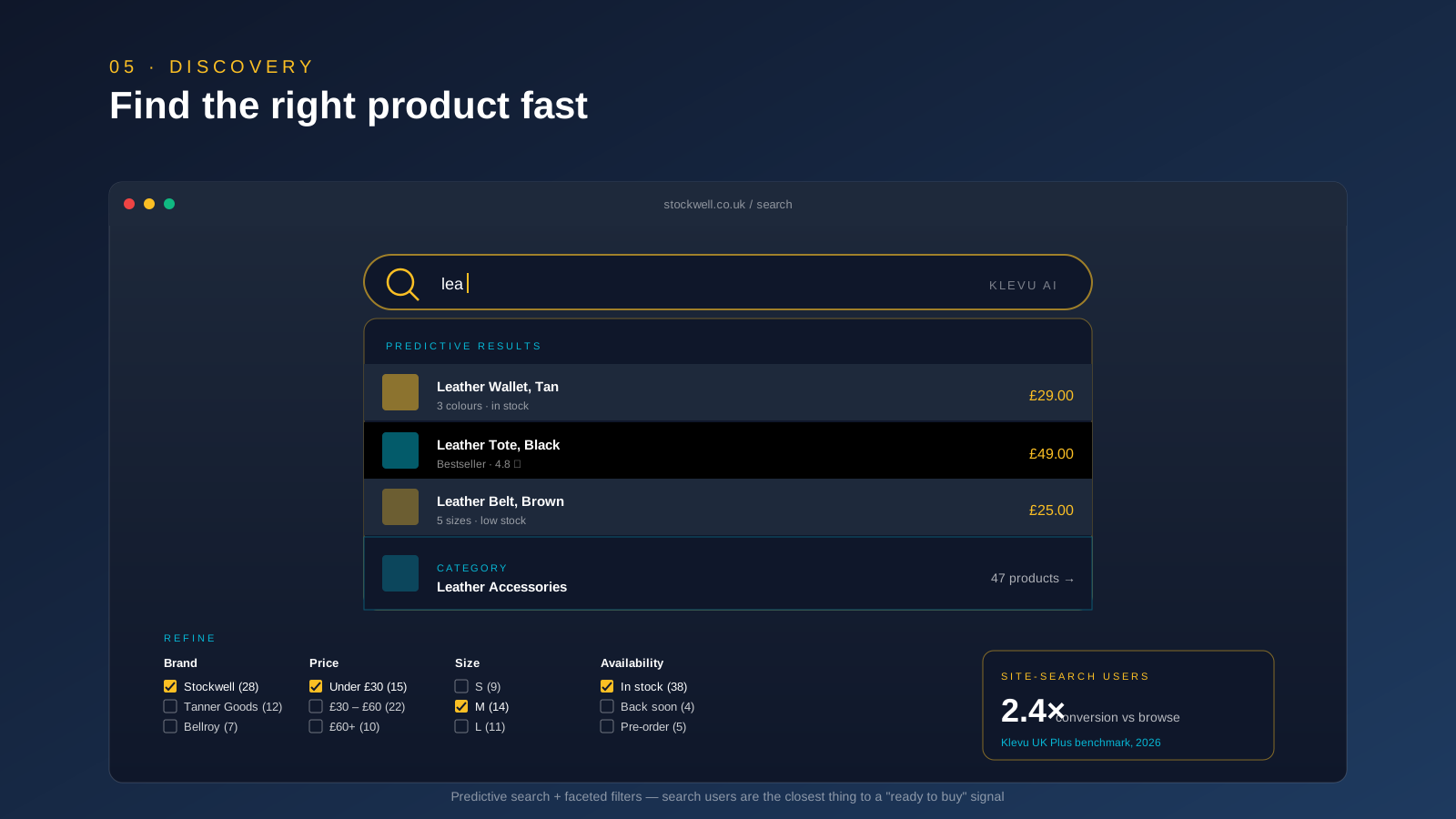
Discovery is the mechanic most often skipped on Shopify because the native search and filtering is "good enough" for small catalogs. Once you cross 500+ SKUs, the native search starts losing shoppers to the search box, they cannot find what they want, they bounce. The best discovery apps recover that lost session-to-purchase rate by surfacing the right product within two or three keystrokes.
15. Klevu ↗
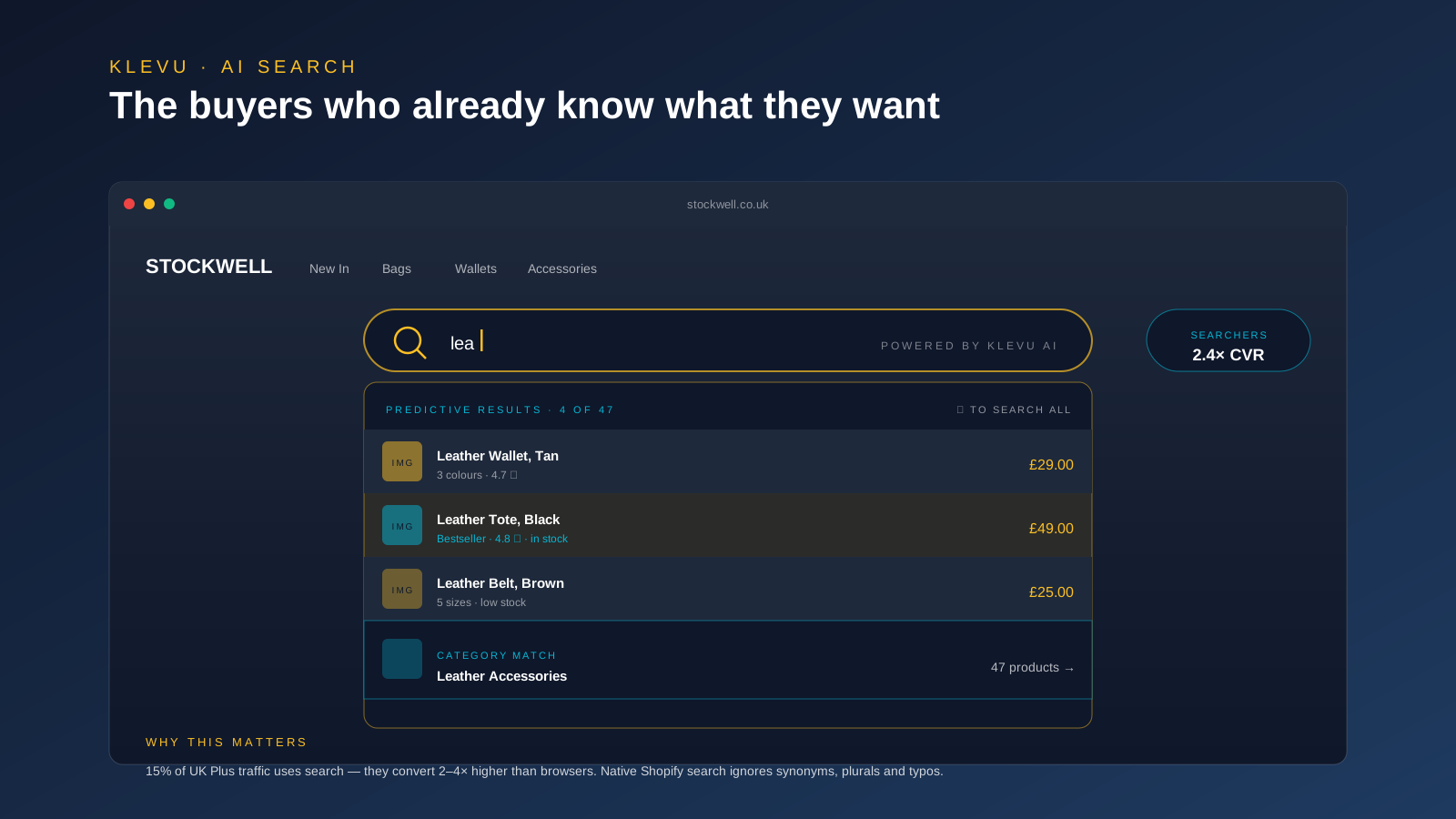
Klevu is the AI-powered search, personalization and merchandising platform that powers search for brands like Holland & Barrett, Vue Cinemas and a long list of UK enterprise stores. The AI learns from clickstream and purchase data to surface the most likely-to-convert products for each search query, handles typos and synonyms natively, and offers faceted filters that update in real-time. The recommendations engine extends the discovery surface across category pages and homepage too. Bigger than your store needs at sub-500 SKUs; transformative once you cross 1,000 SKUs and have a meaningful search volume.
Pricing
Search plan from $99/month. Recommendations add-on from a similar tier. Merchandising and full enterprise pricing quoted directly based on traffic and catalog size.
Best for
Catalogues of 500+ SKUs with meaningful internal search traffic. Below that, the native Shopify Search & Discovery app is sufficient.
The Charle Stack: What We Actually Deploy on Plus Clients
You do not need all fifteen apps. Most of our Plus clients run between six and nine apps from this list. The standard Charle stack we recommend to a new Shopify Plus brand launching tomorrow is below. Other credible options exist in every category, but these are the ones we deploy ourselves and watch perform on engagement and conversion rates over the long term:
- Klaviyo: email + SMS marketing baseline. First install, always.
- Yotpo Reviews (or Judge.me at smaller scale): reviews and UGC, syndicated to Google.
- LoyaltyLion: the loyalty program. Smile.io if revenue under $1m.
- ReConvert: post-purchase upsell on the thank-you page. Installed within the first week.
- Hextom Free Shipping Bar: the simplest AOV lever there is. Free.
- AMP Back in Stock: recovery, if the store sells out regularly.
- ReCharge: subscriptions, if the category supports recurring purchase.
- Klevu: AI search, if the catalog is over 500 SKUs.
That stack covers all five mechanics with overlap-free apps that we have deployed and watched perform across the US Plus client base. The total cost for a $6m revenue Plus store typically lands at $780-$1,170/month combined, scaling with email contact count and order volume. That is roughly 0.15% of revenue going to sales-driving infrastructure, which we think is the right benchmark.
Charle's View: What We'd Skip and Why
There is more to honest agency advice than a recommended list. Here are the categories we are not recommending in 2026, and the reasoning.
Wishlist apps for most stores
Shopify customer accounts and Shop App now cover wishlist functionality natively for most use cases. Installing a separate wishlist app (Wishlist Plus and its competitors) adds an app that 80% of your shoppers will never use, and creates a fragmented "saved items" experience across your storefront, your customer account page and the Shop App. Skip unless wishlist is a load-bearing part of your shopping experience (rare).
"AI everything" general-purpose apps
The category of apps that promise to do AI personalization, AI recommendations, AI chat, AI insights and AI search all from one app is growing fast. Be sceptical. Most of these are wrappers on the same large-language-model APIs you could integrate yourself, with shallower product depth than the category specialists (Klaviyo for retention, Klevu for search, Wiser for cross-sell). Pick the specialist, not the generalist.
"Free shipping calculator" apps that are not Hextom
The Hextom free shipping bar has a free tier that covers what 95% of stores need. The dozens of "free shipping calculator" alternatives in the App Store add marginal features for paid-only plans. Stick with the free Hextom tier unless you genuinely need scheduled bars and geo-targeting.
The "increase sales" trust-badge apps
Adding "100% secure checkout" badges and "30-day money back" stickers to your product pages doesn't actually do much for conversion any more, shoppers have been habituated to ignore the noise. The exception is genuine third-party trust signals (Trustpilot rating, Klarna logo, real customer review counts) which do work. Skip the badge-soup apps.
Anything with no genuine free trial
If an app costs $99/month and offers only a 7-day trial with no free tier, the vendor is signalling that they cannot trust the product to win on its own merits. Pass.
Beyond the 15: Other App Categories Worth Knowing
Not every category made our top 15, but several come up in every Plus client kickoff. None is core to the conversion to AOV to retention to recovery to discovery framework, but each solves a real problem if your ecommerce store has it. The selection logic is the same: each app has to pull weight against a measurable bottleneck before we recommend it.
Landing page builders (PageFly)
PageFly is the most-deployed landing page builder on Shopify. If your storefront needs custom landing pages for paid traffic, ad-specific shopping journeys, or seasonal merchandising, PageFly drag-and-drop landing page templates save engineering time and give marketers the deep customization options they need without filing a ticket with the tech team. Builds on top of the Shopify theme so it inherits your performance baseline.
SEO apps and image optimization
TinyIMG and Plug in SEO are the two reasons to install an SEO app at all. Both handle the standard SEO checklist: page titles, meta descriptions, sitemap submission, image alt text, structured data feeds. TinyIMG also compresses images and improves storefront performance, which compounds with the speed lift you already get from Horizon themes. SEO is a slow burn (8 to 12 weeks before you see meaningful results), but compounding traffic over 12 months pays back many times over.
Trust badges, customer reviews and credibility
Trust badges (secure checkout icons, payment provider logos) are not the conversion lever they once were. Site visitors have habituated to filtering them out. Real customer reviews and customer feedback are the credibility signals that still work in 2026. The Yotpo and Judge.me apps in our top 15 cover this; standalone trust-badge apps are mostly noise that hurt your performance score for no measurable customer retention benefit.
Cookie consent (GDPR, CCPA)
If your store sells into the EU, UK or California, cookie consent is a regulatory requirement, not a choice. TinyCookie is a clean Shopify-native pick that handles GDPR, CCPA, PIPEDA and LGPD compliance. Cookie consent is not a sales-driving app, but failing compliance costs you the whole company, so the selection has to be deliberate. Note: this category replaced the old "trust seal" apps as the real legal credibility surface.
Order tracking and order fulfillment
Order tracking apps like ParcelWILL or AfterShip turn shipping notifications into branded touchpoints. Customers stay on your site for tracking instead of going to the carrier, and the extra impressions feed into your shopping journey for repeat purchases. The wider order fulfillment category (ShipStation, ShipBob, AfterShip Returns) is out of scope for this list, we covered fulfillment separately, but every store processing more than 30 orders a day benefits from at least one of these.
Customer service apps (live chat, help center)
Customer service apps reduce inbound inquiries and improve response efficiency for your support team. Tidio for live chat, HelpCenter for FAQs, Gorgias for the full ticketing stack. The best apps in this category turn what used to be manual tasks into automated messages that handle the 80% of customer service inquiries that are repetitive and predictable. Done well, your team focuses on the genuinely complex 20% that needs human judgment.
Form builder, CRM and customer data
Hulk Form Builder for custom forms; HubSpot for CRM. Marketers running B2B-leaning ecommerce stores often need both. CRM integration matters because customer profiles unify across your marketing strategy, customer information feeds into Klaviyo segmentation, and CRM data informs LoyaltyLion tier rules. For stores below $6m revenue, Klaviyo's native CRM functionality covers 80% of the use case without a separate CRM.
Translation and international
LangShop translates storefront content into 20+ languages. For international expansion, translation is one of the most underrated investments. Pair with the Markets-based per-market checkout from Winter '26 RenAIssance and the language barrier stops being a meaningful drop-off in the shopping journey. The advantage compounds: customers who can read your storefront in their own language convert at materially higher rates than ones who cannot.
Visuals, shoppable video and urgency
Videowise turns product videos into shoppable visuals. Effective for categories where customers want to see product in motion (apparel, fitness, beauty). Countdown timers, urgency badges and exit-intent banners round out the conversion-rate toolkit, but the truth on countdown timers is that they only work when the urgency is real. Fake countdowns hurt long-term credibility.
Dropshipping and supplier-network apps
Spocket and Carro connect Shopify stores to dropshipping suppliers and partner networks. Useful for new businesses testing product-market fit without committing to inventory. Less relevant for established Plus brands but worth knowing about for portfolio strategies. Suppliers in the Spocket network are mostly North American, which is a meaningful advantage over generic AliExpress-style sources for stores selling into the US or Canada.
Common questions store owners ask us about Shopify apps
A few questions surface in every Plus client kickoff. The answers below summarize what we tell people:
What benefits does my company actually get from app consolidation? Reduced page weight, simpler customer profiles, faster team onboarding, fewer integration issues, one renewal conversation instead of seven. Consolidate where the integration quality justifies it, Yotpo's reviews plus loyalty plus SMS is the classic example.
How many apps does the average ecommerce store actually use? 7 to 10 for stores under $1m revenue; 15 to 25 for Plus stores at scale. We track app counts for our clients because surprise dependencies cause more issues than failed payments. Users on the Shopify side of our team audit every install for performance impact.
What's a sensible Shopify apps marketing strategy? Pick apps that match where your shopping journey is leaking. Use the comparison table above. Measure conversions and AOV before and after each install. Cut anything that does not lift either number within 60 days.
How do I handle customer loyalty without paying enterprise prices? Smile.io free tier covers most stores under 200 orders a month. Move to LoyaltyLion when you cross 800 monthly orders. Do not pay for advantage features you will not use.
What about customer retention beyond email? Loyalty programs, subscriptions, branded order tracking pages and post-purchase content sequences all contribute. The right approach combines several apps reading from one shared customer profile, not seven apps each trying to "own" the relationship with people who bought from you once.
Frequently Asked Questions
What are the best Shopify apps to increase sales in 2026?
The 15 apps that genuinely move the needle on Shopify sales in 2026, categorized by sales mechanic: Yotpo Reviews, Judge.me and Loox for social proof; Hextom Free Shipping Bar and qikify popups for conversion lifts; ReConvert, Wiser and FoxSell Bundles plus Bold Upsell for average order value; Klaviyo, LoyaltyLion, Smile.io and ReCharge for retention and repeat purchase; AMP Back in Stock for recovery; and Klevu for AI search and product discovery. The right stack depends on your tier, your shopper behavior and the bottleneck you are trying to fix.
How many Shopify apps should I install on my store?
Fewer than you think. Most successful Shopify stores run between 6 and 12 apps; high-volume Plus stores typically run 15 to 25. Every app adds page weight, JavaScript and dependency risk, so the right number is the smallest count that covers your retention, AOV, conversion, recovery and discovery mechanics. We tell clients to consolidate where possible, Yotpo, for example, can cover reviews, loyalty and SMS in one platform rather than three separate apps.
Which Shopify app increases sales the most?
No single app makes the biggest difference for every store. The category that pays back fastest for most merchants is email and SMS marketing (Klaviyo, Omnisend or Yotpo Email & SMS), because it earns back the cost on abandoned cart recovery alone within the first month. Loyalty programs (LoyaltyLion, Smile.io) and post-purchase upsell (ReConvert) usually deliver the next-largest lift. For stores stuck below 2% conversion rate, reviews and social proof (Yotpo Reviews, Judge.me, Loox) is the right first investment.
Are free Shopify apps any good?
Yes, several of the most-deployed apps on Shopify start free or have a permanent free tier. Judge.me gives unlimited reviews on its free plan. Smile.io covers loyalty up to 200 monthly orders for free. Hextom Free Shipping Bar is free for a single bar. The trade-off is usually feature depth, branding (some free apps display their own logo on widgets) or per-order pricing that climbs as you scale. For stores under $650k revenue, free-tier apps cover most mechanics.
Do I really need a Shopify reviews app like Yotpo or Judge.me?
Yes. Reviews are the single most consistent conversion lift across every Shopify category Charle works in. Around 95% of shoppers read reviews before purchasing, and product pages with reviews convert roughly 270% better than pages without. Shopify Reviews (the native app Shopify retired in 2022) was never replaced with a built-in alternative, so a dedicated reviews app is required to collect, moderate and display them at scale.
What is the best Shopify loyalty app?
LoyaltyLion is our default recommendation for mid-market and Plus stores between $1m and $50m revenue. Smile.io is the entry-level pick because it is simple, free up to 200 monthly orders, and the upgrade path covers most growing brands. Yotpo Loyalty & Referrals is the right choice if you are already using Yotpo Reviews or Yotpo Email and want to consolidate. The wrong loyalty app is worse than no loyalty app, choose for fit, not features.
What is the best Shopify app for upsell and cross-sell?
ReConvert wins on post-purchase upsell, its thank-you page upsells consistently lift AOV by 8 to 15% with a single morning of setup. Wiser is the AI-powered choice if you want frequently bought together, smart cart recommendations and predictive cross-sells. Bold Upsell is the older but battle-tested option for in-cart upsells. For build-your-own bundles, FoxSell or Shopify Bundles (now native) cover the use case without an extra app.
How do I avoid slowing down my Shopify store with apps?
Three rules. First, install only what you actually use, uninstall any app you have not opened in 30 days, and clean up leftover Liquid snippets from previously uninstalled apps. Second, prefer apps built natively on Shopify (Built for Shopify badge) over generic third-party widgets, the native architecture loads less JavaScript. Third, audit your Liquid theme every quarter for app code that is loading on every page when it only needs to load on product or cart pages.