 Nic Dunn, CEO, Charle Agency
Quick Answer: Shopify or Amazon?
Choose Shopify if you want to build a brand that owns its customers online, controls its pricing, and compounds in value over time — entrepreneurs serious about brand identity, customer data, and lifetime value belong on Shopify. Choose Amazon if you want immediate access to high-intent buyers and you are happy to trade brand ownership and customer data for that exposure to Amazon's audience. Most successful online businesses eventually use both ecommerce platforms, but they treat Shopify as the home and Amazon as a discovery channel rather than the other way round.
The decision is rarely binary. Shopify is an ecommerce platform built for brand-building; Amazon is an online marketplace built for reach. Picking the wrong one for your business model is what hurts margins, not picking the wrong one full stop. The rest of this article walks through every factor that should sit in that decision: cost, fulfillment, marketing, fees, customer experience, scalability, and the practical workflow for selling online on both at once. We'll cover the pros and cons of each platform and the specific selling tools that move the needle for ecommerce businesses in 2026.
Platform Overviews: Shopify and Amazon
Although this article compares Shopify and Amazon like for like, it is worth being clear about what each one actually is, because the rest of the comparison only makes sense once that is settled.
Amazon: a marketplace
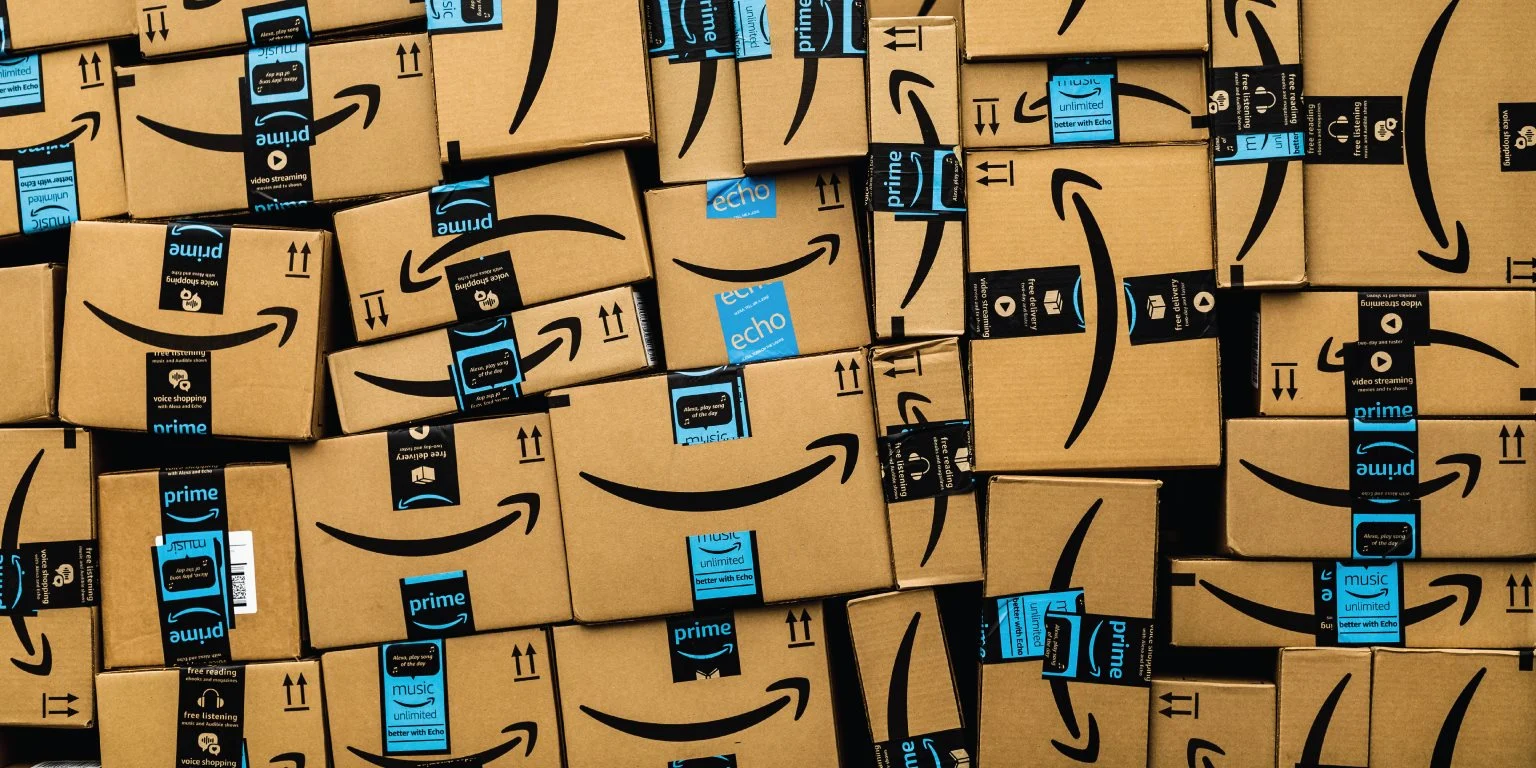
Amazon gives merchants space inside its own website to list products. Think of it as renting a stand at a busy street market. Footfall is enormous and customers are already in buying mode, but they are usually searching for a product category rather than a specific brand. You get access to Amazon's tools to upload listings, manage stock, advertise, and ship through its fulfillment network. You do not get to design the page, set the layout, or speak directly to the customer outside of the order itself.
Shopify: an ecommerce platform
Shopify gives you the tools to build your own ecommerce store. The closer analogy is leasing your own shop on the high street rather than renting one of millions of stalls in someone else's market. You design the storefront, control the URL, set the prices, and own the relationship with every customer who walks in. Shopify provides the software, hosting, checkout, and ecosystem of apps and themes. You provide the brand, the marketing, and the reason for someone to visit in the first place. It is the platform of choice for online businesses that want to build something that lasts, with a free trial that lets you test the platform before committing.
That distinction matters because it changes who depends on whom. On Amazon, your business depends on the marketplace to send traffic. On Shopify, the marketplace depends on you to send traffic to it. Both models work. They reward different kinds of operators.

Building a Brand on Shopify vs Amazon
Brand-building is the single biggest reason ecommerce businesses prefer Shopify long term. We are in a market where customer acquisition costs keep rising and where buyers increasingly research online before they buy. Owning the brand experience — the visual identity, the product story, the post-purchase comms, the social media presence — is what turns a one-off sale into a customer who is worth ten times that first order. Compare that to selling on a marketplace where every product sits next to direct competitors and the customer never really becomes yours.
Brand on Amazon
On Amazon, your ability to express a brand identity is heavily constrained. You can add a logo, a Brand Store front, and A+ Content (enhanced product listings for Brand Registry sellers). Everything else is the standard Amazon template: the same fonts, the same layout, the same competing-product carousel sitting underneath your listing. Customers expect that consistency, which is partly why Amazon converts so well, but it also means there is almost no room to communicate why your product is different beyond the listing copy and images. Most shoppers leave an Amazon listing remembering the product, not the seller — and that's a hard cap on long-term brand-building.
The bigger constraint is data. Amazon owns the customer relationship. You get an order, a shipping address, and the general region the customer is in. You do not get an email address you can market to, a name to retarget with, or a way to follow up that does not violate Amazon's terms. That makes loyalty programs, win-back campaigns, and proper lifetime value modelling effectively impossible on Amazon alone. The same constraints apply to growing your customer base — every new buyer goes to Amazon's customer base, not yours.
Brand on Shopify
Shopify gives you the opposite. Themes are starting points, not ceilings, and the customization options run deep. With the right developer or agency, every part of the storefront and customer experience can be tailored: the homepage, product pages, collection layouts, checkout (on Shopify Plus), and the entire post-purchase journey. Templates are flexible and the customization is genuine — most brands end up with an ecommerce store that does not look like any other Shopify store. B2B, multi-currency, and multilingual tools let you adapt the experience by market, segment, or persona — useful when you sell across multiple markets and need region-specific design. The freedom to shape every aspect of how customers experience your brand is exactly what Amazon doesn't offer.
More importantly, you keep the customer data. Names, email addresses, purchase history, browsing behavior — all of it sits in Shopify ready to feed into Klaviyo, Meta, Google Ads, your loyalty program, or any retention tool you choose. That is the foundation that lets a Shopify brand compound. Your second sale to an existing customer costs a fraction of the first, and you can prove it.
The trade-off is that Shopify will not send you traffic. Every visitor has to come from somewhere you built — paid social, organic search, email, partnerships, PR — and that requires investment in marketing. Brands that skip that investment find Shopify quiet. Brands that commit to it find it scalable in a way Amazon cannot match.
Ease of Use: Setup and Learning Curve
Both ecommerce platforms are designed to get a new merchant selling quickly. The learning curves look different because the work involved is different. Each platform offers different solutions for different kinds of business, and the functionality you actually need depends on what you're selling and how.
Setting up on Amazon
Getting an Amazon Seller account approved is straightforward in principle, but the practical reality is fiddly. You need to verify your identity, link a bank account, set up tax details, and pass Amazon's checks. Then comes the listing work. Every product needs accurate titles, descriptions, bullet points, images, and the right category attributes. Brand Registry adds another layer of verification but unlocks A+ Content, Sponsored Brand ads, and protection against unauthorised resellers. Most new Amazon sellers underestimate the listing work. Tools like Amazon Seller Central are functional rather than friendly, and the platform assumes you already know your way around keyword research, category-specific compliance rules, and FBA inbound shipping requirements.
Setting up on Shopify
Shopify gets you to a working store faster than almost any other platform. Pick a theme, add products, configure shipping zones, and you can be selling within a day. The 2026 admin includes Sidekick, Shopify's built-in AI assistant, which can draft product descriptions, build collection rules, suggest marketing campaigns, and answer questions about the platform in plain English. That alone takes weeks off the learning curve compared to a few years ago.
The depth comes later. Themes can be customized through the editor, but turning a polished theme into a genuine brand experience usually requires custom development. That is where agencies come in. Brands that want custom Shopify theme development typically commission bespoke storefronts to differentiate, integrate complex business logic, or build features the off-the-shelf themes do not support.
Features and Tools
Amazon's feature set
Amazon's strength is operational. The marketplace handles the storefront template, the search infrastructure, the checkout, the payment processing, and (if you use it) the fulfillment. Fulfilled by Amazon (FBA) takes inventory off your hands and gives your listings Prime eligibility, which lifts conversion materially. Sponsored Products, Sponsored Brands, and Sponsored Display ads let you buy your way to the top of relevant searches. Programs like Subscribe and Save, Vine, and Brand Registry add ways to drive repeat purchases and protect your listings. The downside of all of this is that you operate inside Amazon's box. Design is limited, customer data is limited, and every sale gives Amazon a referral fee on top of any FBA charges.
Shopify's feature set
Shopify is built for breadth and ownership. Out of the box you get product management, inventory, multi-channel selling tools (web, in-person via Shopify POS, social media, marketplaces), email marketing with Shopify Email, abandoned cart recovery, gift cards, automatic tax calculation, and a custom domain. The ecosystem then extends that with more than 8,000 apps covering subscriptions, loyalty programs, reviews, SMS, ERP integrations, and pretty much every other category an ecommerce business runs into. The result is that Shopify works equally well for small online businesses launching their first store and for enterprise brands selling at serious scale.
On the infrastructure side, Shopify processes more than 10,000 transactions per minute at peak — comfortably ahead of what most independent platforms handle — which is why enterprise brands run high-pressure Black Friday traffic on it without flinching. That performance also shows up in everyday operations: dashboards load fast, reporting and analytics surface real insights, and the underlying ecosystem scales as you grow. Scalability is built in rather than bolted on. Shop Pay accelerates checkout for repeat shoppers across the network, and on Shopify Plus you can customize the checkout itself, which is locked down on every lower tier and on every competitor we benchmark against.
Marketing and SEO on Each Platform
Both platforms need marketing to work. They need different marketing.
Marketing and SEO on Amazon
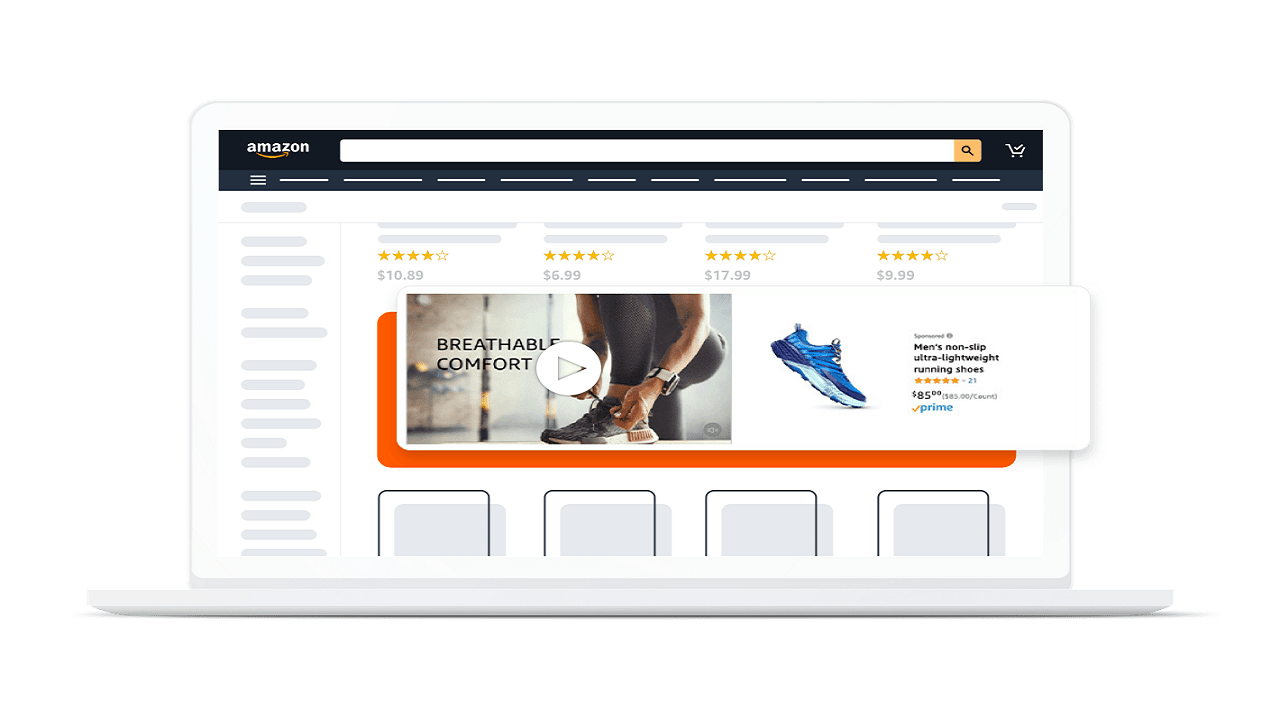
On Amazon, marketing is mostly product listing optimization and on-platform advertising. The questions to answer are: which keywords does your customer search for, how does your title rank for those, how does your imagery compare to the competing listings on the same page, and how strong is your review profile relative to category leaders. Amazon SEO is its own discipline: keyword research is done against Amazon's internal search data rather than Google's, and ranking signals lean heavily on conversion rate, review volume and rating, and sales velocity. Heavy competition in popular categories means every listing edit matters, and a strong listing can move thousands of units a month while a weak one disappears.
Sponsored Products ads sit alongside organic results and are the fastest way to buy visibility in a crowded category. Sponsored Brands ads put your logo above the search results. Sponsored Display ads retarget shoppers who looked at your product. Brand Registry sellers also get A+ Content (richer product descriptions with comparison charts and lifestyle imagery) and the Brand Store, a mini storefront inside Amazon. All of this is real marketing leverage, but it is leverage within Amazon's walls — every pound you spend reinforces your position there rather than building an asset you take with you.
Marketing and SEO on Shopify
Shopify gives you the keys to the wider marketing toolkit. Customers find you through Google, social media, email, partnerships, PR, or paid media — channels you control and own the data from. The platform integrates with Google, Meta, TikTok, Pinterest, Klaviyo, and effectively every relevant marketing tool through its app store. Most online businesses on Shopify run a blend of paid social, organic search, and email as their core acquisition mix, supplemented by content marketing that earns visitors over time.
On the SEO side, Shopify exposes the SEO tools and controls that matter: editable meta titles and descriptions, alt text on images, auto-generated XML sitemaps, 301 redirects, structured product data, and clean URL structures. There are some quirks — Shopify forces certain URL prefixes like /products/ and /collections/ — but for the vast majority of brands those are not the bottleneck. The bottleneck is whether the content is good, the technical foundation is clean, and someone is doing the work of building topical authority. Shopify Email gives you 2,500 free emails a month to start with, automated abandoned cart recovery is built in, and the native blog supports the kind of content marketing that compounds over years.
For longer-form marketing recommendations and marketing tools we install most often, our guide to the best Shopify apps is the right starting point, and our Shopify SEO guide goes deeper on organic search strategies specifically.
Payment Processing
Both platforms handle payments for you, but the flexibility on offer is very different.
Shopify payment processing
Shopify's default payment processor is Shopify Payments, which handles every major card, Apple Pay, Google Pay, and a long list of alternative payment methods. Shop Pay, the accelerated checkout that sits on top, is one of Shopify's strongest assets — customers who have Shop Pay enabled check out faster across every Shopify store they visit, which lifts conversion measurably. When you use Shopify Payments, you pay card processing fees and zero additional transaction fees. If you bring in a third-party gateway like Stripe or PayPal, Shopify adds an extra fee on top, typically 0.5% to 2% depending on your plan. Most merchants stick with Shopify Payments for that reason, though the alternative options remain available when you need them.
On Shopify Plus, you can customize the checkout itself — branded layouts, custom fields, post-purchase upsells, advanced fraud rules — which is locked down on lower tiers. Funds settle directly into your bank account on a schedule you control. For a wider view, see our guide to the best Shopify payment gateways.
Amazon payment processing
Amazon handles all payments through Amazon Pay. Sellers do not choose the processor, do not control the checkout, and cannot integrate a custom gateway. Customers can use stored cards, Amazon gift cards, and One-Click checkout. Funds are held by Amazon and disbursed on a set schedule (typically every two weeks for most categories), and Amazon retains the right to hold payments longer if there is a dispute or quality issue. The trade-off is simplicity for the seller and trust for the buyer, but you give up control of one of the most consequential parts of the customer journey.
Shipping and Fulfillment
Shipping on Shopify
Shopify gives you complete control over fulfillment. You can ship orders yourself from your own warehouse, plug in a third-party logistics provider (3PL) like ShipBob, Huboo, or Amazon's Multi-Channel Fulfillment, or split fulfillment across multiple locations. The admin supports real-time carrier rates, flat-rate shipping, weight-based rules, free shipping thresholds, local delivery, and click-and-collect. Shopify Shipping (in certain regions) offers discounted rates with major carriers and lets you print labels directly from the dashboard.
The advantage is flexibility and branding: your packaging, your inserts, your unboxing experience. The trade-off is responsibility. You own returns, customer service, and shipping speed. For growing brands, a 3PL is usually the right answer — it gives you the speed of an outsourced fulfillment operation without ceding brand control.
Amazon FBA and FBM
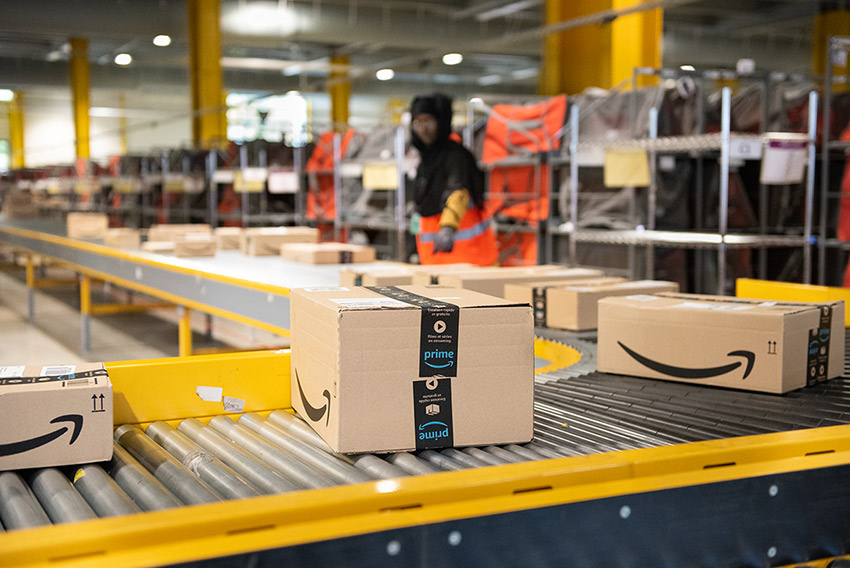
Amazon's Fulfillment by Amazon (FBA), known in the US as Fulfillment by Amazon, is one of the most operationally impressive logistics networks in the world. You send inventory into Amazon's warehouses and Amazon does the rest: picking, packing, shipping, returns, and customer service. Listings become Prime-eligible, which lifts conversion rates significantly because Prime members default to Prime-tagged products. There are more than 600,000 active FBA sellers globally for that reason.
The cost is several layers of fees on top of referral fees: fulfillment fees (priced by size and weight tier), monthly storage fees (priced by cubic foot, typically $0.75 to $2.40 per cubic foot in standard months and considerably higher in Q4), and long-term storage fees if inventory sits for more than 365 days. Lightweight, fast-moving products are the FBA sweet spot. Bulky, heavy, or slow-moving items can lose all their margin to fees once fulfillment fees, storage fees, and referral fees stack up. Many sellers underestimate the all-in cost of FBA fulfillment because the fees are split across so many line items.
If you want to keep more control, Fulfilled by Merchant (FBM) lets you ship orders yourself while still selling on Amazon. You give up Prime eligibility on most products but you keep more margin and control. Amazon's Multi-Channel Fulfillment (MCF) also lets Amazon fulfil orders that came from other channels — like your Shopify store — using the same inventory.
Pricing and Fees in 2026
Pricing is one of the most common decision points, and it is the one where outdated articles do the most damage. Here is what each platform actually costs in 2026.
Amazon pricing and fees
Amazon offers two seller plans. The Individual plan costs $0.99 per item sold with no monthly subscription, but it is capped at 40 items per month and excludes advertising, advanced reports, and most product categories. The Professional plan costs $39.99 per month and unlocks unlimited listings, all categories, advertising, bulk listing tools, and seller analytics. In practice, any business serious about online sales of more than 40 items a month should be on the Professional plan; the Individual plan only exists for hobbyist sellers and people testing the waters with limited resources. For example, a business doing $50k a month in sales would pay tens of thousands in referral fees alone.
On top of the plan fee, Amazon takes a referral fee on every sale. That fee varies by category and typically sits between 8% and 15%, with most general merchandise at 15%. If you use FBA, you also pay fulfillment fees (priced by size and weight) and storage fees ($0.75 to $2.40 per cubic foot in standard months in the US, with a Q4 surcharge that roughly triples that). Long-term storage fees kick in after 365 days. The honest cost of an FBA business is usually 25% to 40% of revenue once all fees are accounted for.
Shopify pricing and fees
Shopify's standard plans in 2026 are:
- Shopify Starter — $5 per month. Lets you sell through social, messaging, and a buy button. No standalone store.
- Basic Shopify — $39 per month. The entry-level full store with most core features.
- Shopify — $105 per month. Professional reports, lower transaction fees, more staff accounts.
- Advanced Shopify — $399 per month. Custom reports, advanced shipping, and the lowest transaction fees on this tier of plans.
- Shopify Plus — starts around $2,300 per month, or a revenue-based model for higher-volume merchants. Includes wholesale, unlimited stores, checkout customization, and dedicated account management.
On top of the subscription, you pay card processing fees through Shopify Payments (the rate drops as the plan tier increases). There are no per-item referral fees and no FBA-equivalent storage fees. If you use a third-party gateway instead of Shopify Payments, an additional 0.5% to 2% transaction fee applies on each sale.
For most brands doing serious volume, the predictability matters more than the headline number. A brand on Shopify Plus paying a fixed $2,300 per month plus card fees has a known cost base; a brand doing the same revenue on Amazon is handing over 25% to 40% of every sale and a chunk of margin to the marketplace. That money goes to Amazon's bottom line, not yours. Our deeper breakdown is in the Shopify pricing guide, and the differences between higher tiers are covered in Shopify Plus vs Advanced.

Using Both Together: The Hybrid Model
The Shopify versus Amazon question often presents itself as either-or. In practice, most successful brands we work with use both, and the choice is about which one is the center of gravity rather than which one to use exclusively.
How the hybrid model works
The standard set-up looks like this. The Shopify store is the brand home — the place where you tell the full product story, capture email, run loyalty programs, and own customer relationships. Amazon runs as a discovery channel that picks up demand from buyers who default to searching there. The two are connected through Shopify's Amazon Sales Channel app, which lets you create and manage Amazon listings from inside Shopify and sync inventory and order data across both platforms. The pros are obvious: you get exposure to Amazon's audience without giving up brand ownership, and you keep the benefits of the Shopify store as your customer base of record. The cons are also real: you have to manage two sets of operations, two sets of analytics, and two sets of pricing parity rules. The pros and cons stack up differently for every business depending on size, category, and goals.
Brands that run this well do three additional things. First, they use Amazon's Multi-Channel Fulfillment to ship Shopify orders out of the same warehouse as Amazon orders, which removes the need for a separate 3PL when volume is moderate. Second, they include physical inserts or QR codes in Amazon packaging that direct buyers to the Shopify store for warranty registration, extras, or a first-order discount — perfectly within Amazon's terms because the value exchange is post-purchase. Third, they treat Amazon as a top-of-funnel channel and DTC as the home for repeat purchases and lifetime value, not the other way round.
Where the hybrid model breaks
The model breaks when a brand becomes Amazon-dependent. Once Amazon accounts for more than half of revenue, every pricing decision, every promotion, and every product launch is shaped by Amazon's rules rather than the brand's strategy. Margins drift toward Amazon's fees rather than the brand's economics. Reviews and ranking become the metric that runs the business. Recovering from that position is hard — DTC traffic takes years to build — which is why we recommend brands keep Amazon under 30% of revenue if brand equity is a long-term goal.
Decision Framework: Which Is Right for Your Business?
The honest answer is "it depends on the goals and business needs that shape the model you want to build". Here is the practical framework we use when this question comes up in client work — weigh the pros and cons honestly against your own success factors, then pick the option that fits your business. Bear in mind that ecommerce platforms aren't interchangeable, and there's no one-size-fits-all solution for every online business.
Choose Shopify if...
- You want to own a brand that compounds — customer data, repeat purchase rates, and lifetime value are central to your model.
- You sell premium, considered, or category-defining products where storytelling matters.
- You expect to scale beyond $1m in online sales and want predictable platform costs as you grow, with the scalability to handle volume without re-platforming.
- You operate in multiple countries or want to localise the experience by market.
- You sell B2B or wholesale alongside DTC and need both channels on one platform.
- You want full control over the checkout, the marketing data, and the post-purchase experience.
Choose Amazon if...
- You are testing products and want fast validation against real, ready-to-buy demand from millions of Amazon visitors.
- You sell commodity products in highly competitive categories where price and reviews matter more than brand.
- You have no marketing budget and need traffic that arrives without you spending on acquisition.
- You sell fast-moving, lightweight items where FBA economics work.
- You are an existing wholesale brand using Amazon as one of several retail accounts.
Choose both if...
- You want the reach of Amazon for discovery and the ownership of Shopify for retention.
- You have the operational capacity to manage two channels and the discipline to keep one from cannibalising the other.
- You are willing to treat Amazon as a top-of-funnel channel rather than the destination.
Why we'd actually pick Shopify for most brands we work with
If you ask us what to do as a default, the answer is Shopify first, Amazon second — and never the reverse. The reason is straightforward: the online businesses we have helped scale to eight figures have, almost without exception, built that growth on a Shopify ecommerce store they own outright. Amazon has played a supporting role for some, but every brand that tried to make Amazon the center of gravity has ended up in a worse position three years later than the brands that didn't. The benefits of owning your platform compound over years; the benefits of renting on someone else's marketplace don't.
The pattern we see most often goes like this. A founder starts on Amazon because it's easier, gets to $500k or $1m a year, then tries to launch their own site. The problem is not the new site. It's that they have spent three years building Amazon's brand instead of their own. The customers they captured during that period belong to Amazon. The reviews live on Amazon. The repeat purchase behavior goes to Amazon. The brand equity is parked inside someone else's marketplace, and it doesn't transfer.
The brands that get this right do the opposite. They start on Shopify, build a small but proper audience first through paid social, content marketing, PR or a community of engaged users, and then add Amazon as a second channel once they have a brand worth amplifying. By that point Amazon stops feeling like a lifeboat and starts feeling like a megaphone — exactly what it is good at. We have run this pattern across luxury, beauty, food and drink, and fashion brands across multiple markets; the economics work out the same way every time.
There is one important caveat. If you sell a commodity product where the buying decision is genuinely about price, availability, or category match rather than brand, Amazon may be the right place to live. Generic consumables, replacement parts, and accessories often perform better as Amazon listings than they ever would on their own ecommerce store. Have a clear sense of which side your products sit on before you commit; the decision tracks the product, not the platform. Keep that distinction in mind as you weigh up your options.