 Nic Dunn, CEO, Charle Agency
What is Average Order Value on Shopify?
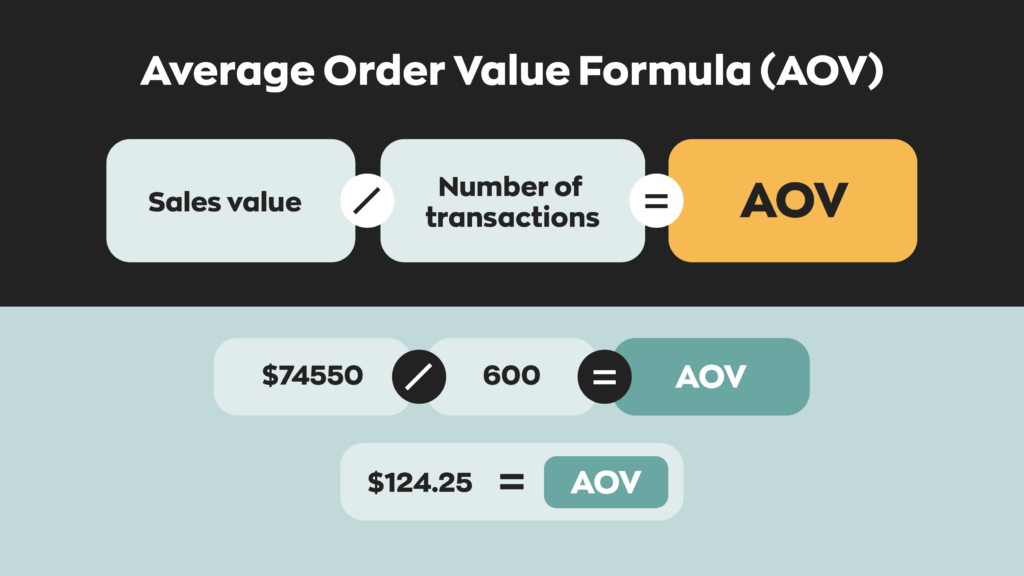
Average order value is the mean revenue your Shopify store earns per transaction. To calculate it, divide total revenue by the number of orders in the same period: a store generating $10,000 from 200 orders has an AOV of $50. That calculation is the foundation, and for example a higher average dollar amount per order means more revenue from the same traffic. You will find the figure in your Shopify admin under Analytics, in the Sales over time report, calculated automatically from net sales after discounts and refunds. Raising AOV is valuable because it grows revenue without extra traffic or ad spend, which improves profitability, profit margins and the bottom line for any ecommerce business.
The mean alone can mislead you. A handful of large orders pulls the average up and hides what most customers actually spend. Shopify makes this point with its Kinda Hot Sauce demo store, where the mean order is $24 but the mode, the most common order, is only $15. Look at all three measures, the mean, the median and the mode, then build your tactics around the modal order. If most customers spend $15, the question is which bundle or add-on nudges that majority a little higher, not how to chase the occasional big spender. Most people cluster around the modal order, so that is where the money is.
Shopify AOV Benchmarks for 2026
Benchmarks give you context before you set a target. Across all industries the global AOV sits near $145, but Shopify stores specifically average between $85 and $92 per order as of late 2024, according to Red Stag Fulfillment. The top 20 percent of Shopify merchants clear $109, and the top 10 percent exceed $120. Category matters enormously: beauty and personal care averages around $71 because products are consumable and repurchased often, fashion and apparel falls between $85 and $100, electronics reaches $95 to $110, and luxury and jewelry can run from $230 to over $400.
Region and device shift the numbers again. Americas stores average $98, EMEA $78 and APAC $62. The starkest gap is device: desktop AOV sits near $95 while mobile and tablet fall to $38 to $40, more than twice as low. For most US brands the majority of traffic is mobile, so a checkout and cart experience that is genuinely optimized for small screens is one of the most overlooked AOV levers. Use these benchmarks to judge where you stand, then focus on your own trend rather than a national average, since a healthy AOV for a beauty brand would be a warning sign for a furniture retailer. These statistics also show the factors at play: consumable goods drive larger, more frequent orders, while luxury and jewelry sit at the high end on price. Track your conversion rates alongside AOV, since the two move together, and judge progress by the percentage gain you can actually influence.

Implementing Upselling Techniques
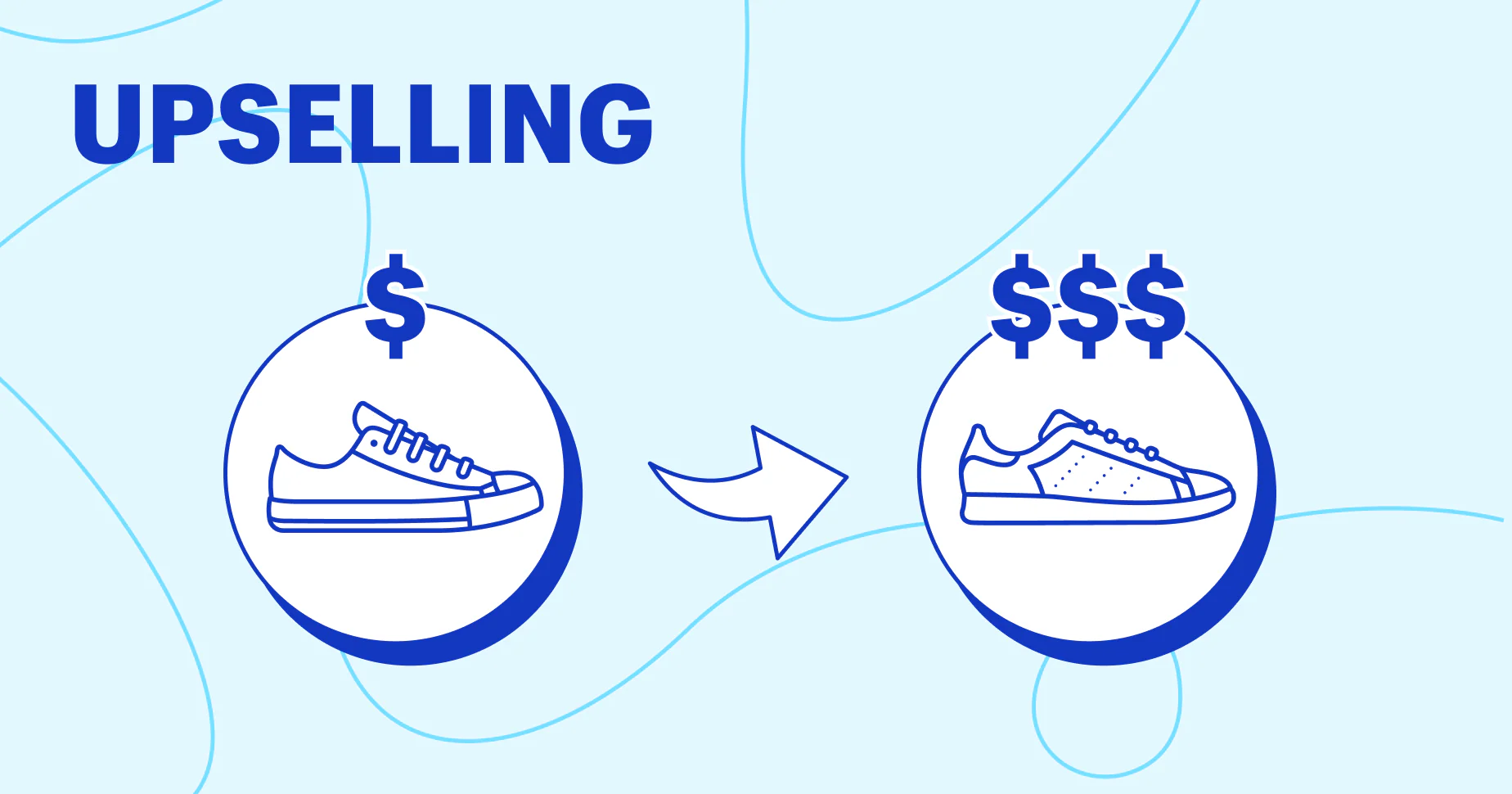
Upselling encourages customers to choose a higher-value version of the product they already want, or to add a premium feature such as an extended warranty. Keep the step small: if someone is set on spending $50 to $100, it is hard to add another $100 but easy to add a $20 upgrade that genuinely improves the purchase. Recommend like a friend would rather than pushing the most expensive item, because an upsell that feels helpful converts and one that feels greedy gets removed from the cart.
Shopify supports upsell prompts across product pages, the cart and post-purchase flows through apps such as Zipify OneClickUpsell and ReConvert. Merchants on Shopify Plus gain full checkout customisation and one-click upsells that fire immediately after a transaction, which is the lowest-risk place to test a higher order value because the original conversion is already secured. Well-timed upsell offers and small add-ons lift order size without adding friction.
Cross-Selling Strategies
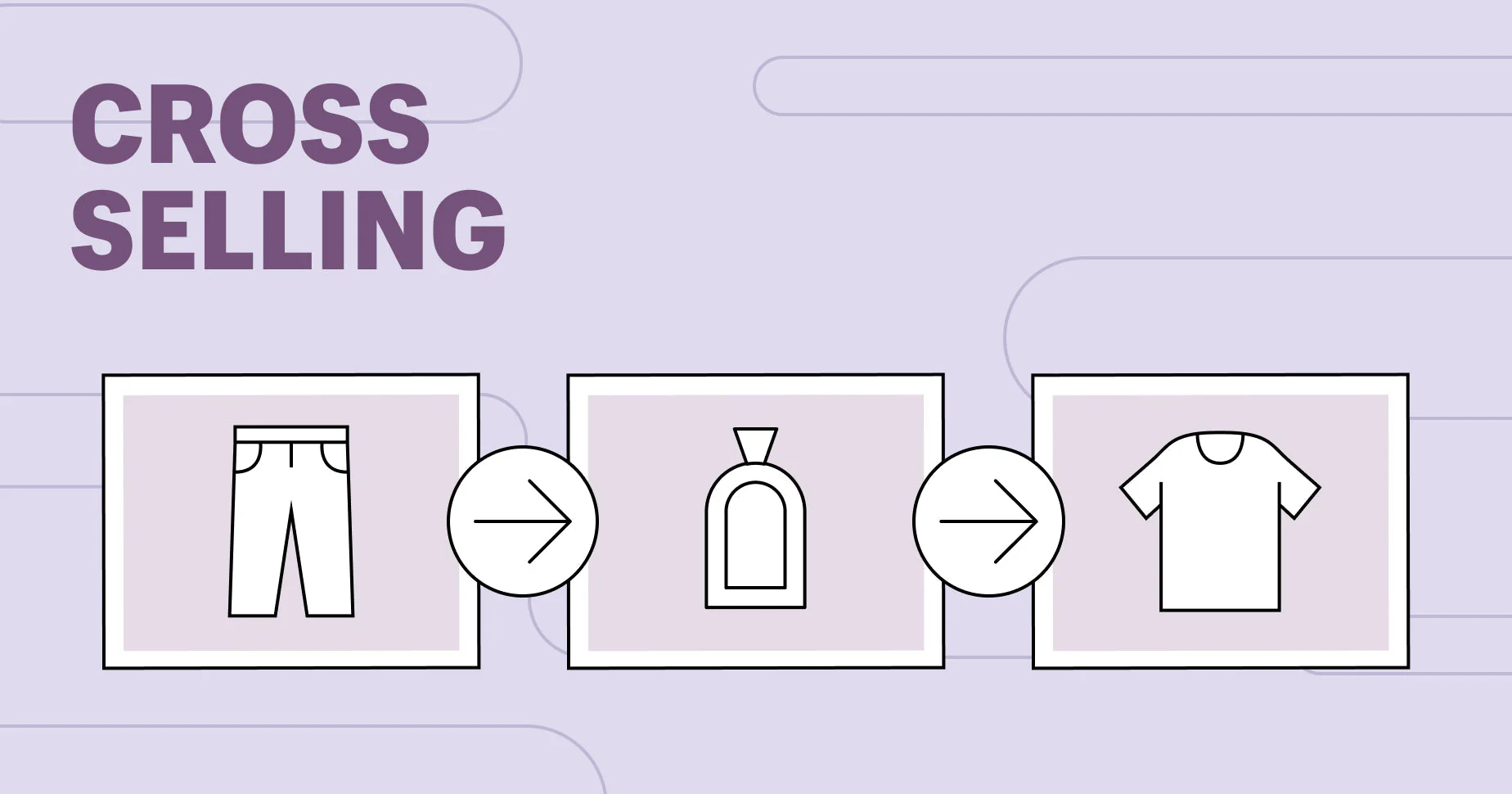
Cross-selling raises order value by suggesting complementary products: socks with trainers, a matching necklace with earrings, batteries with a remote. A cross-sell works best when it is hand-picked to pair with what is already in the cart rather than a generic list of popular items, and when it appears at the right moment on the product page, in the cart drawer or at checkout. Liquid Death attaches star ratings to every cross-sell so the recommendation carries social proof, and that small detail lifts the take rate because shoppers trust an add-on others have rated well.
The data is strong: well-placed product recommendations can raise order values by 10 to 30 percent, and personalized carousels driven by browsing and purchase history outperform static blocks. Build these on Shopify with Search and Discovery, Rebuy or Gorgias, mapping genuine product affinities so every cross-sell reads as a useful suggestion rather than a sales pitch.
Creating Bundled Products
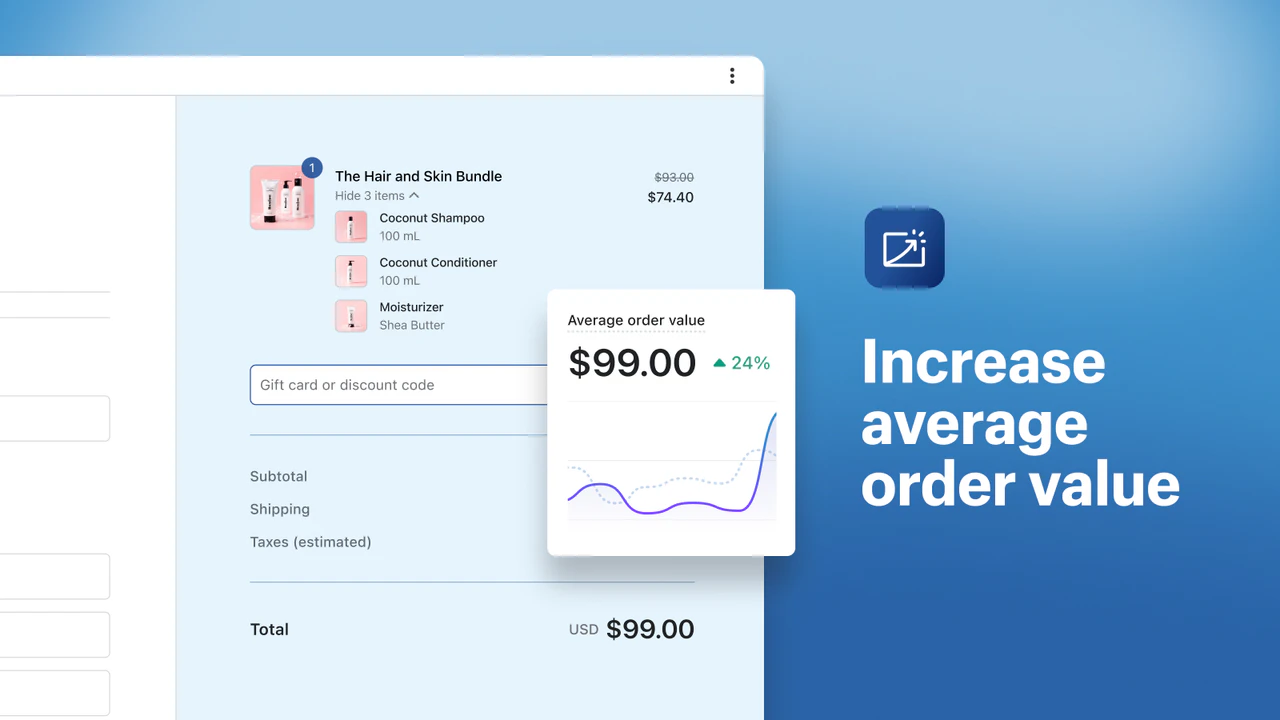
Product bundling encourages customers to buy several items together at a combined price that beats buying each separately. Bundles work because they raise the perceived value of the purchase and reduce the research a shopper has to do: a beauty brand can package a cleanser, toner and moisturiser as a routine, while an apparel store can sell a complete outfit. BioLite bundles a camp stove with the accessories needed to cook a meal, so customers get everything in one purchase and the brand earns a higher order value from a single sale. Dynamic bundles helped home and kitchen brand Avera lift AOV by 12 percent. Product bundles work best when the items genuinely belong together, and the best ones feel curated rather than random.
The free Shopify Bundles app builds fixed and mix-and-match bundles in the admin, and third-party apps add tiered discounts and build-your-own sets. Present every bundle as a curated solution rather than a random grouping, so it reads as a recommendation worth taking.
Offering Volume Discounts
Volume discounts reduce the price per unit as quantity rises, rewarding larger orders and giving shoppers a clear reason to buy more. A skincare store might run "buy two serums, save 10 percent" while an apparel brand offers "3 for 2" on basics. The tactic suits consumables, beauty, apparel and accessories where customers happily buy multiples, and it works best when you show the saving per item so a larger order feels like a good deal rather than an indulgence. Shopify's native discount engine handles tiered offers, and apps extend it with mix-and-match rules and bulk pricing for B2B accounts. Clear pricing strategies that show the saving against normal product prices make a larger order feel like good value, which works especially well for consumable goods.
Free Shipping Thresholds
Free shipping is one of the most reliable AOV levers on Shopify, and the evidence is consistent: orders that qualify for free shipping carry roughly 30 percent higher value, 93 percent of online shoppers say free shipping makes them buy more, and 58 percent will add items specifically to reach a threshold. The mechanic is simple: set a minimum spend just above your current order value and show progress towards it in the cart. Transparent shipping costs and visible incentives remove the friction that stalls larger carts.
Set the threshold deliberately. Digital marketing consultant Aaron Zakowski suggests pitching it around 30 percent above your AOV, but anchor that on your modal order rather than the mean. If your AOV is $42 but most customers spend $15, a $50 threshold will push the majority to abandon rather than add. A progress bar that updates as items go into the cart ("you are $8 away from free shipping") turns the threshold into a game shoppers want to win, which is why a free-shipping bar is often the single highest-return change a store can make.
Post-Purchase Upsells and BNPL
Post-purchase upsells appear immediately after checkout, once the order is confirmed, so they add revenue with no risk to the original conversion. The customer has already said yes, and a relevant follow-up, a travel size of the serum they just bought or a matching applicator, is often added on impulse. Live chat at the cart can answer last-minute questions and nudge a larger basket. Doe Lashes grows order value this way by offering lash accessories after checkout, and apps such as ReConvert and Zipify OneClickUpsell can add 15 to 25 percent to AOV through these offers. Over time the data also reveals which products are bought together, which informs better pre-purchase bundles.
Payment options matter too. Buy now, pay later services such as Klarna and Afterpay reduce the friction of a larger purchase by spreading the cost, and merchants frequently see higher order values once shoppers feel comfortable committing to a bigger basket. For higher-ticket ranges, surfacing instalment pricing on the product page can be the difference between a single item and a full set.
Loyalty Programs and Gamification
A loyalty program rewards repeat purchases and nudges customers to spend more to reach the next tier. The numbers are compelling: 49 percent of consumers spend more after joining a loyalty program, 43 percent already spend more with brands they are loyal to, and loyal customers can be worth up to ten times their first purchase. OSEA Malibu runs a tiered Sea Rewards program offering free shipping, early access and gifts, recognising that lifetime value compounds when every order earns something. Points multipliers and spend-based perks give shoppers a concrete reason to consolidate purchases into a single larger order. Well-run loyalty programs are one of the clearest drivers of long-term revenue growth, and their success compounds as repeat customers spend more each time.
Gamification works alongside loyalty. A tiered progress bar that shows how close a shopper is to a free gift motivates an extra item, and a gift with purchase above a set spend ("spend $60, receive a free mini") creates the same pull. Used well, these mechanics lift order value while making the experience feel rewarding rather than transactional.
Personalisation and AI Recommendations
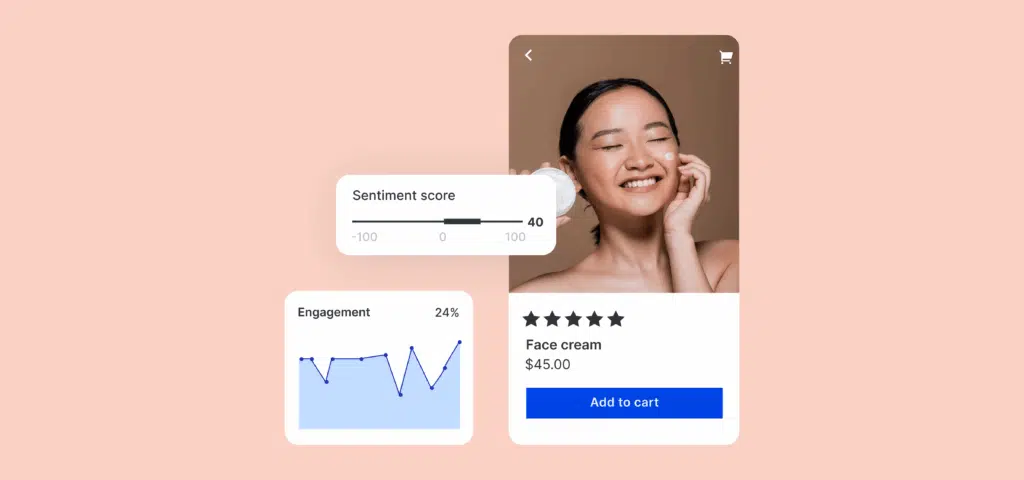
Personalisation is one of the fastest ways to grow AOV, and AI has made it accessible to every store. Instead of showing every visitor the same products, AI-powered tools analyze browsing behavior, purchase history and cart contents to recommend the items a shopper is most likely to add. The payoff is real: companies using highly personalized interactions outperform others by around 30 percent in conversion and revenue, and retailers that redirect budget from blanket discounts to personalized promotions earn returns up to three times higher. On Shopify, tools such as Search and Discovery, Rebuy and Gorgias deliver this personalization across product pages, the cart and checkout.
Personalisation depends on segmentation and targeting. First-time buyers behave differently from returning customers, so segmenting your audience and tailoring recommendations, offers and bundles to each group lifts engagement and order value far more than a single generic experience. The same optimization logic applies to your whole funnel: small, data-led improvements to recommendations and merchandising compound into a meaningfully higher AOV. Customer segmentation surfaces opportunities to tailor offers to each user, and comparing the performance of segments shows where visitors respond best.
Reviews, Descriptions and Urgency
Three supporting tactics make every other lever work harder. Customer reviews provide social proof, with 72 percent of shoppers buying after reading positive reviews, so star ratings on product and cart pages give buyers the confidence to choose the bundle over the single item. Strong product descriptions reduce hesitation by showing how an item fits within a wider range. And limited-time offers create urgency: a "spend $60, receive a free gift" promotion or a short countdown encourages a larger order now, provided you use urgency sparingly so it does not become promotion fatigue.
Measuring AOV: Analytics, CAC and CLV
AOV only becomes useful when you read it alongside the metrics it influences. Track it next to customer acquisition cost (CAC) and customer lifetime value (CLV): if you spend $30 to acquire a customer who orders $60, your margins have to work hard, but lift that order value to $90 and the acquisition cost becomes far easier to justify. A 20 percent rise in AOV can lift CLV by a similar amount when repeat rates hold. Watch conversion rate too, because an aggressive upsell or a high threshold that grows AOV while depressing conversion can leave total revenue flat. This approach suits businesses of every size: in most cases a 10 to 20 percent rise in AOV flows to the bottom line, and a clear strategy keeps revenue and margin moving together.
Shopify Analytics shows AOV in the Sales over time report and in customer cohort reports, so you can see whether gains come from new or returning customers. Set a baseline from at least 30 days of data, target a realistic 10 to 20 percent gain over a quarter, and tag each experiment so you can attribute changes to a specific tactic. The common mistakes are predictable: chasing AOV at the expense of conversion, ignoring product margin when promoting bundles, and leaning on constant discounts that train customers to wait for a sale.
Our View After 100+ Builds
After building and optimising more than a hundred Shopify and Shopify Plus stores, the pattern we see is that brands reach for upsell apps first and the free-shipping threshold last, when it should be the other way round. The threshold is the cheapest change on this list and almost always the highest return, yet most stores set it against their mean AOV and quietly push their most common shopper to abandon. We start nearly every AOV project by finding the modal order, not the average, and setting the bar just above it.
The second thing we would change: stop bolting on three upsell apps that fight each other in the cart. We have seen stores where a post-purchase app, a cart-drawer app and a checkout app all fire competing offers, and conversion drops while AOV barely moves. Pick one mechanic, measure it against profit margin rather than headline order value, and only add the next once the first is proven. AOV is easy to inflate and hard to grow profitably, and the difference between the two is whether you are watching margin at the same time.